


Raw feeding isn’t automatically the healthier choice. The reasons why vets recommend against raw feeding include practical and nutritional concerns: uncooked food can carry harmful bacteria, and homemade recipes may not provide balanced nutrition. PDSA says evidence has not established that raw feeding is better than traditional dog food.
The appeal is understandable. Owners may associate raw ingredients with freshness, a glossier coat or more energy, and want to make a thoughtful choice for their dog. But reported benefits need to be weighed against the evidence and risks that can affect pets and people at home.
This article explains what research says about raw feeding’s claimed benefits, how bacteria can spread through food and the household, and why homemade diets may fall short nutritionally. You’ll also learn what these concerns mean for dogs and families in Ireland, and how a complete, age-appropriate diet can meet your dog’s nutritional needs.
Key Takeaways
- Understand why uncooked pet food can carry bacteria that affect both dogs and people, including through contamination around the home.
- Compare the claimed benefits of raw feeding with the evidence, and see why a balanced, age-appropriate diet matters.
- Learn why homemade raw recipes can fall short nutritionally and what makes a diet complete.
- Explore complete food options suited to your dog’s life stage and size as an alternative to preparing raw meals at home.
Bacterial contamination in raw pet food
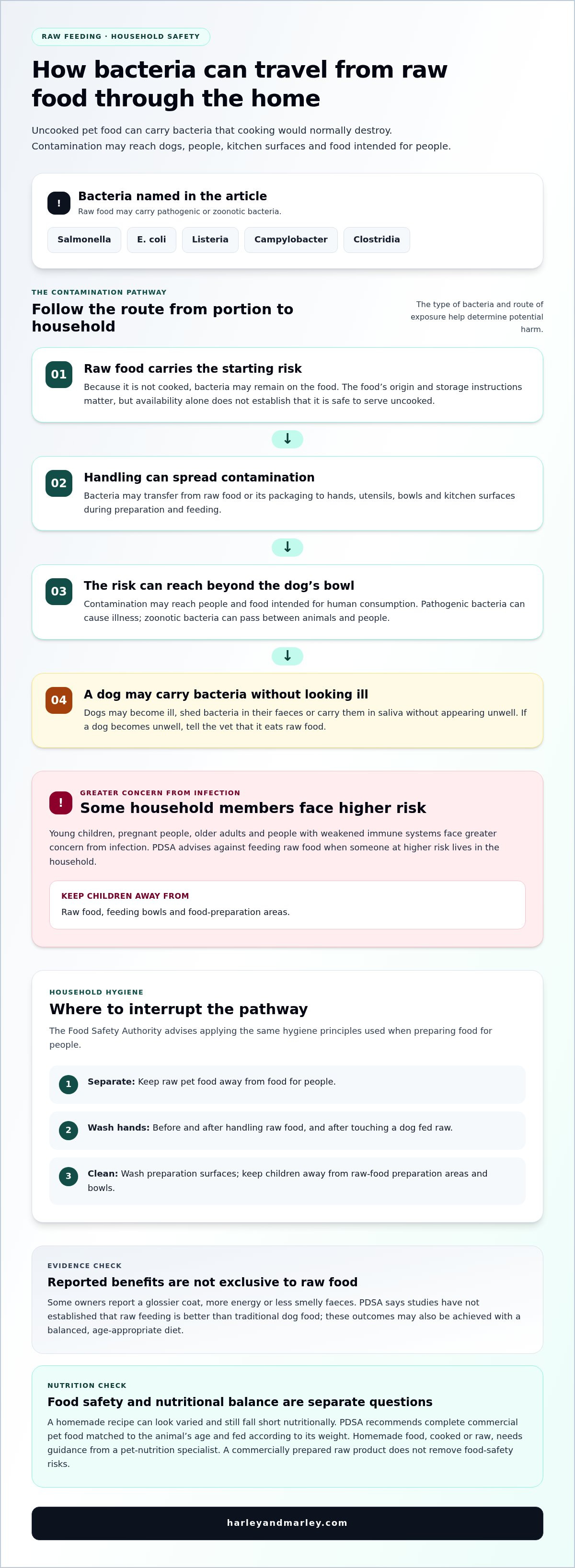
Raw food can carry bacteria that cooking would normally destroy. Contamination may reach dogs, people, kitchen surfaces and food intended for human consumption.
Bacterial and zoonotic hazards
Pathogenic bacteria can cause illness, while zoonotic bacteria can pass between animals and people. Raw pet food may carry Salmonella, E. coli, Listeria, Campylobacter and Clostridia. Because raw food is not cooked, these organisms may remain on it and transfer during handling. A contaminated portion can therefore pose a risk beyond the dog’s bowl. The type of bacteria present and route of exposure help determine the potential harm.
Food-safety risks for pets and owners
Food-safety risks arise when bacteria spread from raw pet food to a dog or household surfaces. Dogs may shed bacteria in faeces or carry them in saliva without appearing ill. In Ireland, import and sale requirements are separate from safe handling at home. The food’s origin and storage instructions matter, but availability alone does not establish that it is safe to serve uncooked. Keep raw food away from food for people, wash your hands before and after handling it, and clean preparation surfaces. The Food Safety Authority advises applying the same hygiene principles used when preparing food for people.
Higher-risk people and pets
Young children, pregnant people, older adults and people with weakened immune systems face greater concern from infection. PDSA advises against feeding raw food when someone at higher risk lives in the household. Dogs can also become ill, while an apparently well dog may still shed bacteria. Keep children away from raw food, bowls and preparation areas, and wash your hands after touching a dog fed raw. If the dog becomes unwell, tell the vet it eats raw food.
Evidence for claimed benefits of raw feeding
Some owners report a glossier coat, more energy or less smelly faeces after switching to raw meat. These observations can feel persuasive, especially when changes appear soon after a new diet begins. However, a change following a switch does not establish that raw food caused it. A dog’s overall diet, age, health and feeding routine can all shape what an owner notices.
PDSA says studies have not established raw feeding as better than traditional dog food. It also notes that reported benefits, including coat condition, energy and stool odour, may be achieved with any balanced, age-appropriate diet. So a raw diet has no demonstrated exclusive advantage for these outcomes. That distinction matters: a desirable change does not prove raw feeding is necessary to achieve it.
Why vets recommend against raw feeding is therefore not simply a rejection of owners’ observations. The concern is that claimed benefits have not been established as unique to raw food, while infection and nutritional risks remain relevant. For example, a dog’s coat may improve after a diet change, but that alone cannot show raw meat was responsible or that the diet is complete.
For dogs and cats, a safer alternative is complete commercial pet food selected for the animal’s age and fed according to its weight. PDSA recommends complete commercial food and advises against homemade diets without guidance from a pet-nutrition specialist. In Ireland, don’t confuse the Irish Veterinary Association and veterinary authorities with PDSA: the advice cited here is PDSA’s, and supports choosing balanced food rather than assuming raw is superior.
When comparing diets, focus on whether the food is complete and appropriate for your pet’s life stage, rather than whether it appears more natural. After a diet transition, keep track of practical changes such as appetite, stool consistency and coat condition. These observations can help you and your vet assess how the food suits your pet. On their own, they don’t prove that raw feeding offers a greater health benefit.
Nutritional balance in homemade raw diets
A homemade raw recipe can look varied yet still fail to meet a dog’s needs. Nutritional completeness depends on the whole formulation, not simply on including meat or rotating ingredients. PDSA advises against preparing homemade pet food, cooked or raw, without guidance from a pet-nutrition specialist. The same principle applies to cats: a recipe made from familiar ingredients is not automatically balanced.
The risk can build over time. A homemade diet based on a single protein, without other balancing components, may leave nutritional gaps when fed for an extended period. Changing ingredients by eye does not reliably correct those gaps. Nor does a fresh appearance show whether the overall recipe supplies the nutrients a pet needs. A dog’s age and weight also matter when deciding how much food to provide.
PDSA recommends complete commercial pet food, fed according to the animal’s weight and age. “Complete” matters because the food is formulated to provide the nutrients needed as a sole diet. Follow the feeding guidance for your pet rather than assuming the same portion suits every dog. Growth, adult maintenance and senior life stages have different requirements, so choose a diet that suits the animal’s age.
If you’re considering raw feeding after speaking with a vet, PDSA advises choosing a commercially prepared product rather than making meals at home. That reduces the guesswork involved in assembling a recipe, but it doesn’t make raw food risk-free: nutritional adequacy and food safety are separate issues. Salmonella contamination, for example, isn’t solved by balancing a recipe. Keep those two questions distinct when assessing a diet: does it meet nutritional needs, and how could it expose pets or people to pathogens? A specialist can guide formulation if you’re considering a homemade diet; without that input, complete food matched to age and weight is the clearer nutritional choice.
Cross-contamination risks in the home
Raw pet food can transfer bacteria from its packaging to hands, utensils, bowls and kitchen surfaces. A leak in the fridge, for example, can expose food intended for people. Freezing doesn’t remove the need for careful handling, so treat raw food as a potential source of contamination throughout storage and preparation.
If you choose to feed raw, store it in a dedicated fridge, away from food for people. PDSA advises thawing it in a sealed container in the fridge, separate from personal food. Don’t put raw pet food on kitchen worktops or let it touch equipment used to prepare human food. These boundaries help limit where contamination can spread.
Keep preparation tools separate from household food equipment, and wash your hands before and after handling pet food. PDSA recommends stainless steel bowls and metal or glass containers rather than plastic. After feeding, wash everything thoroughly and sanitise preparation surfaces. The Food Safety Authority advises applying the same hygiene principles used when preparing food for people. Clean promptly, especially after contact with raw juices.
Once frozen raw food has defrosted, use it within 24 hours and don’t refreeze it. PDSA advises against microwave defrosting because uneven thawing can create hot spots and unsafe temperatures. After touching a dog fed raw, wash your hands: its saliva and faeces may carry potentially dangerous bacteria. Keep children away from preparation areas and bowls, then clean those areas before food preparation resumes.
These measures reduce opportunities for bacteria to spread, but they require consistent separation, storage and cleaning. If you’d prefer a simpler feeding routine, explore complete dog food options suited to your dog’s life stage.
Harley & Marley: Medium/Large Breed Complete Food
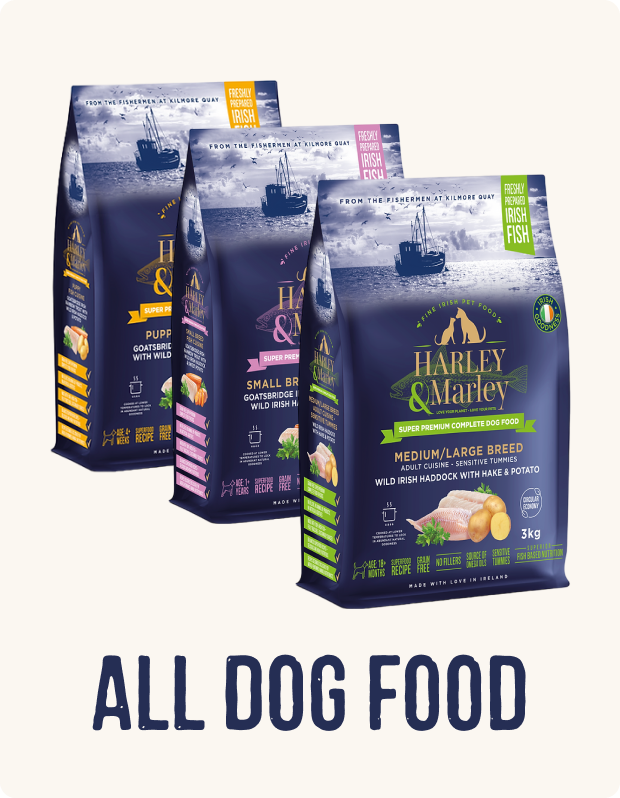
Harley & Marley’s Medium/Large Breed Complete Food offers a complete-food option for owners moving away from homemade raw meals. It is fish-based and formulated as complete food, giving you an alternative to assembling ingredients yourself. Choose food according to your dog’s life stage and size: Harley & Marley also offers Puppy Complete Food, Small Breed Complete Food and Senior Dog Complete Food.
A complete diet can simplify everyday feeding, whilst homemade raw recipes may need specialist guidance to achieve nutritional balance. If you’re weighing up a change, consider your dog’s age and size as well as the food’s intended use. Visit Harley & Marley’s website to explore the complete food options.
Choose a feeding routine that fits your dog
Knowing why vets recommend against raw feeding can help you make a considered next move: choose food around your dog’s life stage, size and everyday routine. Feeding should feel manageable, not like a test of how much effort you can put into preparing meals. Focus on an option you can serve consistently and that suits your dog’s needs.
Harley & Marley offers Medium/Large Breed Complete Food, Puppy Complete Food and Small Breed Complete Food. These give owners options to explore based on their dog’s current life stage or size. Before choosing, consider which category fits your dog now and whether a vet has identified a particular dietary need. For health concerns or individual dietary guidance, your vet is the right person to advise on your dog’s care.
Take the next step at your own pace and explore the available food choices. Contact Harley & Marley about complete food options and make a confident choice for your dog’s routine.
Harley & Marley offers complete food options for dogs
Harley & Marley offers complete food for medium and large breeds, puppies, small breeds, and senior dogs. If you’re considering a change after weighing the concerns around raw feeding, its range offers options to explore.
You can also browse grain-free dog food, chews and bites, fish oil, towels and toys, bundles for dogs, and a monthly food box to add to your dog’s routine.
Frequently Asked Questions
Do vets recommend a raw diet?
Vets don’t universally recommend raw diets, and evidence hasn’t established that raw feeding is better than traditional dog food. PDSA recommends complete commercial pet food and advises speaking to your pet’s vet before changing diets. That conversation can account for your animal’s age, health and current food, helping you make a considered choice rather than relying on claims based solely on appearance or owner experience.
How is meat intended for pet food handled?
Meat intended for pet food may be raw, so it hasn’t undergone cooking that would kill bacteria. Its source and handling matter: PDSA cautions that supermarket or butcher meat intended for people is meant to be cooked and may have higher bacterial levels than recommended for raw pet feeding. Don’t assume meat sold for human consumption is automatically suitable to feed uncooked to a pet.
Is it safe or advisable to feed my dog or cat a raw meat-based diet?
Raw meat-based diets carry food-safety risks, so they aren’t a risk-free choice for dogs or cats. PDSA says studies haven’t established raw feeding as better than traditional food and recommends complete commercial diets. If you’re considering a change, discuss your pet’s individual needs with its vet first. Complete food matched to your animal’s age and weight avoids relying on an unbalanced homemade recipe.
What hazards can arise with such raw product?
Hazards include bacterial contamination, nutritional gaps in homemade recipes and physical injury from bones. PDSA advises against feeding bones, cooked or uncooked, because they can cause tooth fractures, blockages and internal injuries. A bone that looks intact can still break during chewing, so don’t treat it as a harmless way to occupy a dog. Keep the pet’s diet and any chew items as separate decisions.
What is raw feeding?
Raw feeding means offering pets uncooked food, commonly raw meat, rather than food that has been cooked. It can involve commercially prepared raw products or meals assembled at home; recipes and ingredients can differ. Some approaches also include raw meaty bones. The term describes how the food is prepared, not whether the diet is nutritionally complete or suitable for a particular dog or cat.
What bacterial and parasitic infections can raw-fed pets contract or spread?
Raw food may carry bacteria such as Salmonella, E. coli, Listeria and Campylobacter; parasites are another potential hazard. Exposure doesn’t mean infection will always follow, but an affected pet can pose a risk to others. If your dog or cat becomes unwell, tell the vet it eats raw food. That detail can help inform assessment and decisions about appropriate testing or treatment.