



A sensitive stomach needs a considered food choice, not a quick switch. The best food for a French Bulldog with a sensitive stomach has a short ingredient list, a clearly identified protein source and no artificial additives; introduce it gradually over ten days. Watch how your dog responds, as gas, bloating, loose stools and food intolerances can all influence which recipe suits them.
It’s understandable to want one simple answer, especially when your dog’s digestion seems unsettled. The right daily food also needs to match their age and nutritional needs, and puppies may need more frequent meals than adults. This guide explains French Bulldogs’ dietary needs, ingredients that may trigger sensitivities, practical feeding considerations and what to look for in puppy food, so you can make a more informed choice for your dog.
Key Takeaways
- Choose food with a clear, short ingredient list and avoid additives or fillers that may aggravate digestion or skin.
- Track digestive and skin changes as you assess how your French Bulldog responds to different ingredients and protein sources.
- Adjust feeding to your dog’s life stage and routine; puppies may need more frequent meals than adults.
- Introduce a new food gradually over ten days, giving your dog time to adjust and making changes easier to monitor.
1. What Ingredients Should Be Avoided?
Start with the ingredient list, not front-of-pack claims. Corn, wheat and soy are fillers that may contribute to digestive issues or skin conditions in French Bulldogs. Artificial preservatives and other artificial additives can also make a food harder to assess when symptoms appear. For dogs with sensitive digestion, a shorter list of recognisable ingredients makes it easier to identify what each meal contains. It doesn’t establish a diagnosis, but it gives you a clearer basis for monitoring your dog’s response.
Limited-ingredient diets can simplify the process. Look for a clearly stated protein source and fewer additional ingredients, then note changes in stool, gas, bloating or skin. A novel protein is one your dog hasn’t regularly eaten; a single-source recipe can make potential triggers easier to track. Chicken is a possible sensitivity, but it isn’t automatically unsuitable for every dog. Keep a simple food diary and avoid introducing several new foods or treats at once, so reactions are easier to link to a specific ingredient.
Fatty acids matter too. Omega-3 and omega-6 support skin and coat health, and can help reduce inflammation. Fish oil is one source of these fats; sardines and flaxseed oil are other examples. Choose a complete food with a suitable nutritional balance rather than adding oils without considering the whole diet. A change in coat or skin can be worth recording alongside digestive signs.
Some nutrients support other aspects of daily wellbeing. Collagen and glucosamine are associated with joint support, whilst calcium and phosphorus help strengthen bones. Antioxidants support the immune system; blueberries, cranberries and reishi mushrooms are examples of ingredients that provide them. These additions don’t make a food suitable if its main ingredients trigger symptoms, so assess the complete recipe first.
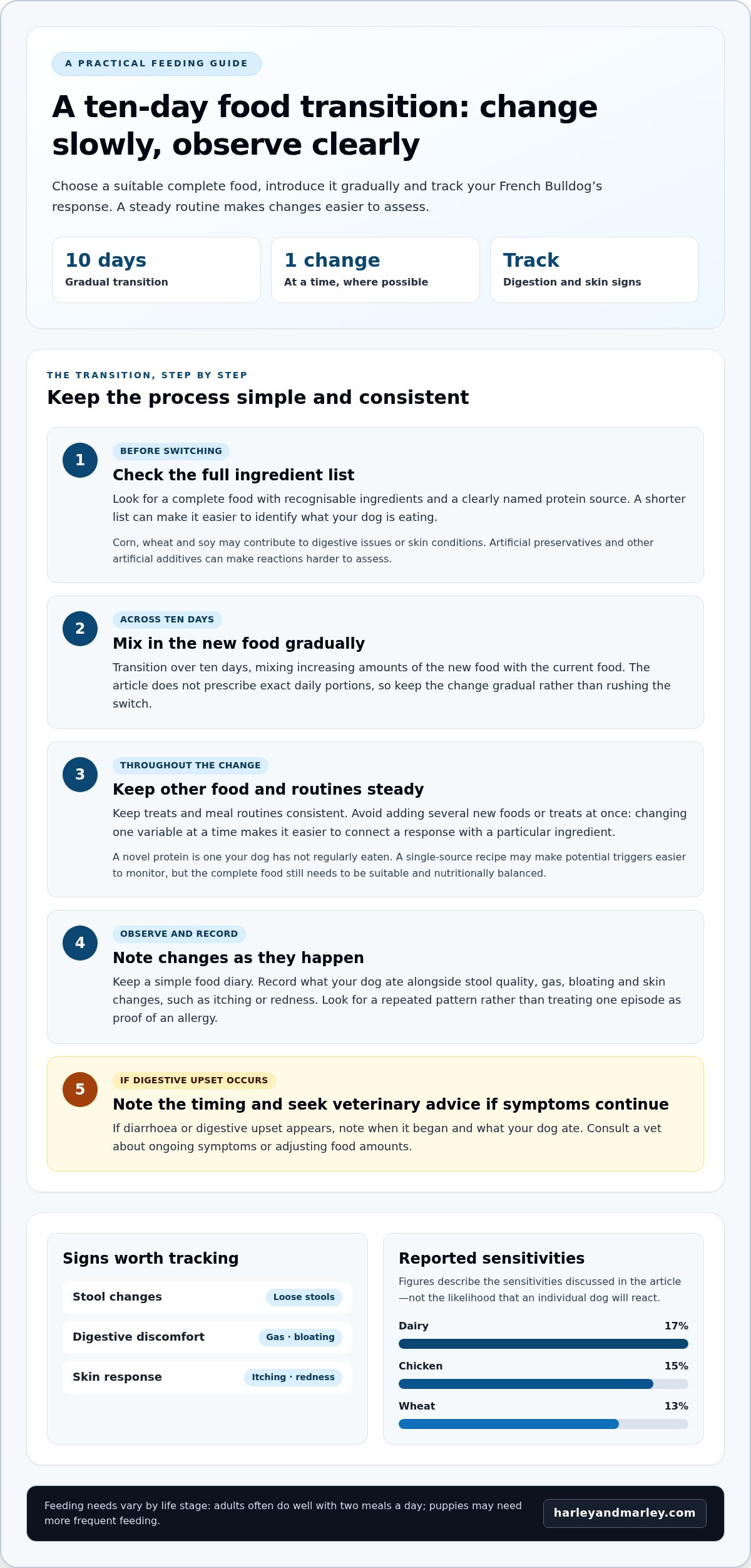
Make one change at a time. Transition to a new food gradually over ten days, keeping portions and treats consistent. This step-by-step approach helps you observe whether a particular ingredient suits your French Bulldog’s digestion, without adding unnecessary stress or confusing the results.
2. What Are the Dietary Needs of French Bulldogs?
French Bulldogs can experience gas, bloating, loose stools, food intolerances and difficulty digesting certain proteins. Owners also report skin concerns, so note itching, redness, stool changes and discomfort alongside meals. These observations help distinguish a recurring pattern from a one-off upset. Fillers such as corn, wheat and soy can contribute to digestive issues or skin conditions, so review the full formula rather than relying on front-of-pack claims.
For a sensitive French Bulldog, choose a complete food with clearly named ingredients, high-quality protein and a measured balance of fats and carbohydrates. No protein or carbohydrate is least likely to trigger sensitivities in every dog. A single protein your dog has not regularly eaten, paired with a simple carbohydrate, can make reactions easier to monitor; turkey is one example to assess against your dog’s food history. Fatty acids, including omega-3 and omega-6, support skin and coat health.
There’s no single price for sensitive-stomach food in Ireland: cost depends on the formula, pack size and how much your dog eats each day. To compare options, consider the cost per feeding and whether the food is complete and suits your dog’s age and needs.
The best choices in Ireland are complete foods with a short ingredient list, a clearly identified protein and no artificial preservatives. A fish-based complete formula is one option to consider, whilst your dog’s digestion and skin response help determine what suits them.
To switch foods, transition gradually over ten days, mixing increasing amounts of the new food with the current one. Keep treats and meal routines consistent, and record stool quality, gas and skin changes during the transition. If diarrhoea or digestive upset occurs, note when it began and what your dog ate; consult a vet about ongoing symptoms or adjusting food amounts. Most adult French Bulldogs do well with two meals a day, while puppies may need more frequent feeding.
3. Common food sensitivities and allergy triggers
Food allergies and intolerances can affect the skin, digestion, or both. French Bulldogs may show signs such as itching, skin flare-ups, gas, bloating or loose stools. Wheat, meat, eggs and dairy are identified as common allergens, but they don’t affect every dog. Look for a repeated pattern between a food and symptoms rather than assuming one episode proves an allergy.
Among the sensitivities described, dairy is identified as a trigger in 17%, chicken in 15% and wheat in 13%. These figures describe the sensitivities in question, not the likelihood that an individual French Bulldog will react. A dog can tolerate chicken whilst reacting to dairy, or show no food-related symptoms at all. Keep a record of ingredients and changes in skin or digestion to help spot patterns.
Wheat, corn, soy and artificial preservatives may trigger skin flare-ups in French Bulldogs. Read the full dietary label, including the ingredients in treats, because several foods can contain the same potential trigger. If symptoms appear after a recipe change, compare the old and new ingredient lists. Note whether the food contains a particular grain, animal protein or preservative.
A short ingredient list with a single protein source can make potential allergens easier to monitor. A novel protein is one the dog hasn’t regularly eaten; it may help narrow down which ingredients coincide with symptoms. However, a single-source recipe isn’t automatically balanced or suitable as a long-term diet. Check that the food is complete and provides the nutrients needed for everyday health, including animal protein to support muscle maintenance.
Change one variable at a time, such as the main protein, and keep other meals consistent. Record the food, treats, stool quality and skin signs, then review the pattern over time. Avoid removing several ingredients without a clear plan, as that makes triggers harder to identify and can complicate balanced feeding. Persistent or recurring digestive and skin symptoms need veterinary assessment to distinguish food reactions from other causes.
4. Sensitive food for French Bulldog puppies
A French Bulldog puppy needs food suited to growth, not simply a smaller adult portion. Choose a complete puppy formula labelled for growth or all life stages, with balanced nutrition for developing bones, muscles and organs. For a puppy with digestive signs, a shorter ingredient list and clearly identified protein can make meals easier to assess. Keep the recipe consistent while you observe appetite, stool quality and skin.
Keep puppies on puppy food until they reach 9 to 12 months of age. Their needs change as they grow, so use the feeding guide on the food packaging as a starting point. Adjust portions to your puppy’s condition and growth, rather than offering extra food whenever they seem hungry. Weighing meals helps make daily feeding consistent and makes changes easier to track.
Puppies may need more frequent meals than adult French Bulldogs. Divide the daily amount into regular meals and keep treats modest so they don’t displace nutritionally complete food. If your puppy eats too quickly, a calm feeding space and measured portions can help you observe how they manage each meal. Record new foods, treats and digestive changes, particularly after changing recipes.
If your puppy has repeated diarrhoea, vomiting, poor appetite or persistent itching, record symptoms and meals before discussing them with a vet. These signs can have causes beyond food, and a growing puppy still needs balanced nutrition. Avoid removing several ingredients or creating a restrictive diet without professional guidance. The key takeaway: choose a complete growth-stage food, keep feeding consistent and assess your puppy’s response over time.
Explore complete food for puppies as you compare growth-stage options for your French Bulldog.
Harley & Marley: Medium/Large Breed Complete Food
Harley & Marley’s Medium/Large Breed Complete Food offers a complete-food option to consider when comparing daily nutrition for your French Bulldog. Match food to your dog’s life stage and size, and use the feeding guidance on the packaging to portion meals consistently. For younger dogs, Puppy Complete Food is the life-stage option; Small Breed Complete Food and Senior Dog Complete Food address other size and age categories. If digestive or skin signs continue, keep a note of meals and symptoms to discuss with your vet, as food selection alone may not explain every issue. For help choosing between the available complete-food options, visit Harley & Marley online.
Make your next feeding choice with confidence
Choosing the best food for a French Bulldog with a sensitive stomach is an ongoing process, guided by your dog’s individual response and life stage. A practical next step is to choose a suitable complete food, then keep meals and observations consistent so you can make informed adjustments. Harley & Marley offers Medium/Large Breed Complete Food, Puppy Complete Food and Small Breed Complete Food for different life stages and sizes. Persistent digestive or skin signs are a reason to speak with your vet, particularly before making restrictive changes to your dog’s diet.
For help considering which complete food may suit your dog’s daily needs, contact Harley & Marley. A thoughtful food choice and steady routine can help you move forward with greater confidence in your French Bulldog’s everyday care.
Frequently Asked Questions
What Are the Dietary Needs of French Bulldogs?
Adult French Bulldogs generally do well with two meals daily, with portions suited to age, activity and body condition. Weigh each serving and review your dog’s shape and energy as their routine changes. Puppies need growth-stage food and may eat more often. A change in activity, age or neuter status can affect how much food is appropriate.
Can a good diet stop my Bulldog getting sick?
No diet can prevent every illness, but balanced nutrition supports your Bulldog’s overall health. Food may also help manage some diet-related concerns, such as sensitivities, when the ingredients suit that individual dog. Keep track of appetite, stool and skin changes; a sudden shift can have causes beyond food. Ongoing symptoms need veterinary attention rather than repeated changes to meals alone.
What Ingredients Should Be Avoided?
Check ingredient lists for components your dog has reacted to, including wheat, corn, soy, dairy or chicken. Artificial preservatives may also be relevant when skin flare-ups occur. Read labels on treats as well as meals: a treat containing chicken can complicate observations if you’re monitoring a chicken-free diet. Focus on the listed ingredients, not broad claims such as “sensitive” or “natural”.
What Nutritional Components Are Essential?
A suitable diet needs adequate protein, fats and essential nutrients for your dog’s life stage. Protein supports tissue and muscle, whilst omega-3 and omega-6 fatty acids contribute to skin and coat health. Calcium and phosphorus are important for bones. Choose a complete food rather than relying on a single ingredient or supplement to provide balanced nutrition.
What should I look for in a sensitive dog food?
Look for a complete food with a clearly identified protein and an ingredient list you can understand. Check that its stated life stage matches your dog, particularly for a growing puppy. When comparing recipes, note differences in protein sources and added ingredients before choosing. Keeping treats unchanged during a food transition can make your dog’s response easier to interpret.
What food ingredients are best for French Bulldogs with sensitive stomachs?
The best food for a French Bulldog with a sensitive stomach depends on which ingredients that dog tolerates. A clearly labelled, single-protein recipe can make responses easier to track; fish is one option, and Harley & Marley’s complete foods are fish-based. Made from fresh Irish fish offcuts, they contain no chicken or beef, which may suit owners avoiding those ingredients.