


More fish oil isn’t always better. The side effects of too much fish oil for dogs can include vomiting, diarrhoea, an oily coat and slower wound healing; excess may also affect blood clotting. The right amount depends on your dog’s weight, health and the supplement, so check the EPA and DHA content, not just the total oil listed on the pack.
It’s understandable to want to support your dog’s wellbeing while worrying about giving too much. This article covers digestive and skin reactions to watch for, how weight relates to dosing, and why fish oil may not suit some dogs. You’ll also learn why a label’s EPA and DHA figures matter, what sensitivities may look like, and when to stop the supplement and speak with your vet. A measured approach can help you make a more informed decision about fish oil for your dog.
Key Takeaways
- Use your dog’s weight as a starting point, but factor in their health and the supplement’s EPA and DHA content when considering an appropriate amount.
- Introduce fish oil gradually and watch for changes in your dog’s digestion, skin or coat.
- Allergies, existing health conditions and some medicines can affect whether fish oil is suitable for your dog.
- If your dog develops digestive symptoms, pause the supplement and seek veterinary advice before deciding what to do next.
Can Fish Oil Be Bad For Dogs?
Yes. Too much can cause unwanted effects, and a suitable dose depends on your dog’s weight, health and the supplement. The label’s EPA and DHA amounts show what your dog is actually receiving.
Fish oil dosage and veterinary guidance
Fish oil contains the omega-3 fatty acids EPA and docosahexaenoic acid (DHA). Their combined amount, rather than the total oil in a capsule, is central to dosage calculations. For example, a label may list 1,000 mg of fish oil but provide a different amount of omega-3s. Check the EPA and DHA figures and follow the product label. Ask your veterinarian before adding a supplement, particularly if your dog has a health condition or takes medicine. The triglyceride form may also appear on a product label, but it doesn’t replace checking EPA and DHA.
Accidental consumption of excess capsules
If your dog accidentally eats more capsules than intended, the EPA and DHA per capsule help determine the potential exposure. Contact your veterinarian promptly with your dog’s weight, the product packaging and the number of capsules eaten. Don’t give more fish oil while seeking advice. If vomiting or diarrhoea develops, tell the veterinarian when it began and how much your dog may have eaten.
Veterinary care for side effects
Contact your veterinarian if your dog develops nausea or diarrhoea after taking fish oil, or has eaten too many capsules. Stop the supplement and share the label’s EPA and DHA amounts, your dog’s weight and any other medicines. This information can help the veterinarian assess the dose and advise whether the supplement should be stopped or adjusted.
Fish oil may be useful for some dogs, including when a veterinarian is considering it for inflammation, but more isn’t automatically better. The side effects of too much fish oil for dogs can involve digestion and other health risks, so dose decisions should take your individual dog into account, not just the number of capsules.
Safe upper limits and body-weight dosing
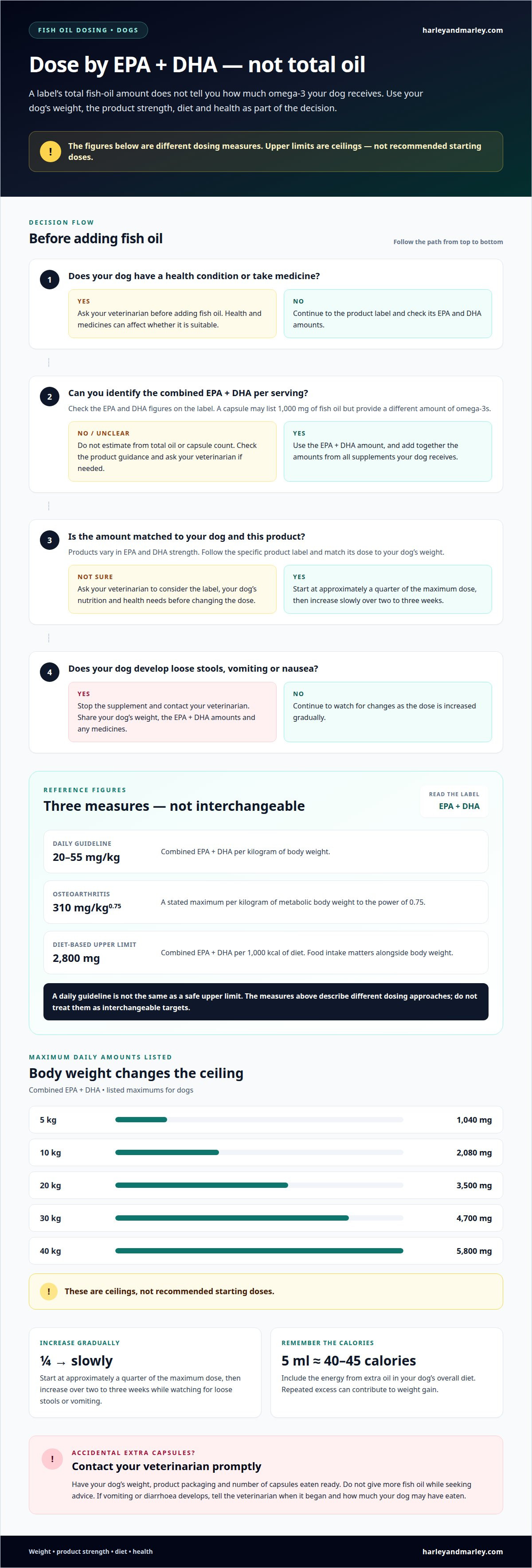
Fish oil dosing depends on your dog’s weight, diet, health and the product’s strength. A daily guideline is not the same as a safe upper limit, especially for dogs being treated for arthritis.
Safe upper limits by body weight
A general daily guideline is 20 to 55 mg of combined EPA and DHA per kilogram of body weight. For osteoarthritis, a stated maximum is 310 mg per kg of metabolic body weight to the power of 0.75. These figures describe different dosing measures, not interchangeable targets. The safe upper limit is also expressed as 2,800 mg of combined EPA and DHA per 1,000 kcal of diet. A dog’s food intake therefore matters alongside body weight.
Maximum daily amounts listed for dogs include 1,040 mg for a 5 kg dog, 2,080 mg for a 10 kg dog and 3,500 mg for a 20 kg dog. The corresponding figures are 4,700 mg for a 30 kg dog and 5,800 mg for a 40 kg dog. These are ceilings, not recommended starting doses.
Product-specific dosing guidance
Follow the label for the specific supplement and match the dose to your dog’s weight. Products contain different amounts of EPA and DHA, so equal volumes or capsule counts may deliver different doses. Add together the EPA and DHA from all supplements your dog receives before comparing the total with the recommended amount.
Start at approximately a quarter of the maximum dose, then increase slowly over two to three weeks while watching for loose stools or vomiting. If you notice stomach upset, the current amount may not suit your dog. Ask your veterinarian to weigh the product label, your dog’s nutrition and health needs before changing the dose.
Extra oil also adds energy: 5 ml provides approximately 40 to 45 calories. Repeated excess can contribute to weight gain, while excessive intake may alter immune function. Include those calories in your dog’s overall diet, and don’t treat the upper limit as a daily target.
Allergic reactions and sensitivities
Fish oil isn’t suitable for every dog. Avoid a supplement if your dog is allergic to fish oil or another ingredient, and speak with your veterinarian about an alternative. An allergy to salmon matters if the supplement is salmon-derived. Check the source and full ingredient list for possible triggers.
Pay attention to skin changes. Fish oil may be associated with itchiness or flaky skin, but those signs alone don’t prove an allergy. Note when they appear, whether they follow a new supplement, and whether your dog’s food or other products have changed too. Share these details with your veterinarian rather than adding another oil to test the reaction.
Formulation matters too. Some human fish oil supplements contain ingredients such as xylitol, which is toxic to pets, and other additives may also be harmful. Choose a product intended for pets, read the ingredient panel, and don’t give a dog a human capsule simply because it contains omega-3 fatty acids. If your dog eats a product with xylitol, contact a veterinarian promptly.
Some sensitivities relate to health and nutrition rather than allergies. Dogs with diabetes, a history of pancreatitis or ongoing diarrhoea need particular caution with fish oil. Dogs eating a high-grain or grain-based diet may become deficient in vitamin E when also given fish oil supplements. These factors can affect whether adding fatty acids is appropriate and how they fit into your dog’s overall nutrition.
Introduce a suitable supplement gradually, following its label and your veterinarian’s advice. Watch for new itching, flaky skin, digestive upset or changes in your dog’s coat. Orange coat pigmentation has also been reported with salmon oil; reduce the daily dose if this occurs and discuss it with your veterinarian. Stop a product linked to a suspected reaction and seek advice before trying it again. Keeping a record of ingredients, timing and symptoms can help distinguish a possible sensitivity from other causes.
Digestive side effects of high-dose fish oil
Too much fish oil can upset a dog’s stomach, causing vomiting, nausea or diarrhoea. These symptoms can follow a sudden dose increase or a serving that exceeds the product’s recommended amount. Fish oil supplies eicosapentaenoic acid and other omega-3 fatty acids, but a larger dose isn’t automatically more helpful. A reported estimate suggests about 15% of dogs experience gastrointestinal intolerance.
Watch for changes after each dose. Note whether your dog vomits, develops loose stools, seems nauseous or refuses food, and record when symptoms began. Your dog’s weight, the amount given and the product label help explain the exposure. Existing diarrhoea or a history of pancreatitis calls for particular caution. Don’t add another supplement to counteract the reaction.
If symptoms start after fish oil, stop giving it and contact your veterinarian. If your dog’s stomach is upset after taking it on an empty stomach, ask whether giving it with food is appropriate. Don’t restart or alter the dosage without advice, especially if vomiting continues or diarrhoea is frequent. Gastrointestinal effects usually resolve within 24 to 48 hours after the supplement is stopped or substantially reduced.
For a dog that has vomited, stop the supplement for a few days before considering a restart at one-quarter of the recommended dose, and only with veterinary guidance. If diarrhoea is not frequent, easing the dose and returning to normal amounts after a couple of days is another approach described for salmon oil. Persistent or worsening symptoms need veterinary attention, since another disease may be responsible.
Choose a fish oil formulated for pets, follow its label, and keep the packaging available if symptoms arise. The side effects of too much fish oil for dogs are easier to assess when the product, dose and timing are clear. For a pet-specific option, explore fish oil and use it according to its label.
Harley & Marley: Fish Oil
Harley & Marley offers dog nutrition options, including Bundles for Dogs, Puppy Complete Food and Medium/Large Breed Complete Food. If you’re considering fish oil, follow the product label and ask your veterinarian whether it suits your dog’s health, weight and current diet. A food bundle can help you choose from the available dog food options, while your veterinarian can advise on supplements and any symptoms. Keep the packaging handy when discussing a dose, so the ingredients and EPA and DHA content are clear. Explore Harley & Marley’s dog food options.
Make your dog’s next nutrition choice with care
Understanding the side effects of too much fish oil for dogs can help you make a considered choice about supplements, alongside your dog’s everyday diet. If you’re reviewing food options as well, Harley & Marley offers Puppy Complete Food, Small Breed Complete Food and Medium/Large Breed Complete Food. Choose according to your dog’s life stage and breed size, and keep supplement decisions grounded in veterinary advice. Each dog’s needs are individual, so thoughtful choices matter more than adding products without a clear reason. For help exploring the available food options, contact Harley & Marley. A measured approach can support a confident next step for you and your dog.
Frequently Asked Questions
Can I Give My Dog Human Fish Oil?
Don’t give your dog human fish oil unless your veterinarian has approved that specific product. Human capsules can contain additional ingredients, including xylitol, which is toxic to pets, and their strength may not suit your dog. Choose a pet supplement and read its full ingredient list. If your dog swallows a human capsule, keep the packaging and contact your veterinarian for advice.
Are there any potential side effects?
Yes. Alongside stomach upset, fish oil may cause a fishy smell, an oily coat, itchy or flaky skin, or delayed wound healing. It can also affect blood clotting. These signs can have different causes, so note when they began and whether anything else changed, such as food or medication. Always see a vet if a problem persists.
Fish Oil Dosage - How Much Is Right?
There isn’t one capsule count that suits every dog. Base dosing on your dog’s weight, health, the product label and its combined EPA and DHA content, rather than the total oil amount. If your dog also receives another omega-3 supplement, include that when discussing the daily amount with your veterinarian. If you miss a dose, don’t give extra or double the next one.
Are there any drug interactions I should be aware of?
Yes. Use particular caution with fish oil alongside anticoagulants, doxorubicin and non-steroidal anti-inflammatory drugs (NSAIDs). Its effect on blood clotting may matter if your dog takes an anticoagulant or has a clotting disorder. Tell your veterinarian about every medicine and supplement your dog receives before starting fish oil, including occasional products, so they can assess the combination.
Are there any risk factors for this supplement?
Dogs with diabetes, a history of pancreatitis, diarrhoea or a blood-clotting disorder need extra care with fish oil. Caution also applies during pregnancy or nursing and before scheduled surgery; high-dose supplementation is advised to stop at least one week beforehand. Tell your veterinarian about these conditions or circumstances before use, as they can affect whether fish oil is appropriate.
What are the common side effects of too much fish oil in dogs?
Vomiting and diarrhoea are common digestive signs; excess oil can also contribute to weight gain. If your dog develops nausea or loose stools after a dose, stop the supplement and contact your veterinarian, particularly if symptoms continue or worsen. Keep the product label handy and note how much your dog received. Don’t restart it or give an extra dose without veterinary advice.