


Could the key to a healthier-looking coat lie in the fats your dog eats? Fish oil for dogs’ skin and coat may help support healthy skin and a glossy coat because it provides the omega-3 fatty acids EPA and DHA.
It’s understandable to hope that fish oil for dogs’ skin and coat will quickly ease dryness or itching, but it isn’t a cure-all. Fish oil comes from oily fish, and its effects can take a few weeks to become noticeable. Too much, or starting with a full serving suddenly, may upset your dog’s digestion.
This guide explains what fish oil is and how its omega-3s may support skin and coat health. You’ll also learn about possible side effects, when changes might appear, and how salmon oil compares with other fish oils, so you can make a more informed choice for your dog.
Key Takeaways
- Learn which side effects to watch for and when a dog’s health or medication makes professional advice especially important.
- Set realistic expectations for coat changes by understanding why omega-3 benefits take time to appear.
- Compare salmon oil with other fish oils by looking beyond the name to the omega-3s each serving provides.
- Explore Harley & Marley Fish Oil as a fish-based supplement option for supporting your dog’s skin and coat care.
What are the side effects of fish oil for dogs?
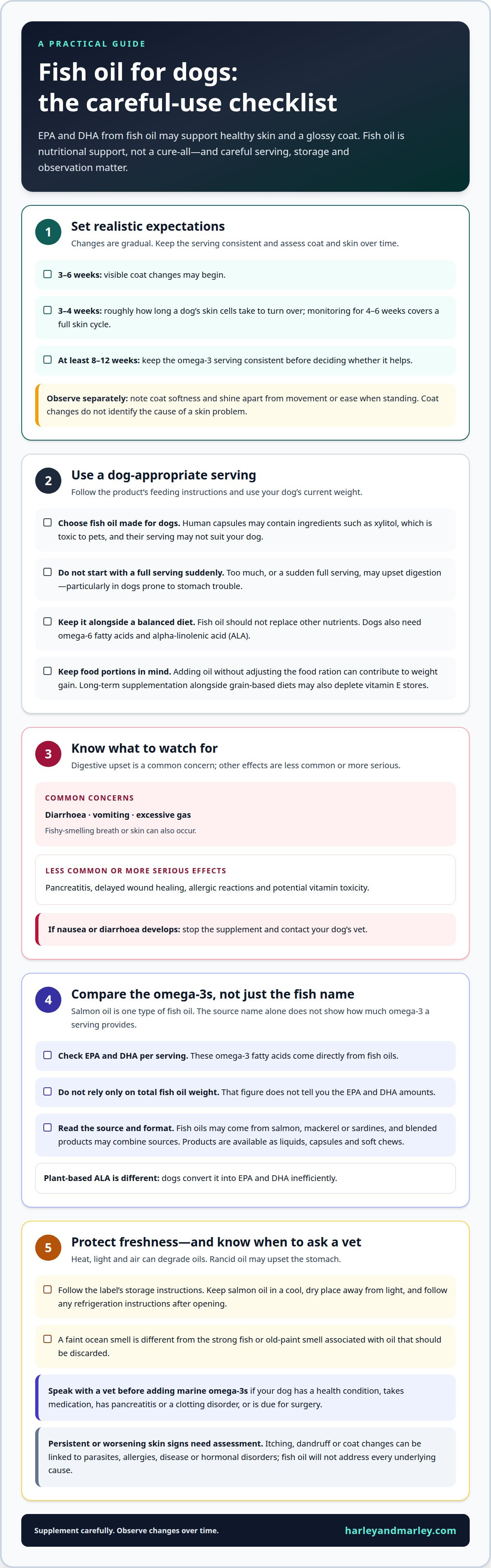
Fish oil supplies the marine omega-3 fatty acids EPA and DHA, but supplements can cause side effects. Dogs also need omega-6 fatty acids and alpha-linolenic acid (ALA), so adding oil should complement a balanced diet, not replace it.
Can dogs take human fish oil capsules, or should I use a dog-specific product? Choose fish oil made for dogs. Human capsules may contain ingredients such as xylitol, which is toxic to pets, and the serving may not suit your dog.
Digestive upset is a common concern. Giving the full serving straight away can lead to diarrhoea, vomiting or excessive gas, particularly in dogs prone to stomach trouble. Fishy-smelling breath or skin can also occur. Follow the product instructions and base the serving on your dog’s current weight.
Balance matters. EPA and DHA come directly from fish oils, including oils from salmon, mackerel and sardines. ALA comes from plant sources such as flaxseed, but dogs convert it into EPA and DHA inefficiently. Fish oil shouldn’t crowd out omega-6 fatty acids or other nutrients needed in a complete diet.
Adding oil without adjusting your dog’s food ration can contribute to weight gain. Long-term supplementation alongside grain-based diets may also deplete vitamin E stores. Less common or more serious effects include pancreatitis, delayed wound healing, allergic reactions and potential vitamin toxicity. These risks make the serving and your dog’s diet important considerations.
Before adding marine-based omega-3s, speak with a vet if your dog has a health condition, takes medication, has pancreatitis or a clotting disorder, or is due for surgery. If nausea or diarrhoea develops, stop the supplement and contact your dog’s vet. Rancid oil can also upset the stomach: heat, light and air can degrade oils, so follow storage instructions and discard oil that smells rancid.
Expected time for skin, coat and joint benefits
Ask a vet about itching, dandruff or coat changes, which can be linked to parasites, disease, allergies or hormonal disorders. Fish oil’s effects develop gradually, so allow time before judging a change.
Time for Benefits to Appear
Visible coat changes may begin within 3 to 6 weeks, but that’s not the full assessment period. A dog’s skin cells turn over in roughly 3-4 weeks, and monitoring for 4-6 weeks covers a full skin cycle. For a steadier assessment, keep the omega-3 dosage consistent for at least eight to twelve weeks before deciding whether it helps.
Skin and Coat Benefits
EPA and DHA may support healthy skin and a glossy coat by helping to moderate inflammation. This may be relevant to canine itching and dry skin, including signs associated with skin allergies. Softness and shine are useful things to observe, but changes in your dog’s coat don’t identify the cause of a skin problem.
Changes in joint comfort can also take several weeks to become noticeable. Dogs with arthritis may become more comfortable and agile with fish oil, but coat and joint responses have different signs. Note changes in movement, such as ease when standing, separately from coat texture or shine.
Omega-3s have potential functions beyond skin and joints. DHA supports brain and eye development in puppies, while it may support cognitive function in older dogs with canine cognitive dysfunction. These are distinct benefits, so a coat change alone won’t show whether another function has changed.
Keep the daily serving consistent and follow the supplement’s feeding guide using your dog’s current weight. If itching, dandruff or coat changes continue, worsen or appear alongside other health changes, a vet can assess causes such as parasites, allergies, disease or hormonal disorders. This matters because a supplement won’t address every underlying cause.
What about salmon oil for dogs?
Salmon oil is fish oil made from salmon, so it’s one source of marine omega-3 fatty acids for dogs. Fish oil can also come from other oily fish, including mackerel and sardines. The useful comparison isn’t simply “salmon” versus “fish oil”: salmon oil belongs to the fish-oil category, and the fish source alone doesn’t show how much omega-3 a serving provides.
For a meaningful comparison, look at the EPA and DHA amounts per serving. These are the omega-3 fatty acids supplied directly by fish oils. Don’t rely only on the total fish oil weight printed on the bottle; that figure doesn’t tell you the EPA and DHA amounts. For example, compare the stated EPA and DHA in a salmon oil serving with those in a blended fish oil serving.
Some fish oils combine several fish sources, so check the label to see which fish are included. Salmon oil names salmon as its source, but neither description alone tells you which option best suits your dog. The serving’s EPA and DHA content, your dog’s diet and the product’s feeding instructions all help inform the choice.
Products come as liquids, capsules and soft chews. Liquid salmon oil can be mixed into food, whilst capsules or chews offer different ways to give a supplement. Follow the chosen product’s dosing instructions and base the amount on your dog’s current weight. If your dog takes medication or has a health condition, discuss omega-3 supplements with a vet before use.
Freshness and storage matter for either type. Heat, light and air can make oils rancid, which may cause digestive upset. Store salmon oil in a cool, dry place away from light, and follow its label, including any refrigeration instructions after opening. A faint ocean smell is different from the strong fish or old-paint smell associated with oil that should be discarded.
How fish oil supports skin and coat health
Fish oil for dogs’ skin and coat can add omega-3 fatty acids to a dog’s nutrition. EPA and DHA may help moderate inflammation, which can support healthy skin and a glossy coat. This may be relevant to some itching and dryness associated with skin allergies, but it doesn’t address every cause. Parasites, disease and hormonal disorders can also affect a dog’s skin.
A soft feel and healthy shine offer useful clues about coat condition, but they don’t diagnose a skin problem. Fish oil for dogs’ skin and coat is best understood as nutritional support, not a treatment for persistent itching or dandruff. Protein, vitamins and minerals in the wider diet also contribute to skin and coat care.
Before adding a supplement, consider the dog’s existing food. Salmon, fish meal and linseed can already provide omega-3. Introducing a supplement separately from a food change can help identify which change affects your dog’s digestion or coat. This makes it easier to assess the addition as part of the overall diet.
Fish oil supplies EPA and DHA directly. By contrast, dogs convert plant-based ALA into EPA and DHA inefficiently. When choosing fish oil for your dog’s skin and coat, the EPA and DHA amounts per serving are more useful than the total oil weight alone.
Liquid fish oil can be mixed into wet food. Follow the product’s feeding instructions and use your dog’s current weight to guide the serving. If itching continues or skin changes appear alongside other symptoms, a vet can assess whether an underlying condition needs attention. Always see a vet if a problem persists.
Explore fish oil options as one way to add marine omega-3s to your dog’s nutrition.
Harley & Marley: Fish Oil
Harley & Marley offers fish oil for owners considering a marine omega-3 supplement as part of their dog’s nutrition. The guide above explains how EPA and DHA may support skin and coat health, why changes take time, and what side effects to watch for. Use that information to decide whether a supplement is relevant to your dog’s routine.
Before adding fish oil, consider your dog’s existing food and follow the supplement’s feeding instructions. A vet can advise on suitability if your dog has a health condition or takes medication. Fish oil supports nutritional care, but persistent itching or skin changes need attention to their underlying cause.
Explore Harley & Marley’s fish oil and find a fish-based option to complement your dog’s nutrition.
Make your dog’s next nutrition choice with care
Choosing fish oil for your dog’s skin and coat is one part of a broader nutrition decision. Consider how a supplement fits alongside your dog’s everyday food, life stage and individual needs. If skin problems persist, focus first on understanding their cause rather than relying on a dietary change alone.
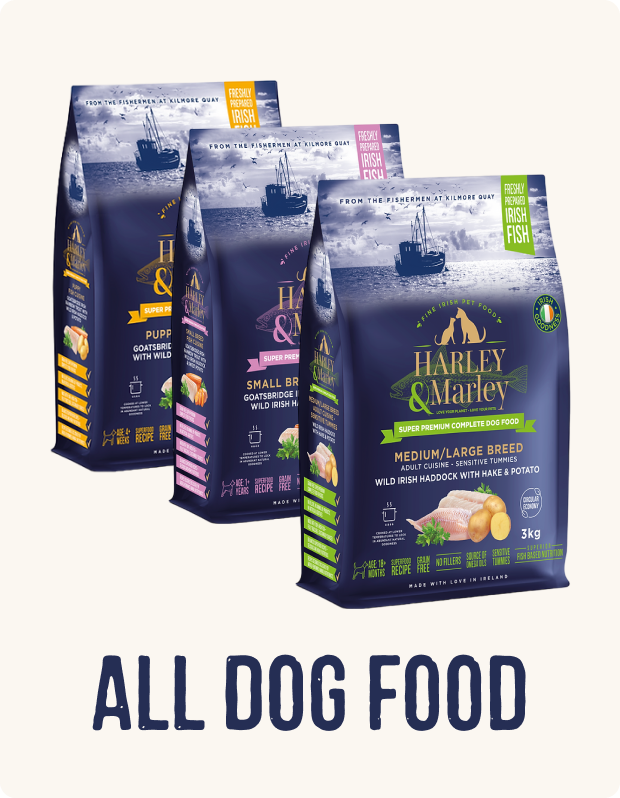
Harley & Marley offers Puppy Complete Food, Small Breed Complete Food and Medium/Large Breed Complete Food, alongside a fish oil blend made with salmon, mackerel and blue whiting. These options let you consider your dog’s food and supplementation together, without treating one product as a substitute for another.
For guidance on Harley & Marley’s range and your dog’s nutritional needs, contact Harley & Marley. A thoughtful next step can help you make a choice that feels right for your dog.
Frequently Asked Questions
What Is Fish Oil?
Fish oil is oil obtained from oily fish, including salmon, mackerel and sardines. It provides the omega-3 fatty acids EPA and DHA. Dog supplements come in forms such as liquid, capsules and soft chews. Choose a product formulated for dogs, since human supplements may contain ingredients unsafe for pets, including xylitol.
Why does fish oil work for some dogs but not others?
Results differ because dogs’ diets, health and skin problems differ. A dog already eating salmon, fish meal or linseed may get omega-3 from food, while itching could stem from parasites, allergies or another condition. The supplement’s EPA and DHA content, the serving given and consistent use also affect whether it suits a dog’s nutritional needs.
Can fish oil stop dog itching completely?
No, fish oil can’t be relied on to stop itching completely. EPA and DHA may help moderate inflammation associated with some itchy, dry skin, but itching can also have causes that a supplement won’t address. If scratching persists, worsens or comes with other changes, seek veterinary advice. Always see a vet if a problem persists.
Can puppies have omega 3 supplements?
Puppies may have omega-3 supplements, but a supplement should fit their age, diet and health needs. DHA supports healthy brain and eye development, yet that doesn’t mean every puppy needs extra oil. Puppy food may already provide omega-3, so consider the whole diet and discuss supplementation with a vet before adding it.
Food, treats or supplement?
Start by considering the dog’s complete diet, as food containing salmon, fish meal or linseed may already provide omega-3. Treats can be part of feeding, but their presence alone doesn’t show how much EPA or DHA a dog receives. For a supplement, compare those fatty acid amounts per serving rather than judging by the total oil weight.
How much should you give?
There isn’t one serving that suits every dog. The amount depends on the supplement, your dog’s current weight, age, health and diet. Follow the product’s feeding instructions rather than estimating from a human capsule or another dog’s serving. A vet can help assess the amount and frequency, particularly if your dog takes medication or has a health condition.