


What if your dog's daily supplement is missing the specific biological key required to actually function? Whilst many owners reach for flaxseed or plant oils, canine physiology is notoriously inefficient at converting these into active EPA and DHA, with conversion rates for ALA to EPA often falling below 1 per cent. This metabolic reality makes high-quality salmon oil for dogs a functional necessity rather than a luxury. You've likely felt the frustration of watching a once-glossy coat turn dull or seeing a senior dog struggle with stiff joints, all whilst worrying if the oil you've chosen is tainted by heavy metals or hidden contaminants.
We understand that you want purity and performance without the guesswork. This 2026 guide clarifies the confusion surrounding therapeutic dosages and explains how ethically sourced, Irish marine oils provide the clean label vitality your pet deserves. You'll discover how to identify superior freshness through TOTOX values and why a blend of salmon, mackerel, and blue whiting offers a more robust nutrient profile than standard imports. From visible coat brilliance to enhanced joint mobility, we're providing the expert roadmap to transform your dog's health through precise, science-led nutrition.
Key Takeaways
- Learn why modern canine diets often create pro-inflammatory imbalances and how marine-sourced Omega-3s restore essential biological harmony.
- Understand the functional roles of EPA and DHA in promoting cognitive development, retinal health, and long-term joint mobility.
- Recognise the critical markers of quality by analysing extraction methods and spotting the subtle signs of harmful oxidation in salmon oil for dogs.
- Master safe administration through precise, weight-based dosage calculations and gentle introduction techniques for dogs with sensitive stomachs.
- Explore the nutritional superiority of sustainable Irish-sourced marine oils and the benefits of a circular economy approach to pet health.
Why Salmon Oil is a Non-Negotiable for Modern Canine Health
Evolution didn't prepare your dog for a diet devoid of marine fats. Ancestral canines were opportunistic feeders, often scavenging nutrient-dense fish along coastlines to meet their biological requirements. Today, even premium commercial diets often fail to replicate this ancestral profile. Whilst modern processing ensures shelf stability and convenience, it frequently sacrifices the delicate omega-3 fatty acids that are vital for cellular integrity. This creates a nutritional void that salmon oil for dogs is uniquely qualified to fill, acting as a functional bridge between modern convenience and evolutionary necessity.
Without these essential lipids, systemic inflammation becomes a silent passenger in your dog's body. You might notice this as a persistent itch that won't resolve or a slight hesitation when they climb the stairs. These aren't just signs of ageing; they're often the outward manifestations of a cellular imbalance. By introducing a high-quality marine supplement, you're not just adding a "topper" to their bowl. You're providing the bioactive compounds required to modulate the body's inflammatory response and restore daily vitality.
Addressing the Omega-3 Deficiency Gap
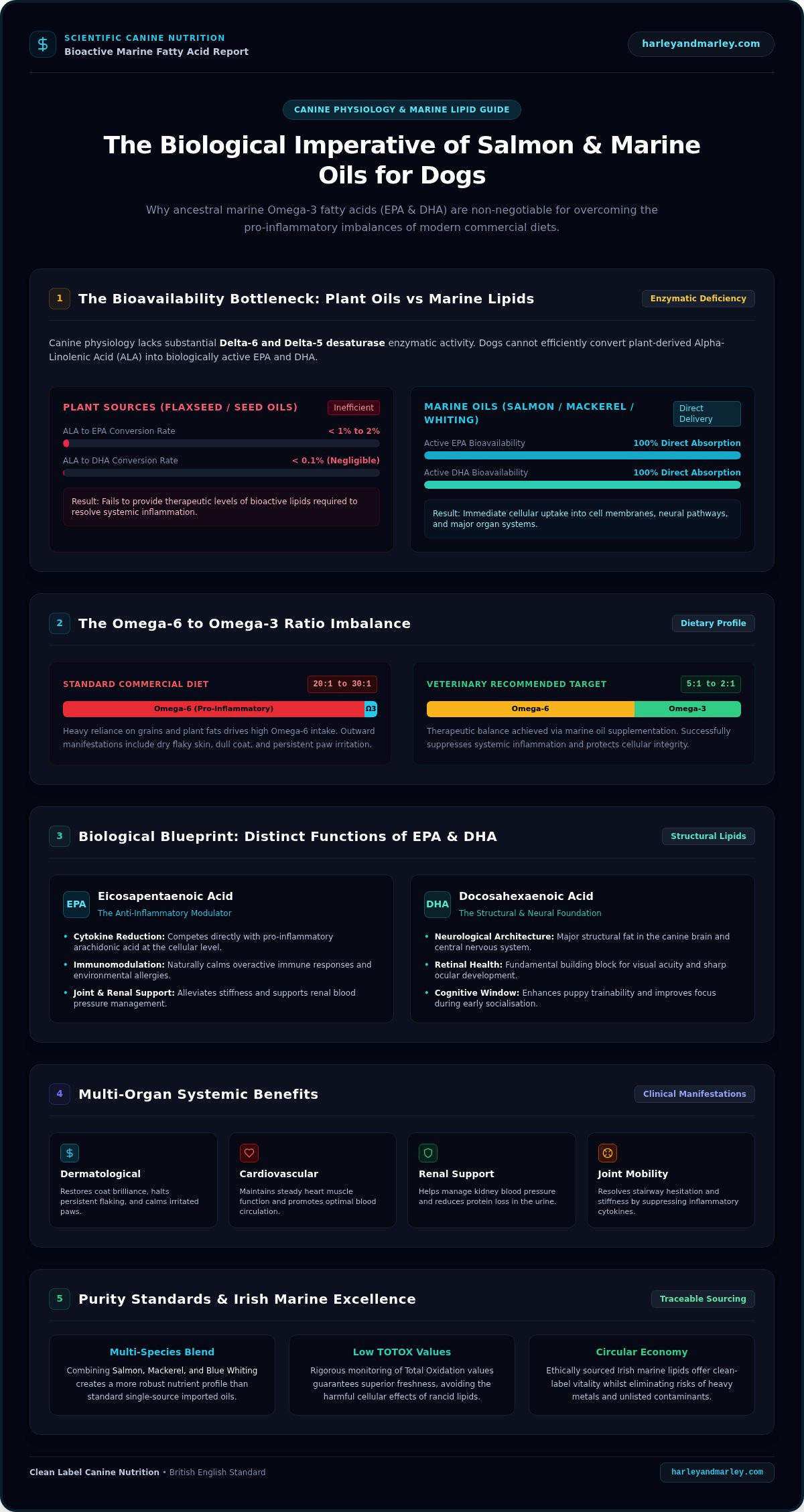
The majority of commercial pet foods rely heavily on plant-based fats and grains, which are naturally high in Omega-6. Whilst Omega-6 is necessary for growth and immune function, an overabundance drives pro-inflammatory pathways. Many standard kibbles reach ratios as high as 20:1 or 30:1, far exceeding what a dog's system can healthily manage. When this imbalance occurs, you'll see visible red flags: dry, flaky skin, a lacklustre coat, and paws that seem perpetually irritated. Veterinary experts agree that the optimal fatty acid ratio for canine health should ideally sit between 5:1 and 2:1 to effectively suppress systemic inflammation and support long-term wellness.
Beyond the Coat: Systemic Benefits of Marine Oils
The advantages of salmon oil for dogs extend far beneath the surface of the skin. Pure marine lipids play a sophisticated role in supporting cardiovascular health by maintaining steady heart muscle function and improving blood flow. For senior dogs, these oils provide essential renal support, helping to manage blood pressure within the kidneys and reducing protein loss in the urine. Furthermore, the EPA found in Irish-sourced fish oil acts as a natural immunomodulator. It helps to calm the overactive immune responses seen in allergic dogs, reducing the severity of environmental sensitivities without the need for harsh interventions. This holistic support ensures every major organ system benefits from the purity of the Atlantic's most potent nutrients.
The Biological Blueprint: How EPA and DHA Benefit Every Life Stage
Understanding the value of salmon oil for dogs requires a look at the two primary long-chain polyunsaturated fatty acids: Eicosapentaenoic acid (EPA) and Docosahexaenoic acid (DHA). Whilst plant-based sources like flaxseed provide Alpha-Linolenic Acid (ALA), dogs lack the biological machinery to convert it effectively. Specifically, they lack substantial Delta-6 and Delta-5 desaturase activity. Research indicates that conversion of ALA to EPA is typically under 2 per cent, whilst the conversion to DHA is virtually negligible at less than 0.1 per cent. This metabolic reality makes direct marine supplementation the only reliable way to ensure these bioactive lipids reach the tissues that need them most.
These fatty acids aren't just energy sources; they're structural components of every cell membrane in your dog's body. EPA primarily serves as a natural anti-inflammatory, competing with pro-inflammatory arachidonic acid to reduce the production of inflammatory cytokines. DHA, meanwhile, is a major structural fat in the brain and retina. Together, they form a functional powerhouse that supports health from the cellular level upwards, regardless of your dog's age or activity level.
Puppy Development: Building Smarter Brains
The "golden window" of puppyhood is a period of rapid neurological expansion where DHA acts as a fundamental building block. As a structural component of the central nervous system, DHA supports the development of sharp vision and cognitive function. Puppies receiving adequate levels of marine-sourced Omega-3s often demonstrate improved trainability and better focus during early socialisation. Integrating these fats through targeted Puppy Food Ireland: Fish-Based Nutrition for Growth ensures your puppy’s nervous system is primed for learning from day one.
Adult Maintenance: Skin, Coat, and Immune Resilience
In adult dogs, the focus shifts toward maintaining the integrity of the skin barrier. EPA acts as a potent natural anti-inflammatory that helps prevent environmental allergens from penetrating the skin's surface. This biological shield is what produces the legendary "salmon oil shine" and improves fur texture by nourishing the hair follicle from within. By supporting follicular health, you can often manage seasonal shedding more effectively and reduce the systemic itch that plagues many active dogs during the Irish summer months.
Senior Vitality: Supporting Ageing Joints and Minds
For senior dogs, salmon oil for dogs becomes a critical tool for managing comfort and mental clarity. EPA works by modulating the inflammatory pathways in joint tissues, which can lead to a reduced reliance on traditional NSAIDs for managing stiffness. At the same time, high-strength DHA helps combat Canine Cognitive Dysfunction (CCD) by protecting ageing neurons from oxidative stress. Following veterinary guidance on fish oil supplementation is essential here to ensure therapeutic levels are met safely. You can find more detail on How Fish Oil Supports Joint Health in Older Dogs to help maintain their quality of life. For those seeking the purest Irish-sourced options, our specialist fish oil provides the precise EPA/DHA ratios required for senior vitality.
Purity Over Price: Identifying High-Quality Salmon Oil for Dogs
Not all marine oils are created equal. Whilst the market is flooded with budget options, the biological cost of choosing an inferior product can be significant. High-quality salmon oil for dogs must be evaluated through the lens of stability and purity, particularly concerning oxidation. Polyunsaturated fats are notoriously fragile. When exposed to heat or oxygen, they undergo a chemical breakdown known as oxidation, resulting in rancid oil that can actually trigger the systemic inflammation you're trying to resolve. You can identify rancidity by a harsh, pungent odour rather than a fresh, mild fish scent. Expert veterinary guidance on fish oil supplementation emphasises that primary oxidation levels, measured as a Peroxide Value (PV), should remain at or below 5.0 meq/kg to ensure safety and efficacy.
Extraction methods play a pivotal role in maintaining this stability. Many mass-market brands use heat-treated chemical rendering to maximise yield, a process that frequently damages the delicate molecular bonds of the oil. In contrast, cold-pressed extraction uses minimal pressure and low temperatures to preserve the oil's natural integrity. This method ensures that the bioactive EPA and DHA remain intact and bioavailable. Beyond extraction, purity benchmarks like the International Fish Oil Standards (IFOS) are essential for screening heavy metals. Premium oils must meet strict limits, ensuring mercury, lead, and arsenic levels remain below 0.1 ppm, providing peace of mind for long-term daily use.
Marine vs. Plant Oils: The Bioavailability Debate
A common misconception amongst pet owners is that plant-based oils, such as flaxseed, are suitable alternatives to marine fats. Whilst flaxseed contains Alpha-Linolenic Acid (ALA), dogs are biologically inefficient at converting this into the active forms of EPA and DHA. Research shows that less than 2 per cent of ALA is converted to EPA, and the conversion to DHA is virtually non-existent. Direct marine supplementation is the only way to provide these lipids in a format the canine body can immediately utilise for cellular repair. Cold-pressed extraction is superior for preserving long-chain fatty acids because it avoids the thermal degradation that occurs during standard industrial refining.
Provenance Matters: Scottish vs. Irish vs. Global Sourcing
The origin of your fish oil dictates its environmental and nutritional footprint. North Atlantic sourcing, particularly from Irish coastal waters, adheres to some of the world's highest environmental standards. "Clean label" supplements prioritise transparency, avoiding the synthetic antioxidants and fillers found in generic imports. By choosing oils derived from local, sustainable fisheries, you ensure a shorter supply chain and maximum freshness. This commitment to quality is a cornerstone of Fish-Based Dog Food: The Ultimate Guide to Functional Canine Nutrition in 2026, where we explore how provenance directly impacts the therapeutic potency of your dog's diet.
Best Practices for Supplementation: Dosage and Administration
Precision is the difference between a supplement that works and one that simply passes through your dog's system. Administering salmon oil for dogs requires more than a casual splash over a bowl of kibble. It demands a methodical approach based on your dog's metabolic weight and current health status. To avoid overwhelming the digestive system, you must titrate the dose upwards, allowing the gallbladder and pancreas time to adjust to the increased lipid load. Signs of success typically manifest within three to six weeks, appearing first as a softer coat texture and later as improved mobility or cognitive focus in senior dogs.
Whilst veterinary standards suggest a maintenance dose of 50 to 75 mg of combined EPA and DHA per kilogram of body weight, every dog is an individual. If you're managing clinical conditions like osteoarthritis, these requirements may increase under professional supervision. Always keep a log of changes in your dog's behaviour or physical appearance during the first month of supplementation to ensure you've found their "sweet spot" for vitality.
A Step-by-Step Guide to Starting Salmon Oil
Begin by offering just a quarter of the recommended daily dose for the first three days. This cautious start helps you assess digestive tolerance and prevents the sudden onset of loose stools. Over a period of 14 days, gradually increase the amount until you reach the full therapeutic target. During this transition, monitor your dog's energy levels and stool consistency closely. If you notice any digestive upset, consult our Dog Food for Loose Stools Ireland: 2026 Digestibility Guide to understand how to balance their gut health effectively.
Storage and Handling: Keeping it Fresh
Omega-3 fatty acids are exceptionally sensitive to light, heat, and oxygen. To protect these fragile molecular bonds, always choose oil housed in opaque or UV-protected bottles. In Ireland’s temperate but often humid climate, refrigeration is the gold standard for preservation after opening. Always perform a quick "smell test" before serving. Fresh salmon oil for dogs should have a mild, oceanic scent; if it smells sharply acidic or unpleasantly "funky," it has likely oxidised and should be discarded to avoid causing oxidative stress in your pet.
Managing Fussy Eaters
For dogs who are hesitant with new additions, marine oil acts as a natural palatability enhancer. Its rich aroma can make dry kibble significantly more appealing to selective eaters. You can also mix the oil with wet food or drizzle it over healthy, fish-based treats to ensure they receive their daily requirement without fuss. If you’re looking for a premium, sustainably sourced option to boost your pet's vitality, order our Irish-made fish oil to experience the Harley & Marley difference in every drop.
The Harley & Marley Difference: Sustainable Irish Marine Excellence
Choosing the right salmon oil for dogs involves more than just reading a label; it requires an understanding of the ethics and environment behind the bottle. We believe in a circular economy that respects our oceans whilst providing unparalleled nutrition. By utilising high-quality marine trim from human-grade fisheries, we ensure that nutrient-dense resources are never wasted. This sustainable approach allows us to create a superior functional supplement that supports both your dog's vitality and the health of our Irish coastal ecosystems. Transparency is our foundation, and we take immense pride in the vessel-to-bowl traceability of every drop we produce.
Our formulation is intentionally sophisticated. Whilst many brands offer single-species farmed oil, we've developed a proprietary blend that incorporates wild Irish mackerel and blue whiting alongside premium salmon oil. This multi-species synergy significantly enhances the nutritional profile. Research indicates that this specific combination increases iron by 361 per cent and magnesium by 223 per cent compared to plain farmed salmon oil. By sourcing locally from Irish waters, we provide a fresher, more potent product that hasn't spent weeks in transit across global supply chains, ensuring the bioactive lipids remain at their peak effectiveness.
Conscious Nutrition for the Modern Dog Owner
The decision to focus exclusively on marine nutrition is both a health-driven and an ethical one. We've seen first-hand how sensitive paws and digestive systems thrive when inflammatory meat-based proteins are removed from the equation. Our "no-nasty" promise is absolute: you'll find no meat, no grains, and no synthetic fillers in our range. By supporting an Irish-owned business, you're also investing in local craftsmanship and a pet food industry that prioritises environmental responsibility over mass-market rendering. It's a cleaner, more honest way to nourish your companion.
A Holistic Approach to Canine Vitality
True health isn't achieved through isolated supplements but through a consistent, holistic lifestyle. We advocate for a fish-only diet because it naturally aligns with a dog's physiological needs for high-quality protein and essential fatty acids. To help you maintain this consistency, our monthly food box ensures that your supply of fresh, grain-free meals and high-strength oils never runs low. This steady intake is what allows the visible benefits-the brilliant coat shine and the renewed spring in a senior dog's step-to become a permanent reality. If you're ready to elevate your pet's health with the purity of the North Atlantic, explore the Harley & Marley Fish Oil Range today and see the difference that sustainable Irish excellence makes.
Elevating Your Dog's Health Through Marine Precision
The journey toward optimal canine health begins with acknowledging that plant-based alternatives simply cannot replicate the bioavailable potency of marine lipids. By choosing a high-quality salmon oil for dogs, you're providing the specific EPA and DHA required to modulate inflammation and support cognitive function across every life stage. It's about moving beyond surface-level shine to achieve systemic vitality through expert-led, fish-only nutrition.
As an Irish-owned sustainable business, we prioritise transparency and purity in every bottle. Our cold-pressed oils ensure maximum nutrient retention, avoiding the thermal damage often found in mass-market imports. This commitment to the circular economy means your pet receives the freshest nutrients whilst supporting local coastal communities. The transformation in your dog's mobility and coat brilliance is a tangible result of science-backed supplementation. It's time to bridge the nutritional gap with a supplement that respects both your pet's biology and the environment.
Invest in your dog’s vitality with our premium Irish Fish Oil and experience the joy of a thriving, healthy companion.
Frequently Asked Questions
How long does it take for salmon oil to work on a dog’s skin?
Visible improvements in skin hydration and coat texture typically appear within three to six weeks of consistent supplementation. This timeframe aligns with the natural cycle of canine skin cell regeneration. Whilst some owners notice a reduction in scratching sooner, the full structural benefits of salmon oil for dogs require several weeks to manifest at the cellular level. Consistency is vital during this initial period to ensure the skin barrier is fully reinforced.
Can salmon oil cause diarrhoea or loose stools in dogs?
Salmon oil can cause digestive upset if introduced too rapidly or administered in excessive quantities. Because it's a concentrated lipid, a dog's gallbladder and pancreas need time to adapt to the increased fat intake. To prevent loose stools, you should always start with a quarter of the recommended dose and gradually increase it over a fortnight. If symptoms persist, it might indicate the dose is too high for your dog's specific metabolism.
Is salmon oil better for dogs than flaxseed or coconut oil?
Marine-sourced oils are superior to plant-based alternatives because they provide direct, bioavailable EPA and DHA. Dogs lack the enzymes to effectively convert the Alpha-Linolenic Acid (ALA) found in flaxseed into the active forms required for health. Whilst coconut oil offers medium-chain triglycerides for energy, it doesn't provide the anti-inflammatory Omega-3s essential for joint and skin support. Choosing a cold-pressed fish oil ensures your pet receives functional nutrients they can actually use.
Can I give my puppy salmon oil every day?
Daily supplementation is highly beneficial for puppies as it provides the DHA necessary for healthy brain and retinal development. This "golden window" of growth is the most critical time to ensure their nervous system is supported by high-quality marine fats. You must follow weight-specific guidelines to avoid over-supplementation. Daily use helps improve cognitive focus and trainability, setting a strong foundation for their lifelong health and immune resilience.
Does salmon oil make a dog’s breath smell like fish?
Fresh, high-quality oil should not cause persistent fishy breath if the product is stored correctly and hasn't oxidised. A mild oceanic scent immediately after eating is normal, but a strong, rancid odour often indicates the oil has "gone off" or is of poor quality. Using a premium salmon oil for dogs that is cold-pressed and kept refrigerated will minimise any lingering smells whilst providing the maximum nutritional benefit for your pet.
Can salmon oil help with my dog’s arthritis and joint pain?
EPA acts as a potent natural anti-inflammatory that can significantly reduce joint inflammation and improve mobility in dogs with arthritis. It works by inhibiting the enzymes that break down joint cartilage, providing a functional alternative or support to traditional pain management. Many owners report that their senior dogs show a renewed willingness to exercise and play after several weeks of therapeutic dosing, demonstrating the oil's ability to support comfort and vitality.
How should I store salmon oil to prevent it from going rancid?
You should store your oil in a cool, dark place and ideally keep it refrigerated once the bottle has been opened. Exposure to light, heat, and oxygen triggers oxidation, which turns the beneficial fats into harmful free radicals. Using opaque or UV-protected glass bottles helps maintain the oil's integrity. Always ensure the cap is tightly sealed after every use to prevent air from entering and compromising the freshness of the fragile Omega-3s.
Is it possible to give my dog too much salmon oil?
It is possible to exceed the safe upper limit, which can lead to weight gain, digestive issues, or interference with blood clotting. The National Research Council (NRC) provides specific safety ceilings based on a dog's metabolic weight and caloric intake. Over-supplementation can also increase the body's requirement for Vitamin E. Sticking to the recommended dosage ensures your dog receives the therapeutic benefits of marine lipids without the risks associated with excessive fat loading.