


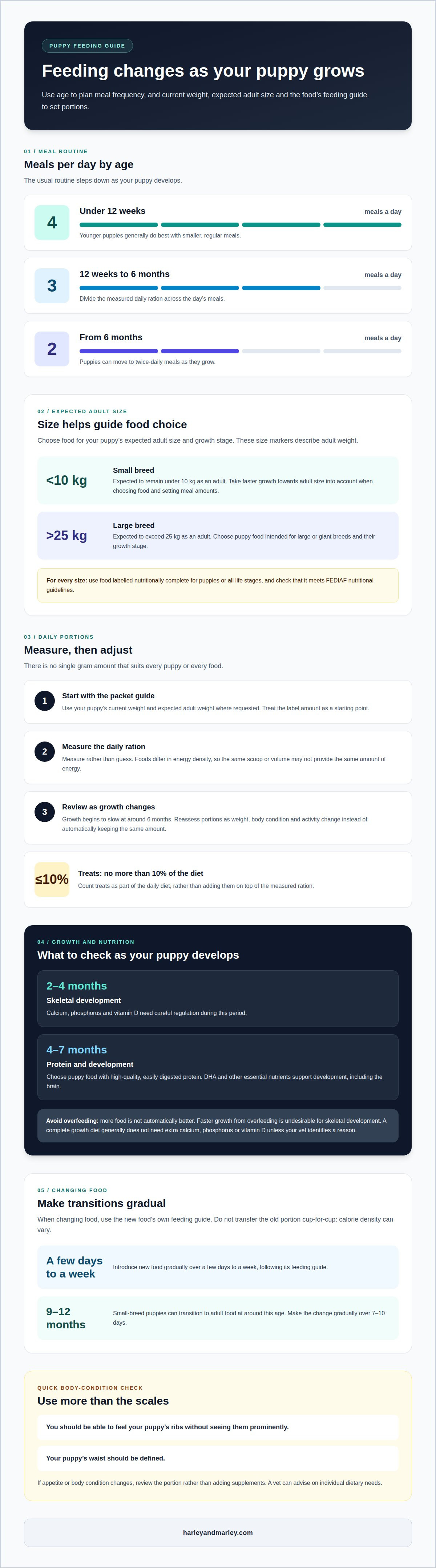
The right amount to feed isn’t a fixed scoop: it depends on your puppy’s current weight, expected adult size and the food’s feeding guidance. A puppy nutrition guide for the first year should also account for changing meal frequency: puppies under 12 weeks usually have four meals a day, those from 12 weeks to 6 months usually have three, and from 6 months they can move to two meals a day.
It’s natural to focus on portion size, especially as your puppy grows quickly. But meal frequency matters too: younger puppies generally do best with smaller, regular meals, and their needs change as they grow. Measure the daily amount rather than guessing, use the food label as a starting point, and adjust portions to your puppy’s individual needs.
This guide explains how to match portions to your puppy’s weight and expected adult size, set a sensible meal routine, and introduce food gradually. You’ll also learn which label details to look for when choosing nutritionally complete puppy food to support steady growth through the first year.
Key Takeaways
- Use your puppy’s current weight and expected adult size to make sense of portion guidance, then tailor the daily amount as growth changes.
- Build a meal routine around age: the right frequency shifts as your puppy develops.
- Look beyond front-of-pack claims and learn which label details indicate food is suitable for growth.
- Choose food with your puppy’s eventual size in mind, particularly for large and giant breeds.
What do I need to be aware of with a small breed puppy?
Choose puppy food that suits your dog’s expected adult size and nutritional needs, then adjust portions as growth and activity change. For small breeds, take their faster growth towards adult size into account when choosing food and setting meal amounts.
Choosing Food for Breed and Size
Food suited to breed and expected adult size is formulated to meet a puppy’s needs during growth. Small-breed puppies are expected to remain under 10 kg as adults, while large-breed puppies exceed 25 kg. For large and giant breeds, choose puppy food intended for their size and growth stage, and look for food that meets FEDIAF nutritional guidelines. A complete food labelled for puppies or all life stages helps make its intended use clear.
When comparing manufacturers, look for clear information about nutritional formulation and quality-control processes. WSAVA notes that terms such as “holistic” and “premium” have little practical value when assessing nutrition. Puppy food prices in Ireland vary by product and pack size. Look for complete foods formulated for puppies, including options tailored to different size categories.
Adjusting Food Through Growth
Adjusting food means matching the measured daily portion to your puppy’s changing energy needs and growth. Growth begins to slow at around 6 months, so reassess the amount rather than continuing the same portion automatically. The packet’s feeding guide is a starting point; your puppy’s individual needs also matter. Keep treats to no more than 10% of the diet as a general rule.
For Ireland, use food labelled nutritionally complete for puppies or all life stages, and follow the packet’s feeding guidance. A vet can advise on a puppy’s individual dietary needs. Small-breed puppies can transition to adult food at around 9-12 months; make the change gradually over 7-10 days.
Unsafe Foods and Ingredients
Unsafe foods are those not suitable for puppies or not intended as part of their diet. Keep human foods, table scraps and unapproved supplements out of reach, and offer treats only in measured amounts. When choosing any ingredient or supplement, use food formulated for dogs and seek veterinary advice if your puppy has a specific dietary need.
If you think your puppy has eaten something unsafe, contact a veterinary practice promptly and explain what was eaten and when. Avoid homemade puppy-formula recipes. If the mother’s milk isn’t available, use a specially formulated puppy milk replacer.
What label words matter most on puppy food?
Choose food labelled as suitable for puppy growth, and look beyond claims such as “premium”. Check that the nutritional information and feeding guidance suit your puppy’s development, from early skeletal growth to changing energy needs.
Nutrients for Growth and Health
Growth nutrients include protein, minerals and other essentials that support a puppy’s developing body. Check the label for a balanced puppy formula, rather than an adult recipe.
Between two and four months, calcium, phosphorus and vitamin D need careful regulation to support skeletal development. From four to seven months, choose puppy food with high-quality, easily digested protein. DHA and other essential nutrients support development, including the brain. A nutritionally complete formula also provides a sound foundation for overall health, including skin.
Balanced Nutrition During Growth
Balanced nutrition provides energy and essential nutrients in appropriate amounts as your puppy grows. More food isn’t automatically better: overfeeding can speed up growth, which is undesirable for skeletal development.
Use the feeding guide as a starting point, measure portions, and monitor your puppy’s weight and body condition. You should be able to feel your puppy’s ribs without seeing them prominently, and their waist should be defined. If appetite or body condition changes, review the portion rather than adding supplements. A complete growth diet generally doesn’t need extra calcium, phosphorus or vitamin D unless your vet identifies a reason.
Growth Stages and Nutritional Needs
Growth stages reflect how nutritional needs change with age and expected adult size. Choosing food for the right stage helps you avoid switching to adult food too early.
Puppies’ needs change around eight weeks, and the main growth phase spans months two to seven. A large-breed puppy may keep growing for longer than a medium-sized puppy, so adult size matters alongside age. Many puppies aged 9-12 months are close to adult size, but that doesn’t mean every puppy is ready to switch.
Read the life-stage wording and feeding directions together. “All life stages” means the food is formulated for reproduction and growth as well as other life stages. During growth, measure portions and review them as your puppy’s weight, body condition and activity change.
Feeding amounts by weight and expected adult size
Your puppy’s daily portion depends on their current weight, expected adult size and the food’s energy density. Start with the packet’s feeding guide, using current weight and expected adult weight where requested. There’s no single gram amount that suits every puppy: foods provide different amounts of energy in the same volume. A scoop used for one dry food may not measure the right portion of another.
Measure the daily ration carefully rather than estimating. When changing foods, don’t transfer the old portion cup-for-cup: calorie density varies, so the same volume can provide a different amount of energy. Introduce new food gradually over a few days to a week, following its own feeding guide. Count treats as part of the daily diet instead of adding them on top of the measured ration.
Divide the daily amount into meals that suit your puppy’s age and routine. Younger puppies generally need three to four meals a day; puppies are generally fed three meals from weaning to 6 months, then twice daily from 6 to 12 months. These are useful patterns, not a reason to serve the whole daily ration in fewer, larger meals. Keep meal times consistent, and spread the measured amount across them.
Reassess the portion as your puppy grows. Growth begins to slow at around 6 months, and energy needs may change with it. Compare weight and body condition over time: ribs should be felt without being too visible, and a healthy puppy has a defined waist. If weight or condition changes, adjust the daily amount in small steps rather than making a sudden cut or increase.
Keep fresh water available all day, including with dry food, and check and refill the bowl regularly. A steady routine, measured portions and fresh water support healthy growth through the first year. Regular weight checks can help you see when to adjust the packet’s starting amount.
Puppy meal frequency by age
Meal frequency changes as puppies grow, so divide the daily ration into smaller servings instead of offering it all at once. Age is a useful starting point, but breed and activity also shape the routine. Keep meal times consistent and spread the measured daily portion across them.
During the first three weeks, puppies feed exclusively on their mother’s milk. As weaning begins, split puppy meals into four portions. A puppy under 12 weeks would usually have four meals daily; from about 12 weeks, three meals are typical. From 12 weeks to 6 months, continue three meals a day, then many puppies can move to two.
Breed size can affect the schedule. Small-breed puppies need three meals daily until four months old, then two meals daily between four and ten months. Large-breed puppies should have three meals a day until six months, followed by two meals daily between six months and a year. These patterns show why age alone doesn’t determine every puppy’s routine.
After 6 months, most puppies can transition towards two meals daily, with breed and activity informing the timing. Keep the total daily amount the same when dividing meals; changing the number of servings shouldn’t mean adding extra food. If your puppy eats dry food, measure the daily ration first, then portion it between meals. Fresh water should remain available throughout the day.
Adult dogs are normally fed twice daily, but a growing puppy may need more frequent meals for longer. A small breed may be ready for two meals earlier than a large breed. Keep a routine that suits your puppy’s age and appetite, and adjust portions as growth and energy needs change. For a food formulated for puppies, explore puppy food.
Harley & Marley: Puppy Complete Food
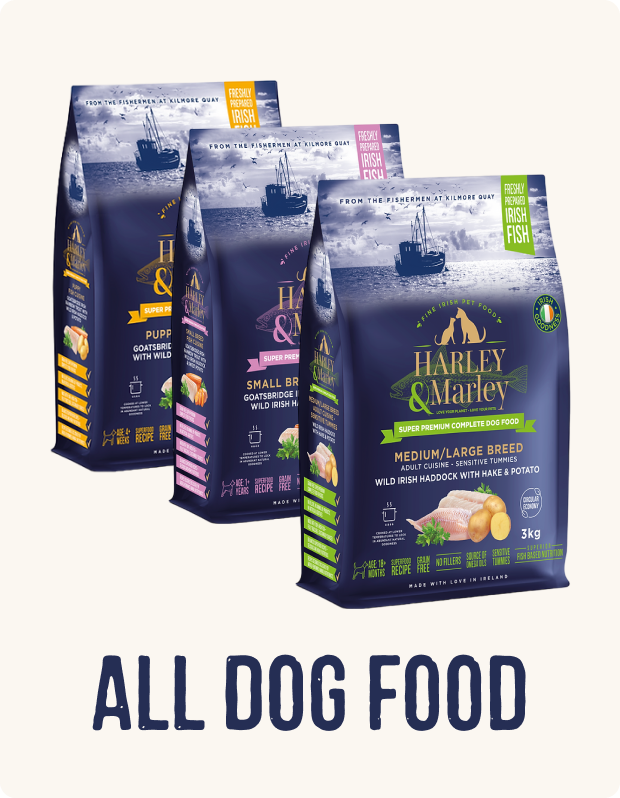
Harley & Marley’s Puppy Complete Food is a complete-food option for puppies during growth. Choose food with your puppy’s needs and expected adult size in mind. The range also includes Small Breed Complete Food and Medium/Large Breed Complete Food.
Follow the feeding guidance on the packaging, then monitor your puppy’s weight and body condition as they grow. If you’re switching from another food, make the transition gradually to help reduce the chance of digestive upset. Puppy Complete Food can be a practical choice when you’re selecting a complete food for your puppy’s routine.
Contact Harley & Marley to discuss food for your puppy.
Make your puppy’s next food choice with confidence
Your puppy’s needs will keep changing as they develop. Let growth, body condition and eating habits guide your decisions, rather than treating your first food choice as permanent. A puppy nutrition guide for the first year is most useful when it helps you build a routine you can review and adapt.
Harley & Marley offers Puppy Complete Food, Small Breed Complete Food and Medium/Large Breed Complete Food, giving you options suited to different life stages and sizes. If you’re deciding which food may fit your puppy’s needs, contact Harley & Marley for puppy feeding help.
Small, thoughtful adjustments can make feeding easier as your puppy grows. Keep learning what works for your dog, and enjoy each new stage together. For readers who want more support with their own digestive wellness, Healthy Gut offers science-backed supplements designed to optimise health.
Frequently Asked Questions
How much should you feed your puppy?
Use the daily amount on the food label as a starting point, then adapt it to your puppy’s growth and body condition. If you switch to food with a different calorie density, for example, the same scoop may provide a different amount of energy. Measure food rather than estimating, and count treats as part of the daily diet. Use this puppy nutrition guide for the first year to revisit portions as your puppy develops.
What is mixed feeding for puppies?
Mixed feeding means serving both dry and wet food as part of your puppy’s diet. Account for both foods within the daily ration rather than adding a full serving of each. Introduce the change gradually over several days to reduce the likelihood of digestive problems. If you change the food, follow the new product’s feeding directions, as calorie density can differ.
When to switch puppy to two meals a day?
Many puppies can move towards two meals a day from 6 months, but breed and activity affect the timing. For instance, small-breed puppies are generally fed three meals until four months, then two meals between four and ten months. Large-breed puppies typically have three meals until six months, then two daily. Keep the daily ration measured as you redistribute it, rather than increasing the total.
Can puppies drink milk?
During their first few weeks, puppies can drink their mother’s milk or specially formulated puppy milk replacer. Gradual weaning can begin at one month old, with solid food introduced as part of the process. If a puppy can’t receive maternal milk, use a puppy milk replacer rather than making formula from an untested recipe. Choose food intended for puppies as their diet develops.
Does “premium” mean nutritionally better?
No. WSAVA notes that marketing terms such as “premium” have little practical value when assessing nutritional quality. Look instead for a label stating that the food is nutritionally complete for puppies or all life stages, and check that its feeding guidance suits your puppy. The word alone doesn’t show whether a food is appropriate for growth, so assess its nutritional information and life-stage wording.
Grain-Free Puppy Food: Is It Right for Your Pup?
Grain-free food can be an option, but the label should still show that it’s nutritionally complete for puppies or all life stages. Grain-free wording alone doesn’t establish that a food meets your puppy’s growth needs. Compare life-stage statements and feeding directions, and consider your puppy’s individual dietary needs. Harley & Marley offers grain-free dog food, so choose a formula according to your puppy’s needs.