


Grain-free isn’t automatically the smartest choice for a growing puppy. The best food for puppy brain development is a complete puppy food with a balanced nutrient profile, including omega-3 fatty acids such as DHA, which support cognitive function and brain and eye development. A healthy choice is about the nutrition, not a single label claim.
It’s natural to want every meal to support your puppy’s growth, but food labels can make it hard to know what matters most. This guide explains how to assess puppy food, which nutrients support brain and eye development, and how to choose between grain-free and grain-inclusive options. You’ll also see why complete, puppy-specific food matters as your dog grows, helping you make a more confident choice at mealtimes.
Key Takeaways
- Look for a complete, puppy-specific food and assess its overall nutritional balance, not just a single ingredient or label claim.
- DHA and other omega-3 fatty acids support brain and eye development, so consider how these nutrients feature in your puppy’s diet.
- Grain-free food isn’t automatically better; weigh your puppy’s dietary needs and any diagnosed intolerance when choosing.
- Harley & Marley Puppy Complete Food is an option to consider when choosing food made for a puppy’s life stage.
1. How Can You Tell Puppy Food is “Healthy”?
A healthy puppy diet supplies nutrients for development, rather than relying on one fashionable ingredient. Omega-3 fatty acids, particularly DHA, support cognitive function and brain and eye development. These nutrients matter as puppies learn, respond to sounds and develop vision. DHA is an omega-3 fatty acid, so look for it specifically when assessing food for growing dogs.
For a puppy in Ireland, fish and fish oil are useful ingredients to look for when considering omega-3 intake. Read the ingredient and nutrition information, and look for DHA and EPA where these are identified; the word “fish” alone doesn’t tell you their amounts. Fish oil provides healthy fats that support energy and brain development, but a food’s overall nutrient profile matters more than one ingredient.
B vitamins also belong in the nutritional picture. They’re found in foods such as meat, fish, vegetables and eggs, which can feature in a balanced diet. Rather than adding ingredients at random, assess the puppy food as a whole: its nutrients need to work together to support growth, cognitive development, immune function and digestion. A puppy’s stomach may also respond poorly to sudden changes, so keep feeding consistent when assessing a food.
Treats can displace nutrients supplied by meals if they take up too much of the diet. Keep them to no more than 10% of a puppy’s daily caloric intake. Supplements also need care: give them only when a veterinarian recommends them. A homemade diet can cause problems if it lacks balance; careful planning with a veterinarian or canine nutritionist is needed. Nutritional deficiencies can contribute to poor vision and reduced learning abilities, so avoid guessing at amounts or combining supplements with a homemade recipe without professional guidance.
2. Nutrients supporting puppy brain and eye development
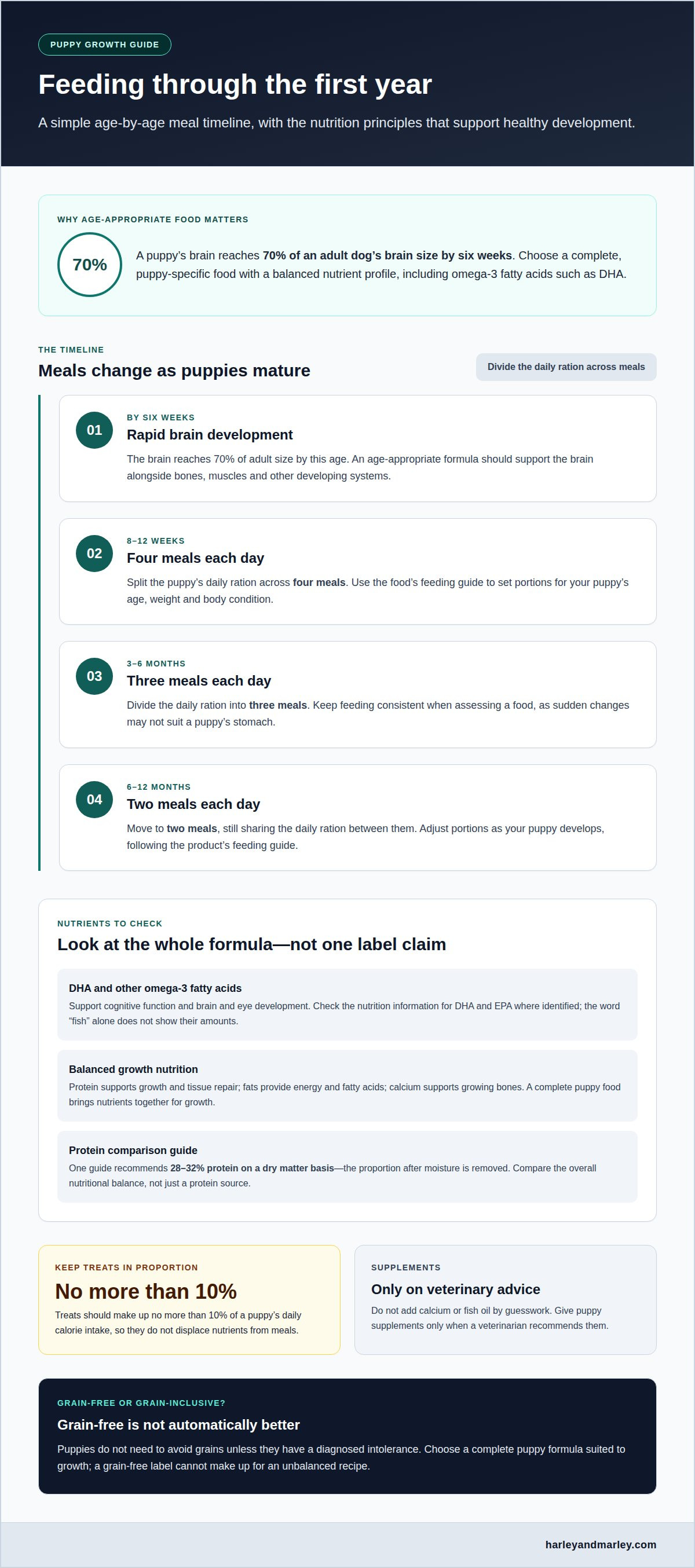
A puppy’s brain reaches 70% of an adult dog’s brain size by six weeks of age. This rapid growth makes an age-appropriate formula crucial: nutrients must support the brain alongside bones, muscles and other developing systems. Puppies fed food enriched with DHA were quicker at solving a problem than puppies given a balanced diet without added DHA enrichment. For owners choosing the best food for puppy brain development, this highlights the value of considering the overall formula, not one nutrient alone.
Other nutrients contribute in different ways. Calcium supports growing bones, while healthy fats provide energy and support brain development. Antioxidant-rich ingredients, such as blueberries, kale and raspberries, can help combat oxidative stress. Vegetables can provide useful nutrients, but extras should complement, not replace, a puppy’s complete food. Nutritional deficiencies can affect vision and learning, so a growth-focused formula matters more than adding individual ingredients.
Breed size affects feeding choices because growth patterns differ. Small-breed puppies are expected to remain under 10 kg as adults; medium-breed puppies may weigh 10–25 kg, while large-breed puppies are expected to exceed 25 kg. Large and giant breeds can face musculoskeletal problems if overfed or given too much calcium too soon. Choose food suited to expected adult size, and use its feeding guide to set portions according to age, weight and body condition.
Meal frequency changes as puppies mature: feed four meals daily from 8–12 weeks, three meals daily from 3–6 months, then two meals daily from 6–12 months. Divide the daily ration across those meals rather than adding extra food. Choosing the best food for puppy brain development also means feeding an amount suited to the individual puppy. Follow the product’s feeding guide and adjust portions as your dog develops.
3. Does grain-free mean better for puppies?
No. Puppies don’t need to avoid grains unless they have a diagnosed intolerance, so grain-free alone doesn’t mean a food is healthier. Compare complete puppy formulas and check that each supports growth with balanced nutrition. Grain-free puppy food should meet FEDIAF nutritional guidelines. A grain-free label can’t make up for an unbalanced recipe.
Protein supports the growth and repair of muscle and other tissues, while fats provide energy and supply fatty acids. A guide recommends puppy food with 28–32% protein on a dry matter basis. This figure describes the proportion after removing moisture, making it more useful when comparing foods with different water contents. Protein sources can include meat, fish and eggs; focus on the formula’s overall nutritional balance, not a single source.
Food sensitivity is different from simply preferring grain-free kibble. A diagnosed intolerance may affect which ingredients suit an individual puppy, but removing grains without a diagnosis isn’t automatically beneficial. If a food seems to trigger a reaction, note its ingredients and discuss the pattern with a veterinarian. Avoid changing several parts of the diet at once, as that makes it harder to identify the cause.
Overfeeding can increase musculoskeletal risks, particularly for large and giant-breed puppies. Excess calcium too soon can add to that concern. Don’t add calcium or fish oil supplements by guesswork. Give puppy supplements only when a veterinarian recommends them: a growing dog needs balanced nutrition, not extra nutrients in isolation.
To choose between grain-free and grain-inclusive food, first consider any diagnosed intolerance, then assess whether the complete formula is suitable for growth. Protein matters, but so do fats and calcium balance. There isn’t one perfect ingredient list for every puppy. The best choice supports healthy brain development and physical growth without unnecessary exclusions or additions.
4. Complete and balanced puppy food
Choose food labelled “complete” and intended for puppies. Complete food is formulated to provide full nutrition, while a puppy-specific recipe accounts for the demands of growth. Adult dog food isn’t an equivalent substitute: puppies need nutrients that support developing bones and muscles, as well as brain and immune system function. Check the life-stage wording on the pack before feeding it as your puppy’s main diet.
In Ireland, look for puppy food that meets FEDIAF nutritional guidelines. This gives owners a recognised nutritional reference when comparing complete formulas, including grain-free options. Check the feeding guide, ingredients and nutrient levels together; no single ingredient proves that a food is balanced. Puppy food should contain around 8.5% fat, according to the figures used in this guide. Fat supplies energy, and the formula should also provide nutrients needed for growth.
Complete puppy food can provide DHA as part of the diet, so don’t add DHA supplements without veterinary advice. Give puppy supplements only when recommended by a veterinarian. This helps avoid adding nutrients unnecessarily to a carefully formulated meal. Wet and dry food can both suit puppies when they’re reputable, complete formulas made for their life stage. Choose a texture your dog eats consistently, then follow the feeding directions.
For owners asking which is the best food for puppy brain development in Ireland, start with a complete, puppy-specific formula that includes DHA among its nutrients. The best food for puppy brain development is not defined by a grain-free claim or one standout ingredient; check the label and feeding guidance against your puppy’s needs. Treats should remain extras, not replace balanced meals. If you’re looking for a puppy-specific option, explore complete puppy food and consider its feeding guidance for your growing dog.
Harley & Marley: Puppy Complete Food
Harley & Marley’s Puppy Complete Food is a fish-based option for owners choosing a complete diet for a growing dog. It offers a practical next step after comparing puppy-specific foods, nutrient balance and life-stage suitability. Select food according to your puppy’s needs and follow its feeding guidance.
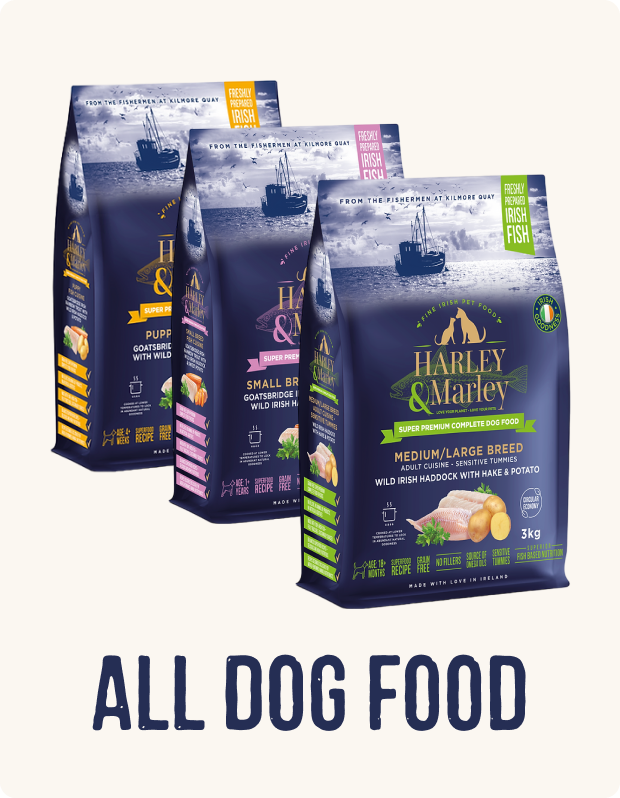
Breed size can help guide your choice as your dog grows. Harley & Marley offers Small Breed Complete Food and Medium/Large Breed Complete Food, as well as Senior Dog Complete Food for a later life stage. These options let you consider food suited to your dog’s size or age without treating grain-free as a measure of nutritional quality.
For advice about choosing a suitable option, contact Harley & Marley.
Make your puppy’s next meal an informed choice
Choosing the best food for puppy brain development is only one part of supporting a young dog. Keep the decision practical: notice how your puppy eats, whether their digestion stays settled, and how their energy and body condition change as they grow. These everyday observations can help you judge whether their current routine suits them.
Keep a brief record of feeding habits and any changes you notice. If you’re unsure how food-label information applies to your puppy, use those observations to guide a conversation about suitable options. Choosing food can feel more manageable when you consider your puppy as an individual, rather than following a trend or focusing on one ingredient.
For a considered next step, contact Harley & Marley about your puppy’s food. You’re building a routine that can grow alongside your dog, one meal at a time.
Frequently Asked Questions
How Can You Tell Puppy Food is “Healthy”?
Start by checking that the packaging identifies the food as complete and suitable for puppies. Compare the feeding guide with your puppy’s routine and consider whether the recommended portion is practical to measure. For example, weigh kibble instead of estimating by eye, and include treats when considering daily intake. Keep a record of appetite, stools and energy to spot changes over time.
How Do I Choose the Right Puppy Food for My Puppy’s Breed and Size?
Choose a puppy formula that suits your dog’s expected adult size, then follow its feeding directions as your puppy grows. Small-breed and large-breed puppies can have different growth needs, so don’t choose food by age alone. If you’re unsure of your puppy’s likely adult size, consider the parents’ size and your puppy’s growth pattern when discussing food choices with your veterinary practice.
What Nutrients Does a Puppy Actually Need?
Puppies need a balanced supply of energy, protein, fats, vitamins and minerals to support growth. DHA, an omega-3 fatty acid, is associated with brain and eye development; calcium supports developing bones. B vitamins also contribute to normal body function. Rather than combining separate ingredients at home, choose a complete puppy food and use its feeding guidance. Give supplements only when a veterinarian recommends them.
Are Dry or Wet Foods Better for a Growing Puppy’s Health?
Neither format is automatically better: wet and dry food can both suit a growing puppy when they’re reputable, complete formulas made for puppies. Consider which texture your puppy eats consistently and how easily you can measure the recommended portion. If you combine formats, account for both in the daily ration rather than feeding a full portion of each. Keep fresh drinking water available alongside meals.
Are There Any Foods I Should Avoid Feeding My Puppy?
Keep chocolate, garlic, grapes and raisins away from puppies, as these foods are toxic to dogs. Avoid offering nuts, including peanuts and macadamia nuts, too. Store risky foods securely and make sure everyone in the household knows not to share them. If your puppy eats something unsuitable or develops symptoms, contact a veterinary practice. Always see a vet if a problem persists.
How do I know if my puppy's food is good quality?
Look beyond front-of-pack words such as “premium” or “natural”. Check that the label identifies the food as complete and intended for puppies, with clear feeding directions and nutritional information. Compare the recommended daily amount with what you actually serve, including treats. A clear label makes it easier to feed consistently and notice whether your puppy’s routine needs attention.