


You notice it first on a damp morning; that slight hesitation before your dog climbs the stairs or the stiff, careful way they rise from their favourite bed. It's a quiet, sobering realisation that your once-boundless companion is entering their golden years. You likely worry about their slowing pace, the creeping risk of weight gain, or whether their kidneys can still manage the protein levels they once thrived on. Here at Harley & Marley, we agree that watching a beloved pet lose their spark is one of the hardest parts of being a dog owner.
This guide provides a definitive checklist for selecting the most effective dog food for older dogs in 2026, ensuring you can support their changing biology with expert precision. You will learn how to identify the exact window for transitioning to senior nutrition and how to interpret the latest "Pet Nutrition Facts" appearing on modern labels. We also examine how high-quality, fish-based proteins and essential oils can soothe joint inflammation, helping your dog maintain a healthy weight and a vibrant, agile spirit throughout their senior life.
Key Takeaways
- Identify the subtle physical and behavioural indicators, from cloudy eyes to stair hesitation, that signal your dog has officially entered their senior years.
- Learn how to select the most effective dog food for older dogs by prioritising high-quality protein for muscle maintenance whilst carefully managing caloric intake.
- Understand the biological advantages of fish-based nutrition, specifically how Omega-3 fatty acids act as natural anti-inflammatories to soothe stiff joints.
- Master a safe, 10-day transition protocol to switch your senior dog to a new diet without causing digestive distress or dehydration.
- Discover the benefits of Irish-made, grain-free formulations designed to support the specific metabolic and kidney health requirements of ageing pets.
Recognising the Golden Years: A Checklist for Identifying Senior Dog Behaviours
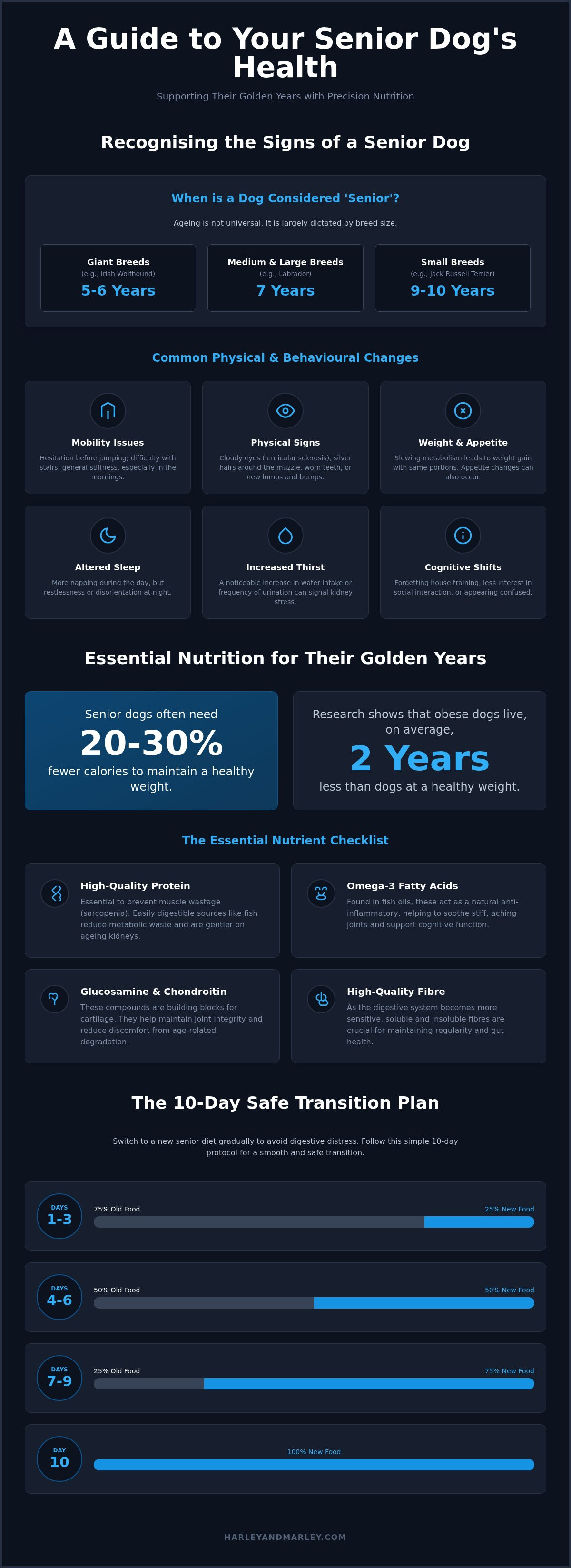
Ageing in dogs is rarely a sudden transition. It is a slow, cumulative series of biological shifts that often go unnoticed until they reach a tipping point. You might first spot a sprinkling of silver around the muzzle or a slight cloudiness in their eyes, known as lenticular sclerosis. Dental changes are also common. Older dogs often show significant wear on their teeth or develop sensitivity that changes how they chew. These physical markers are your first cue to begin evaluating dog food for older dogs to ensure their diet matches their slowing physiology.
Mobility is perhaps the most telling indicator of senior status. A dog that once bounded into the car may now hesitate, measuring the distance before making a careful attempt. Stiffening joints often make stairs a challenge, particularly in the mornings. You may also notice shifts in their circadian rhythm. Many senior dogs spend more time napping during the day but become restless or disoriented at night. Cognitive changes can be subtle, such as a dog that suddenly forgets its house training or seems less interested in social interaction with the family.
When is a Dog Actually Considered 'Senior'?
While many industry professionals use age seven as a standard benchmark, ageing is not a universal timeline. It is dictated largely by breed size and genetics. Giant breeds, such as Irish Wolfhounds, may be considered senior as early as age five or six. Conversely, smaller breeds like Jack Russell Terriers often don't reach their senior phase until age nine or ten. Understanding different dog food formulations and how they cater to these distinct life stages is vital. We recommend a dedicated 'Senior Wellness' veterinary check-up once your dog hits these milestones to establish a health baseline.
The Behavioural Monitoring Checklist
Monitoring your dog's daily habits is the best way to catch age-related issues early. Use the following checklist to track changes that might necessitate a change in dog food for older dogs:
- Thirst and Urination: Increased water intake can signal kidney stress or metabolic changes.
- Appetite and Weight: A slowing metabolism often leads to weight gain even if food portions remain the same. Alternatively, a sudden loss of interest in food requires immediate attention.
- Physical Inspection: During regular grooming, check for new lumps, bumps, or skin changes that were not there previously.
Staying observant allows you to transition your pet to a tailored diet, such as a fish-based senior dog complete food, before minor stiffness becomes a chronic mobility issue.
Decoding Senior Nutrition: The Essential Nutrient Checklist for Older Dogs
Once you have identified the physical signs of ageing, the focus must shift to the bowl. A dog’s metabolic rate slows down as they enter their golden years, often leading to a 20% to 30% reduction in caloric needs. Maintaining a lean body condition is paramount; research shows that obese dogs have a lifespan that is, on average, two years shorter than those at a healthy weight. This requires a shift towards dog food for older dogs that balances lower caloric density with high-quality, functional ingredients.
High-quality fibre also plays a vital role. As the digestive system becomes more sensitive, soluble and insoluble fibres help maintain regularity and support a healthy gut microbiome. Additionally, senior diets should be enriched with glucosamine and chondroitin. These compounds are essential for maintaining cartilage integrity and reducing the discomfort associated with age-related joint degradation, especially in larger breeds prone to stiffness.
Why Protein Quality Matters More Than Ever
There is a common misconception that senior dogs need less protein to protect their kidneys. In reality, older dogs require high-quality, easily digestible protein to prevent sarcopenia, or muscle wastage. Choosing a superior protein source reduces the amount of metabolic waste the kidneys must filter. Bio-availability refers to the proportion of a nutrient that is successfully absorbed and utilised by the body after ingestion, rather than being excreted as waste. Fish proteins are particularly effective here, offering a clean, highly bio-available alternative to heavy red meats that can be harder on a slowing digestive tract.
The Micronutrient Checklist for Vitality
A sophisticated approach to dog food for older dogs involves fine-tuning micronutrients to support ageing organs. Phosphorus levels must be carefully controlled, as excessive amounts can accelerate the decline of kidney function in ageing pets. Understanding the specific nutritional needs for senior dogs allows owners to choose formulations rich in antioxidants like Vitamin E and C, which combat oxidative stress and support a flagging immune system.
For those looking to optimise these levels through a sustainable, Irish-made diet, exploring a Senior Dog Complete Food provides a scientifically balanced solution that prioritises long-term vitality without compromising on flavour or purity.
The Fish Advantage: Why Marine Proteins Outperform Traditional Meat for Seniors
Ageing is essentially an inflammatory process. While traditional land-based meats like beef or lamb are staples in many diets, they often carry higher levels of saturated fats that can exacerbate systemic inflammation. Marine proteins offer a cleaner, more functional alternative. By switching to a fish-based dog food for older dogs, you provide a source of protein that is naturally anti-inflammatory, helping to soothe the chronic "heat" in the body that leads to joint stiffness and cognitive decline.
The lean profile of white fish is a critical tool for weight management. Unlike fatty cuts of meat, white fish provides the high-quality protein needed to maintain muscle mass without the excessive calories that lead to obesity. This is particularly beneficial for senior dogs whose activity levels have dipped. Additionally, the hypoallergenic nature of fish reduces the burden on an ageing immune system, which can become increasingly reactive to common allergens found in traditional meat-based recipes.
Fish Oil: The Senior Superfood
The real power of marine nutrition lies in long-chain Omega-3 fatty acids, specifically Eicosapentaenoic Acid (EPA) and Docosahexaenoic Acid (DHA). These are the primary drivers of mobility and neurological health. While many kibbles include fats, they are often rendered or processed, losing their biological potency. Pure, liquid fish oil remains the gold standard for bioavailability. For a deeper look at how these fats transform movement, read our Dog Fish Oil for Joint Health: Omega-3 Mobility Guide. It explains why these specific fatty acids are non-negotiable for the senior years.
Digestibility and Palatability
As dogs age, their sense of smell and taste can dim, leading to "fussy" eating habits. The natural, pungent aroma of fresh fish is often far more enticing than processed chicken or beef, encouraging even the most reluctant senior to finish their meal. Fish is also structurally simpler to break down than complex mammalian proteins, making it much gentler on a senior dog's digestive tract. Grain-free fish recipes significantly reduce the risk of senior bloating because they eliminate the heavy, fermentable carbohydrates that often cause gas and discomfort in older, less active dogs. This combination of high palatability and easy digestion ensures your dog receives the nourishment they need without the gastrointestinal strain common in dog food for older dogs that relies on heavy fillers.
Transitioning Your Senior Dog: A Step-by-Step Checklist for a Safe Dietary Shift
Older dogs possess more delicate gastrointestinal tracts than their younger counterparts. While some retailers suggest a rapid three-day switch, this often leads to avoidable digestive distress or systemic inflammation. We recommend a strict 10-day transition rule when introducing a new dog food for older dogs. Start with 75% of the old diet and 25% of the new for the first three days. Gradually increase the ratio until the shift is complete. This methodical approach allows the gut microbiome to adapt without triggering the digestive upsets that can set back a senior dog’s health.
Precision is vital for weight management. Stop using a standard plastic scoop and invest in a digital kitchen scale. Measuring by weight rather than volume ensures you don't accidentally overfeed, which is easy to do when kibble sizes vary between brands. Hydration is equally critical. Monitor their water bowl closely during the switch, as a change in protein source can slightly alter their thirst levels. For dogs struggling with arthritic necks or spinal stiffness, consider a raised feeder. Elevating the bowl reduces the physical strain of bending, making mealtime a comfortable experience rather than a chore.
Managing a Sensitive Stomach During Transition
Watch your dog closely during the first 48 hours of any dietary change. Signs of upset include lethargy, excessive flatulence, or loose stools. Natural fibres and probiotics can help firm up stools and support the colon during this phase. If you notice any significant changes in behaviour, simply slow the process down. Spend four or five days at each ratio level instead of three. A slower pace is always preferable to a systemic upset that requires veterinary intervention.
Lifestyle Adjustments to Complement the New Diet
Modifying how you serve the food can be just as impactful as what you serve. Splitting the daily allowance into three smaller meals rather than two large ones helps maintain steady energy levels and aids digestion. If your dog has dental sensitivities or missing teeth, try softening the kibble with warm water or a splash of pure fish oil. This creates a highly palatable, easy-to-chew texture that releases the natural aromas of the ingredients. To find the right formula for this journey, consult our guide on the Best Fish Based Senior Dog Food for Mobility and Vitality in 2026.
Ready to support your dog’s ageing paws with premium Irish nutrition? Explore our Senior Dog Complete Food range today.
Elevating Senior Vitality: The Harley & Marley Senior Dog Food Checklist
Choosing the right dog food for older dogs is the most impactful decision you can make for your pet's long-term comfort. Harley & Marley Senior Dog Complete Food is specifically formulated for ageing paws, focusing on the biological realities of a slowing metabolism and more sensitive joints. Our recipe is entirely grain-free and meat-free, providing a clean-label alternative to mass-produced diets that often rely on inflammatory land-based proteins. By removing these heavy ingredients, we reduce the metabolic load on your dog's organs whilst ensuring they receive every essential nutrient for vitality.
A holistic approach to senior health extends beyond the main meal. We recommend supplementing their diet with pure Fish Oil to provide a concentrated mobility boost. This ensures a high intake of EPA and DHA, which we have already identified as critical for cooling systemic inflammation. For rewards, our Fish Skin Chews offer a functional solution for dental health. These treats are naturally abrasive, helping to manage plaque buildup without the high calorie counts found in traditional starch-heavy dental sticks. They are the ideal tool for owners who want to maintain their dog's joy without compromising their weight management goals.
The Irish-Made Difference
Provenance is not just a badge of pride; it is a guarantee of nutrient density. Because we are an Irish-owned business, our fish is sourced locally and processed quickly. This proximity ensures that the delicate Omega-3 fatty acids remain potent rather than degrading during long international transit times. Choosing fish-based nutrition is also a conscious ethical choice. It supports a circular economy and offers a more sustainable footprint than traditional livestock farming. To understand the full scope of these benefits, read our Fish-Based Dog Food: The Ultimate Guide to Functional Canine Nutrition in 2026.
Your Senior Subscription Strategy
Consistency is the final piece of the senior health puzzle. Our monthly food box ensures you never run out of the specific dog food for older dogs your pet relies on, preventing the sudden dietary shifts that cause digestive upset. You can create tailored bundles that combine our Senior Dog Complete Food with functional treats and oils, providing a comprehensive nutrition programme delivered directly to your door. This structured approach allows you to monitor portions and health outcomes with professional precision.
Explore our Senior Dog Complete Food range today and give your companion the gift of a more mobile, vibrant future.
Empowering Your Dog's Golden Years
Supporting an ageing pet requires a shift from passive observation to proactive nutritional management. We have explored how identifying subtle behavioural changes and prioritising high-quality, bioavailable proteins can significantly alter your dog's quality of life. By choosing a specialised dog food for older dogs, you aren't just managing their weight; you're actively cooling systemic inflammation and protecting vital organ function through the power of marine-based nutrition.
Harley & Marley remains dedicated to this mission as a 100% Irish-owned business. Our grain-free, Omega-3 rich formulations are crafted using sustainable, circular economy sourcing to ensure every bowl supports both your pet and the planet. Transitioning to a cleaner, fish-only diet is a tangible way to restore the spark in your companion's eyes and the spring in their step. It's time to move beyond the status quo of traditional meat-based kibble and embrace a scientifically backed, local solution for your dog's vitality.
Give your senior dog the gift of Irish fish-based nutrition and watch them thrive during their most precious years.
Frequently Asked Questions
When should I start feeding my dog senior dog food?
You should transition your dog based on their breed size rather than a universal age. Large and giant breeds often require dog food for older dogs by age five or six, whilst smaller breeds may not reach this milestone until age nine or ten. Observing physical changes like grey muzzles or slowing mobility is a more accurate trigger than the calendar alone. A "Senior Wellness" check with your vet can confirm when their metabolism has slowed sufficiently.
Is fish-based dog food better for older dogs with joint pain?
Fish-based nutrition is exceptionally effective for managing age-related joint pain due to its high concentration of Omega-3 fatty acids. These marine lipids, specifically EPA and DHA, act as natural anti-inflammatories that soothe the systemic "heat" in stiff joints. Unlike land-based meats that can be pro-inflammatory, white fish provides a lean, clean protein source that supports muscle mass whilst helping your dog regain the mobility they may have lost to chronic inflammation.
Can senior dogs eat grain-free food if they have sensitive stomachs?
Grain-free recipes are often the best choice for senior dogs with sensitive digestion. These formulations eliminate heavy fillers like wheat or corn, which can cause bloating and gas in dogs with slower metabolic rates. By using easily digestible alternatives like sweet potato or peas alongside fish, you reduce the gastrointestinal load. This ensures that your pet absorbs maximum nutrients without the discomfort often associated with traditional grain-heavy dog food for older dogs.
How many calories should an older dog have per day?
Most senior dogs require approximately 20% to 30% fewer calories than they did in their younger adult years. The exact number depends on their weight, breed, and current activity levels. We recommend using a digital kitchen scale for precision rather than relying on a "guestimate" scoop. This prevents the gradual weight gain that shortens lifespans. Always monitor your dog's body condition score to ensure their ribs are palpable but not visible.
Do I need to add supplements if I'm using a complete senior dog food?
While a complete senior diet is nutritionally balanced, targeted supplements like Fish Oil can provide a significant mobility boost. Complete foods contain the baseline requirements, but adding pure marine oils ensures your dog receives a therapeutic dose of EPA and DHA for joint health. This is particularly beneficial for large breeds or those showing clear signs of stiffness. It's a simple way to elevate a standard diet into a truly functional health programme.
What happens if I don't switch my dog to senior food?
Continuing with a high-calorie adult diet often leads to rapid obesity as your dog's activity levels decline. Excess weight places undue stress on ageing joints and the cardiovascular system. Additionally, standard adult foods may contain protein sources that are harder for older kidneys to process. Switching to a tailored senior formula ensures they receive the correct nutrient density and bioavailable proteins needed to maintain muscle mass without straining their internal organs.
Is fish oil safe for older dogs with kidney issues?
Fish oil is generally considered safe and even beneficial for dogs with kidney concerns, as Omega-3s help reduce renal inflammation. However, you must ensure the oil is of high purity and free from heavy metals. Because every dog's health profile is unique, you should always consult your vet before adding supplements to a clinical diet. They can help you determine the correct dosage to support kidney function without interfering with other medications.
How can I encourage my senior dog to eat if they have lost their appetite?
You can stimulate a flagging appetite by slightly warming their food to release its natural aromas. Senior dogs often experience a diminished sense of smell, so the pungent scent of fresh fish can be highly enticing. Adding a splash of warm water or a teaspoon of fish oil creates a softer texture that is easier to chew for dogs with dental sensitivity. Splitting their daily allowance into three smaller, more manageable meals also helps.