


A quick food switch can sometimes add to a puppy’s digestive upset rather than solve it. Loose stools or a rumbling tummy may follow a change in routine, too many treats or an abrupt diet change, but similar signs can also have other causes. If you’re searching for puppy food sensitive digestion, a measured approach is more useful than guesswork.
It’s understandable to worry that the food is to blame, especially when symptoms come and go. But a sensitive stomach isn’t a diagnosis, and changing meals repeatedly can make it harder to identify what’s affecting your puppy. Harley & Marley offers complete fish-based puppy food to assess for your puppy’s life stage and individual needs. It is a food option, not a treatment for digestive symptoms.
This guide explains common causes of digestive changes, what to look for in complete puppy food, and how to introduce a new diet gradually while monitoring your puppy. You’ll also learn which signs call for prompt veterinary advice, so you can make a thoughtful choice with your puppy’s wellbeing at the centre.
Key Takeaways
- A single soft stool doesn’t reveal the cause. Look for patterns and consider changes in routine, food and treats.
- When comparing puppy food sensitive digestion options, assess life-stage suitability, complete-food labelling, feeding guidance and your puppy’s response.
- Introduce food thoughtfully and keep a simple record of meals and digestive changes to make patterns easier to notice.
- Know which symptoms call for prompt veterinary advice rather than trying repeated food changes at home.
- Complete fish-based puppy food can be one option to assess for your puppy’s needs, but it isn’t a treatment for digestive symptoms.
Puppy food for sensitive digestion: what symptoms should you notice?
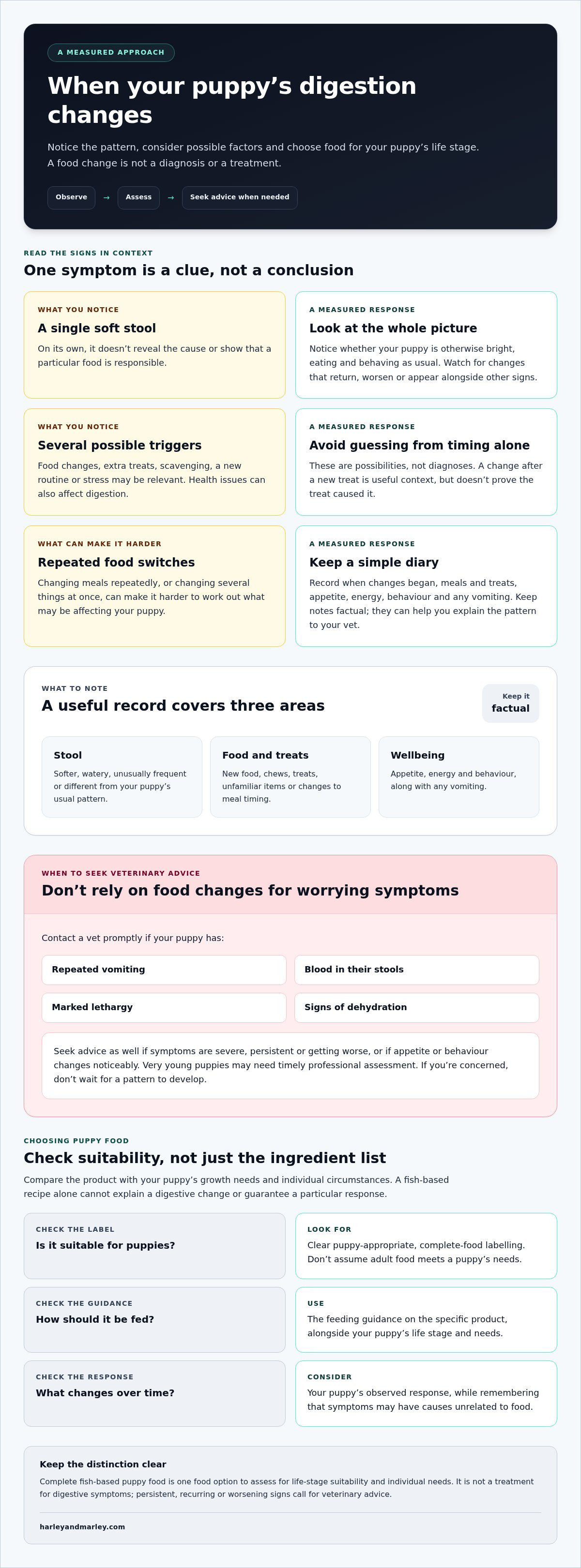
“Sensitive digestion” describes a pattern of digestive changes, not a veterinary diagnosis. It can help describe recurring signs, but it doesn’t explain what’s causing them or identify a particular food as the solution. A single soft stool, for example, doesn’t reveal the cause. It may be a brief change or one detail in a pattern worth discussing with your vet.
Pay attention to how your puppy is overall, not just what you see in the bowl or on a walk. A short-lived change in stool consistency in a puppy who is otherwise bright, eating and behaving as usual is different from symptoms that keep returning, worsen, or appear alongside changes in appetite or energy. This distinction can help you decide what to observe and when to seek professional advice.
Which digestive signs might a puppy owner notice?
Look for changes in stool consistency or frequency, reduced interest in food, unusual gas, stomach rumbling or occasional vomiting. None of these signs alone confirms an intolerance, allergy, infection or other condition. As general background, this overview of dog food nutritional requirements discusses how feeding needs vary, including by life stage. It doesn’t identify the cause of an individual puppy’s symptoms.
A simple diary can make useful details easier to recall. Note when a change began, what and when your puppy ate, any treats or unfamiliar items, and whether their appetite, energy or behaviour also changed. Keep the notes factual. They can help you describe the pattern clearly if you seek veterinary advice.
- Stool: note whether it is softer, watery, unusually frequent or different from your puppy’s usual pattern.
- Food and treats: record new foods, chews, treats or changes to meal timing.
- Wellbeing: note appetite, energy and behaviour, as well as any vomiting.
Small details matter. A change after a new treat may be useful context, but timing alone doesn’t prove that the treat caused it. Avoid drawing a diagnosis from the diary. Use it to support a clearer conversation about your puppy’s health.
When should digestive symptoms prompt veterinary advice?
Contact a vet promptly if your puppy has repeated vomiting, blood in their stools, marked lethargy or signs of dehydration. Seek advice as well if symptoms are severe, persistent or getting worse, or if your puppy’s appetite or behaviour changes noticeably. Very young puppies may need timely professional assessment, so don’t wait for a pattern to develop if you’re concerned.
Digestive symptoms can have several possible causes, and food is only one of them. A vet can assess your puppy’s symptoms and advise on appropriate next steps. Don’t assume that switching diets will address a health problem. Repeated or worsening signs deserve assessment rather than guesswork. If symptoms seem mild and pass quickly, continue to observe your puppy closely, and seek advice if they return or you’re unsure.
Why can a puppy’s digestion become unsettled?
Food can play a part, but it isn’t the only possible explanation for a change in a puppy’s digestion. A new routine, extra treats, scavenging, stress or an underlying health issue may also be relevant. These are possibilities to consider, not diagnoses. The pattern and your puppy’s overall wellbeing matter more than trying to assign a cause to one episode.
How can food changes and feeding habits affect digestion?
An abrupt switch between foods or a run of unfamiliar treats can coincide with digestive changes. They can also make it harder to work out what, if anything, affected your puppy, particularly if several things change at once. Access to rubbish, dropped food or unfamiliar items outdoors may be useful context, but shouldn’t be assumed to explain symptoms.
Keep your puppy’s growth needs in view. Puppies need food suitable for their life stage, and adult food shouldn’t be assumed to meet those needs. Look for clear puppy-appropriate, complete-food labelling, and follow the feeding guidance on the specific product. The AAHA guidance on choosing pet food for sensitive stomachs also highlights the importance of considering age, life stage and individual health when selecting food.
Harley & Marley offers complete fish-based puppy food. Assess it as a food option against your puppy’s life stage and needs, not as a remedy for symptoms. A fish-based recipe alone can’t establish why digestion has changed or guarantee a particular response.
Could digestive symptoms be unrelated to the food?
Yes. Parasites, infections, stress and other health issues can affect digestion, and some require veterinary assessment. One symptom or a glance at an ingredient list can’t reliably diagnose a food sensitivity. A vet can consider the full picture, including your puppy’s history and any other signs, before advising on appropriate next steps.
Persistent digestive symptoms need assessment rather than repeated food experimentation. Frequent switches may make it more difficult to interpret what’s happening, while delaying advice could leave an unrelated health issue unaddressed. If a change is ongoing, recurring or worsening, speak to your vet rather than assuming the current food is responsible.
For a broader look at possible factors behind loose stools, see this guide to dog food for loose stools. It can add context, but it can’t identify the cause of an individual puppy’s symptoms. Keep any food choice grounded in suitability for growth, the product’s label and your puppy’s observed response.
How to compare puppy food for sensitive digestion
Compare the information on the pack, not just the promise on the front. When considering puppy food sensitive digestion, ask whether the food suits growth, how its feeding guidance is presented, what the ingredient declaration says and how your puppy responds. No single phrase, protein source or diet category can establish that a food will resolve digestive symptoms.
Use this framework to compare options side by side. Check each point against the relevant product label rather than assuming the wording or formulation is the same across foods.
| What to compare | What to look for |
|---|---|
| Life-stage suitability | Clear wording that the food is complete and suitable for puppies or growth. |
| Feeding guidance | Instructions for feeding the food, with guidance that you can follow consistently. |
| Ingredients | The ingredient declaration, read as information about composition, not proof of digestibility or a diagnosis. |
| Individual response | Your puppy’s appetite, stool pattern and general wellbeing over time. |
What should you check on a puppy-food label?
Start with the life-stage statement. “Complete” indicates that the food is intended to provide the required nutrients when fed as directed, while puppy or growth wording helps distinguish it from food intended for adult maintenance. Verify both claims on the specific pack. Then compare the feeding guidance and ingredient declaration. A shorter list or a particular ingredient doesn’t automatically make one food more digestible than another.
If packaging highlights a nutrient, formulation or health-related benefit, look for supporting detail on the label and assess the wording carefully. Don’t infer an exact nutritional profile from a front-of-pack claim alone. For broader context on growth and life-stage needs, see this complete puppy nutrition guidance.
Does fish-based or grain-free puppy food automatically suit a sensitive stomach?
No. “Fish-based”, “grain-free” or “sensitive” describes an ingredient choice or product positioning; none guarantees symptom relief for an individual puppy. A medically diagnosed adverse food reaction is different from a preference for a particular recipe, and symptoms alone can’t establish that diagnosis. If you’re considering complete fish-based puppy food, assess its puppy-appropriate labelling and feeding guidance alongside your puppy’s observed response. Don’t treat the protein source as a cure.
Ingredient lists can help you understand what a food contains, but they can’t confirm how a particular puppy will respond. Grain-free wording by itself doesn’t show that a food is better suited to digestive symptoms. Explore this overview of fish-based dog food for broader ingredient context, then compare the actual label with your puppy’s needs.
How to feed and monitor a puppy with a sensitive stomach
A steady routine makes changes easier to interpret. Rather than switching foods in response to every unsettled meal, use a considered sequence: seek advice when symptoms warrant it, choose a suitable complete puppy food, keep feeding consistent and record what happens. This gives you a clearer basis for deciding what to do next without treating a food change as a diagnosis.
- Seek advice when needed. If symptoms are severe, persistent or worsening, speak to your vet before changing your puppy’s diet. Follow their guidance if your puppy is already being assessed or has specific dietary needs.
- Choose food for growth. Check the pack states that the food is complete and suitable for puppies, and read its feeding instructions. Complete fish-based puppy food is one option to assess, but it shouldn’t be presented as a treatment for digestive symptoms.
- Keep the routine consistent. Follow the food’s feeding guidance, including the recommended amount and any transition directions. Avoid making several changes at once, and adjust feeding only with appropriate advice.
- Record changes. Make a brief daily note of meals, treats, stool changes, appetite and energy. Include timings and anything unusual, such as a missed meal or a change in routine.
How should you introduce a different puppy food?
Gradual transitions are commonly used, but the right approach can vary with the puppy and the reason for changing food. Follow the transition guidance provided for the specific product, and ask your vet for advice if symptoms are present or your puppy is under assessment. There isn’t one timeline that suits every puppy. This safe food-transition guidance offers a more detailed discussion.
What should you track after changing food?
Keep the record simple enough to maintain. Note what your puppy ate and when, any treats or extras, stool consistency and frequency, appetite, energy and the timing of any symptoms. Where practical, keep other foods and treats steady during a transition so you’re not trying to interpret several changes at once.
Look for a pattern, not a single meal or stool in isolation. If symptoms recur, worsen or persist, share your notes with a veterinary professional rather than making repeated food changes. A clear record can help them understand what has changed and when, but it can’t diagnose the cause by itself.
If you’re assessing a complete fish-based option for your puppy, explore complete puppy food and review its life-stage and feeding information as part of your decision.
Choosing complete fish-based puppy food with confidence
A considered food choice starts with your puppy’s needs, not a promise on a packet. Harley & Marley offers complete fish-based puppy food for owners to assess against their puppy’s life stage and individual requirements. It isn’t a treatment for sensitive digestion, and choosing a different food can’t replace veterinary assessment when symptoms are persistent or concerning.
When might a complete fish-based puppy food fit your shortlist?
It may be worth comparing if you’re looking for food intended for puppies and want to consider a fish-based option. Start with the exact product label: check its life-stage suitability, that it is described as complete, and the feeding guidance. Read the ingredient declaration to understand the food’s stated composition, but don’t infer a digestive benefit, hypoallergenic status or suitability for your individual puppy from the fish-based description alone.
Use a consistent set of checks rather than relying on a single headline claim:
- Growth suitability: Does the label identify the food as complete and appropriate for puppies?
- Label detail: Do the feeding directions and ingredient declaration meet your practical needs?
- Individual response: What do you observe about appetite, stool and general wellbeing as you feed it according to the guidance?
This approach keeps the decision grounded in information you can assess. A complete food label addresses the food’s intended nutritional role; it doesn’t explain the cause of a puppy’s symptoms or guarantee how that puppy will respond.
How can you make a confident next decision?
Take the steps in order: consider the symptoms and how your puppy is behaving overall; seek veterinary advice if signs are worrying, persistent or worsening; then compare complete foods for puppy life-stage suitability, label information and feeding guidance. If a change is appropriate, follow the product’s directions and any veterinary advice. Where practical, change one variable at a time so your observations remain useful.
For a puppy with ongoing digestive signs, don’t rely on a food change as the answer. A veterinary professional can assess whether something beyond diet needs attention. If symptoms are mild and you’re evaluating food, a brief record of meals, treats and changes in stool or appetite can help you describe your observations clearly and avoid making several changes based on guesswork.
There’s no need to solve every uncertainty at once. Careful observation, a suitable complete food and timely professional advice where needed can support a more informed conversation about your puppy’s diet. To review Harley & Marley’s complete fish-based puppy food, explore Harley & Marley.
Choose the next step with care
Finding puppy food for sensitive digestion isn’t about chasing a perfect-sounding label. It’s about making a considered choice for your puppy’s growth and needs, then using clear observations and appropriate professional advice to guide what happens next. If symptoms persist or cause concern, prioritise veterinary advice over relying on a food change.
Harley & Marley offers complete fish-based food for puppies. It’s available through individual purchases, curated bundles and a monthly food box subscription, giving you different ways to explore the range while checking the product information against your puppy’s needs.
Explore Harley & Marley’s fish-based puppy food and consider whether its life-stage information and feeding guidance suit your next step. Thoughtful choices take time, and paying close attention to your puppy is a positive place to begin. With patience and the right advice when needed, you can move forward with greater confidence.
Frequently Asked Questions
Can puppies have sensitive digestion without having a food allergy?
Yes. Digestive signs can occur for reasons other than a food allergy, and one episode of loose stools doesn’t establish an allergy. A food allergy involves an immune response, while other adverse food reactions can have different causes; symptoms may also be unrelated to food. If you’re searching for “puppy food sensitive digestion”, remember that a food label can’t diagnose your puppy. Keep notes on symptoms and discuss recurring signs with your vet.
How long should a puppy have digestive symptoms before I call a vet?
There isn’t a single safe waiting period for every puppy. Contact a vet promptly if symptoms are severe, worsening, or include repeated vomiting, blood in stools, marked lethargy or signs of dehydration. Very young puppies may need timely assessment, so seek advice early if you’re concerned. For mild changes, consider your puppy’s overall behaviour and whether signs recur. Contact your vet if you’re unsure rather than waiting for an arbitrary number of days.
Is fish-based puppy food suitable for every puppy with a sensitive stomach?
No. A fish-based recipe isn’t automatically suitable for every puppy, and the description alone can’t predict an individual response or treat digestive symptoms. Check that the specific food is complete and intended for puppies, then compare its label with your puppy’s needs. If your puppy has a known adverse reaction to an ingredient or ongoing symptoms, discuss the food choice with your vet before making a change.
Can treats cause digestive upset in puppies?
They can be one possible contributor, particularly if a puppy has several new treats, chews or table scraps close together. For example, a puppy given a new training treat and a different chew on the same day may be harder to assess if their stools change. Keep a note of treat types and timing, and avoid assuming that one coinciding change proves the cause. Ask your vet if symptoms persist or concern you.
Should I choose grain-free food for a puppy with sensitive digestion?
Not solely because your puppy has digestive signs. Grain-free describes a formulation choice; it doesn’t show that the food will suit your puppy better or resolve symptoms. Focus first on complete food that’s appropriate for growth, and assess the actual label and feeding guidance. Don’t remove ingredients or restrict your puppy’s diet to test a theory without veterinary advice, especially if symptoms are recurring or a food reaction is suspected.
How often should a puppy normally pass stools?
There isn’t one frequency that suits every puppy. Age, meal routine and the individual dog can affect how often they go, so compare your puppy with their own usual pattern rather than another dog’s schedule. Note a clear change in frequency alongside consistency, appetite and behaviour. Straining, repeated watery stools or a sudden persistent change deserves veterinary advice, particularly if your puppy seems unwell or is eating less.
Can I give my puppy probiotics for digestive problems?
Ask your vet before giving a probiotic. Products can differ in their ingredients and intended use, and a supplement isn’t a substitute for finding out why a puppy has digestive signs. Your vet can advise whether one is appropriate for your puppy’s age, symptoms and overall health, and how to use it. Don’t guess a dose or use a human product without professional guidance; seek assessment if symptoms are persistent or worsening.