


Marine-derived EPA and DHA provide functional cellular therapy that plant oils simply cannot replicate. If you've spent weeks watching your dog scratch incessantly at irritated skin, or hesitate at the bottom of the stairs with stiff joints, you already know how distressing it is to see their comfort slip away. Sifting through conflicting acronyms like ALA and DHA, whilst worrying about heavy metals or rancid batches, only adds to that anxiety. Introducing a fresh, bioactive omega 3 fish oil for dogs is one of the most effective, research-backed ways to soothe systemic inflammation directly at its biological source.
You'll discover how marine fatty acids actively transform canine joint mobility, coat condition, and everyday vitality, backed by practical advice on sourcing and safety. We unpack the critical difference between fish and seed oils, demonstrate how to calculate the correct daily dose for your dog's specific body weight, and show you how to select pure, sustainably harvested oils that retain their natural potency.
Key Takeaways
- Understand why omega 3 fish oil for dogs is an essential dietary requirement that canine physiology cannot synthesise on its own.
- Discover how bioavailable EPA and DHA target systemic inflammation to soothe itchy skin and restore fluid joint mobility.
- Learn why plant-based oils fall short due to your dog's natural enzymatic limits, making direct marine sources essential.
- Calculate precise, weight-based daily dosages to avoid digestive upset and master safe storage practices that prevent oxidation.
- Identify ethical, circular-economy marine sources that provide exceptional purity whilst protecting delicate ocean ecosystems.
What Is Omega 3 Fish Oil for Dogs and Why Is It Vital?
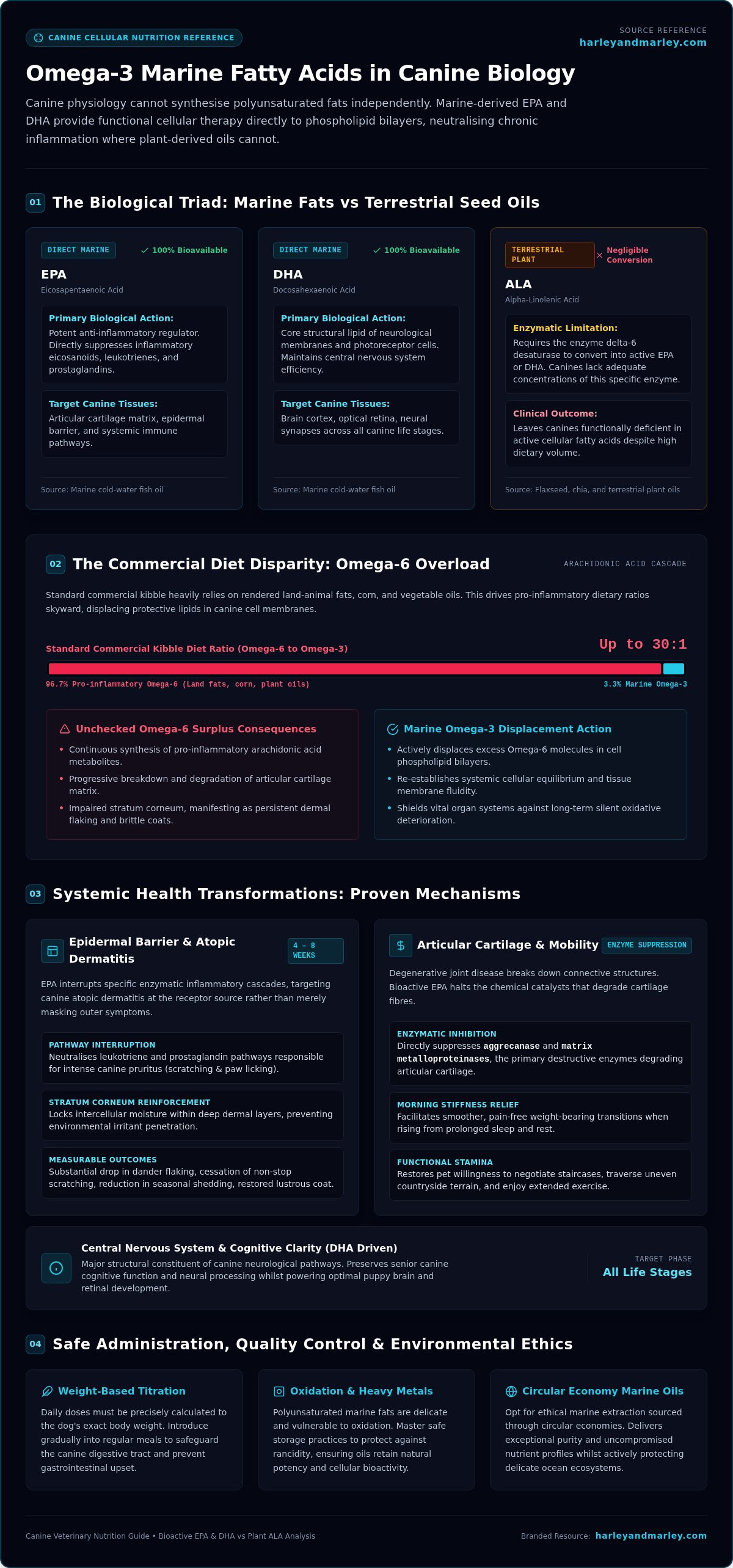
Canine biology cannot manufacture polyunsaturated fats out of thin air. Instead, dogs must absorb these critical structural compounds directly from their daily food. As fundamental components of cellular membranes, Omega-3 fatty acids govern membrane fluidity, cellular signalling, and immune surveillance. Without sufficient intake, cell walls become rigid and prone to dysfunction. Supplementing a pure omega 3 fish oil for dogs ensures your pet's body possesses the raw biological building blocks needed to soothe systemic irritation and protect long-term tissue elasticity.
The Crucial Difference Between EPA, DHA, and Plant-Based ALA
Not all fatty acids perform the same biological duties. Canine health relies on three distinct forms, each possessing distinct metabolic properties:
- Eicosapentaenoic acid (EPA): This marine-sourced fatty acid acts as a primary anti-inflammatory agent, directly regulating immune responses and down-regulating inflammatory eicosanoids.
- Docosahexaenoic acid (DHA): A major structural component of neurological tissue, DHA maintains cognitive clarity, supports retinal structure, and preserves central nervous system performance across every life stage.
- Alpha-linolenic acid (ALA): Found in plant oils like flaxseed and chia, ALA requires complex enzymatic conversion via delta-6 desaturase to yield EPA or DHA. Because dogs lack adequate concentrations of this specific enzyme, their rate of synthesis remains negligible.
Relying on terrestrial seed oils leaves dogs functionally deficient in active marine fats.
The Problem with Modern Omega-6 Heavy Canine Diets
Modern commercial kibble often exacerbates cellular inflammation. Standard processing relies extensively on rendered land-animal fats, corn, and vegetable oils, driving dietary omega-6 to omega-3 ratios as high as 20:1 or even 30:1. While omega-6 fatty acids support normal wound healing and blood clotting, an unchecked surplus drives the continuous release of pro-inflammatory arachidonic acid metabolites.
Over time, this chronic imbalance can manifest as brittle coats, persistent dermal flaking, and degraded joint cartilege. Adding fresh omega 3 fish oil for dogs counterbalances this commercial surplus. By displacing excess omega-6 molecules within the cell membrane phospholipid bilayer, high-quality marine lipids re-establish systemic equilibrium, shielding vital organs against silent, long-term oxidative stress.
Key Canine Health Benefits: From Mobility to Itch-Free Skin
Bioavailable marine lipids operate far beyond simple surface nourishment; they initiate deep biological repair across vital organ systems. Leading veterinary organisations confirm that the broad benefits of fish oil for dogs stem from active cellular integration. When incorporated consistently into daily meals, high-potency marine oils soothe persistent systemic irritation, revitalise dull coats, and protect vulnerable joint structures.
Soothing Sensitive Skin and Banishing Brittle Coats
Constant scratching, paw licking, and flake-covered bedding are hallmark symptoms of an impaired epidermal barrier. EPA directly interrupts the leukotriene and prostaglandin pathways responsible for canine atopic dermatitis, neutralising the chemical triggers that cause severe pruritus.
Simultaneously, these functional lipids reinforce the intercellular stratum corneum, locking in vital moisture whilst preventing environmental irritants from breaching the dermis. Within four to eight weeks of daily supplementation, dog owners typically report a dramatic reduction in dander, less seasonal shedding, and a soft, naturally lustrous coat.
Supporting Joint Lubrication and Arthritic Mobility
Degenerative joint disease affects countless canines, leading to painful morning stiffness and diminished stamina. EPA actively suppresses aggrecanase and matrix metalloproteinases, the destructive enzymes responsible for breaking down articular cartilage. This enzymatic inhibition produces noticeable real-world changes:
- Smoother weight-bearing transitions when rising from rest.
- Increased willingness to tackle stairs and uneven terrain.
- Noticeable comfort during extended countryside strolls.
If your aging companion struggles with physical discomfort alongside digestive sensitivity, pairing targeted lipids with our best dog food for senior dogs with sensitive stomachs provides comprehensive, gentle nutritional care.
Fueling Puppy Development and Preserving Senior Cognition
DHA constitutes approximately 30% of the structural lipid content within the mammalian brain. In developing puppies, early DHA enrichment accelerates neurogenesis and enhances retinal acuity, directly translating to superior trainability, quicker recall, and sharper visual tracking. Introducing dedicated puppy food for fish-based nutrition establishes these essential neurological foundations from the very start.
At the opposite end of the life cycle, senior canines face oxidative degradation within neural tissue, often resulting in canine cognitive dysfunction. Consistent intake of omega 3 fish oil for dogs shields delicate cerebral pathways against free radical damage, helping elderly companions maintain alert interactions and calm sleep cycles. To elevate your companion's daily mealtime with pure, ocean-fresh vitality, explore the natural formulations crafted by Harley & Marley.
Evaluating Quality: Marine Fish Oil Versus Alternative Sources
Quality defines clinical efficacy. Not every amber bottle on the pet store shelf delivers active cellular nourishment. Published clinical reviews examining the therapeutic use of fish oils confirm that biological origin, extraction methodology, and molecular purity dictate whether a supplement resolves chronic symptoms or simply passes unabsorbed through the canine digestive tract. Evaluating an omega 3 fish oil for dogs requires looking past marketing claims to understand true marine bioavailability.
Why Plant Oils Cannot Replace Marine Omega 3
Many pet owners turn to flaxseed, hempseed, or chia oil hoping for an ethical, plant-based solution. These botanical seeds contain only short-chain alpha-linolenic acid (ALA). Canine physiology cannot convert ALA efficiently into long-chain EPA and DHA; the actual metabolic yield languishes below ten percent. Terrestrial plant oils cannot supply the preformed structural lipids necessary to suppress systemic inflammatory pathways. Marine sources remain non-negotiable for tangible clinical benefits.
Wild Pelagic Fish Versus Monoculture Farmed Oils
Where that marine fat originates matters just as much as its biological classification. Relying entirely on monoculture farmed fish can produce variable fatty acid ratios, heavily influenced by processed aquaculture feeds. Incorporating wild pelagic species, such as mackerel and blue whiting, alongside responsibly managed Atlantic salmon ensures a more naturally balanced fatty acid matrix. Small pelagic fish feed directly on nutrient-rich marine plankton, concentrating bioavailable EPA and DHA whilst easing ecological pressure on single fisheries.
Detecting Rancidity and Evaluating Cold Extraction Standards
Polyunsaturated fatty acids are fragile. Heat, light, and oxygen exposure break their chemical bonds, triggering lipid peroxidation. Oxidised, rancid oil creates toxic peroxides that actually drive chronic cellular inflammation instead of soothing it. High-grade omega 3 fish oil for dogs requires gentle, cold extraction and strict purity testing to eliminate heavy metals, PCBs, and environmental dioxins. Fresh oil carries a clean, mild ocean aroma; it should never smell sharp, pungent, or sour.
Safe Administration: Dosage Guidelines, Introduction, and Storage
Precision matters when introducing active fats to your dog's regime. While omega 3 fish oil for dogs offers remarkable therapeutic properties, casual guesswork risks digestive upset. Establishing the right balance demands calculating exact active milligram values, easing the canine microbiome into higher lipid levels, and preserving those fragile polyunsaturated bonds from domestic heat and air.
Weight-Based Dosage Framework for Optimal Safety
Never base your calculations on the gross volume of oil in the bottle. Always calculate intake by combining the specific milligrams of EPA and DHA listed on the nutritional label. For daily wellness, veterinary consensus supports a baseline range of 50 to 75 mg of combined EPA and DHA per kilogram of canine body weight.
- Small dogs (up to 10 kg): Require modest micro-doses, roughly 250 to 500 mg of combined EPA/DHA daily.
- Medium dogs (11 to 25 kg): Thrive on 600 to 1,500 mg per day.
- Large breeds (26 kg and above): Benefit from 1,600 mg upward, scaled proportionally to combat systemic inflammation.
If your dog requires therapeutic dosing for advanced joint support, consult your vet before exceeding these baseline amounts.
Gradual Introduction to Protect Sensitive Stomachs
Pouring a full therapeutic dose over dinner on day one frequently overloads the canine pancreas. This abrupt influx of rich lipids can trigger transient loose stools or greasy, oily waste. Patience preserves intestinal comfort:
- Days 1 to 4: Administer one-quarter of the target daily dose mixed thoroughly into breakfast.
- Days 5 to 9: Step up to half the calculated amount, monitoring stool consistency carefully.
- Days 10 to 14: Move to three-quarters, reaching the full target amount by the end of week two.
Pairing these fats with an easily digestible digestible fish-based dog food provides steady enzyme adaptation and consistent digestive comfort.
Proper Storage to Prevent Premature Oil Degradation
Liquid marine fats oxidise quickly when exposed to room temperatures and open air. Once a bottle's seal breaks, refrigerate it immediately. Keep the pump mechanism or bottle cap tightly wiped and shut between servings to limit oxygen exposure. Discard any remaining oil after ten to twelve weeks in the fridge, as degrading lipids lose therapeutic efficacy and stress your dog's antioxidant reserves. To provide pure, properly preserved marine nutrients, shop premium fish oil supplements at Harley & Marley.
Selecting a Sustainable, Ethical Marine Supplement for Your Dog
Conscious care requires looking beneath the surface of the ingredients list. Today's dog owners rightly insist on rigorous environmental ethics alongside verifiable clinical benefits. Harvesting wild oceanic life solely for industrial feed or pet supplements rapidly strips pelagic populations and disrupts delicate marine food webs. Sourcing pure omega 3 fish oil for dogs should enrich your companion's daily health without depleting vulnerable marine ecosystems.
The Circular Economy: Sustainable Sourcing Without Ocean Waste
True sustainability relies on complete, respectful utilisation of ocean catches. Circular-economy production transforms clean processing streams from responsibly caught food fish into concentrated nutritional supplements, capturing nutrient-dense value that would otherwise go to waste.
When selecting a high-calibre supplement, use this objective checklist to evaluate ethical standards:
- Circular sourcing model: Prioritises high-grade surplus from Atlantic salmon, wild Irish mackerel, and blue whiting rather than dedicated industrial reduction fisheries.
- Transparent provenance: Backed by traceable supply chains that verify exact fishing zones and processing facilities.
- Clean label formulation: Free from synthetic carrier oils, synthetic colourings, and artificial masking flavourings.
- Oxidation control: Packaged in light-blocking containers designed to minimise air contact and protect volatile marine lipids.
Responsible manufacturing protects ocean biodiversity whilst ensuring the final extraction delivers 100% natural, human-grade purity directly to your dog's bowl.
Integrating Pure Fish Oil into a Holistic Diet
Administering liquid marine lipids is simple. Pouring a measured daily dose over standard complete food naturally improves mealtime palatability, turning dry kibble into an enticing, aromatic feast even fussy eaters adore. Beyond immediate flavour, incorporating high-quality fats enhances the intestinal absorption of vital fat-soluble micronutrients, including vitamins A, D, and E.
This functional synergy elevates baseline nourishment into comprehensive physiological care, supporting resilient skin, supple joints, and sustained immune vigour across every stage of your pet's life. To experience the transformative advantages of an unadulterated, sustainably harvested marine blend, discover how the pure formulation of Harley & Marley Finest Fish Oil delivers superior vitality to your dog's daily bowl.
Give Your Dog the Gift of Lifelong Marine Vitality
Restoring your companion's natural spring in their step starts at the cellular level. By replacing pro-inflammatory dietary imbalances with direct, bioavailable EPA and DHA, adding a premium omega 3 fish oil for dogs delivers visible relief for sensitive skin, revitalises dull coats, and protects flexible cartilage. Pairing precise, weight-based measures with careful cold storage ensures every drop retains its biological strength without the risk of oxidative degradation.
True wellness shouldn't come at the expense of our oceans. By choosing cold-blended oils crafted from premium Atlantic salmon, wild Irish mackerel, and blue whiting, you embrace a circular economy approach that supports delicate marine ecosystems whilst providing unadulterated purity free from artificial additives. Your companion deserves targeted nourishment that helps them thrive across every woodland ramble and peaceful afternoon rest. Explore our pure, sustainably sourced Finest Fish Oil for Dogs to nourish your pet naturally and enjoy many more vibrant, active years together.
Frequently Asked Questions
Can I give my dog regular human fish oil capsules from the chemist?
You should avoid giving human fish oil capsules to dogs unless specifically instructed by your vet. Human formulations often contain flavourings like citrus or artificial sweeteners such as xylitol, which is toxic to dogs. In addition, capsule concentrations are calibrated for adult human biology, making safe, weight-adjusted dosing difficult for smaller dogs. Dedicated canine fish oil liquids allow exact measurement and guarantee pet-safe ingredients.
How long does it take for omega 3 fish oil to work on a dog’s coat?
You can expect visible improvements in your dog's coat and skin within four to eight weeks of continuous daily use. Epidermal cells take roughly three to four weeks to regenerate from the deep dermal layers to the surface. As active EPA and DHA integrate into newly forming skin cells, dander subsides, shedding moderates, and the coat develops a healthy, natural lustre. Daily consistency is essential.
Can omega 3 fish oil cause pancreatitis or loose stools in sensitive dogs?
Yes, introducing excessive quantities of oil too quickly can trigger digestive upset, loose stools, or pancreatitis flare-ups in sensitive dogs. Sudden spikes in dietary lipids overburden normal pancreatic lipase production. You can avoid this by introducing omega 3 fish oil for dogs gradually over two full weeks, starting with a quarter of the recommended dose. If your dog has a history of clinical pancreatitis, consult your vet first.
What is the correct ratio of EPA to DHA for canine health?
An optimal therapeutic ratio for general adult canine health typically features more EPA than DHA, usually around 3:2 or 1.5:1. EPA delivers the primary systemic anti-inflammatory action needed for joint mobility and sensitive skin, requiring higher volumes. Developing puppies and aging seniors, however, benefit from generous DHA levels to fuel neurodevelopment and protect cognitive function. Always check that the label lists active milligrams rather than just total fat.
Is salmon oil better for dogs than blended wild fish oil?
Blended marine oils combining salmon with wild pelagic fish often outperform single-source salmon oil in environmental sustainability and fatty acid balance. While salmon provides clean EPA and DHA, single-source oils frequently rely on intensive aquaculture. Combining Atlantic salmon with wild pelagic species like mackerel and blue whiting yields a broader nutrient spectrum. This circular-economy approach also reduces harvesting pressure on isolated fisheries whilst ensuring exceptional bioavailable nutrition.
Can puppies safely take omega 3 fish oil supplements every day?
Yes, puppies can safely consume balanced omega 3 fish oil for dogs daily once they transition onto solid food. Dietary DHA plays an irreplaceable structural role during early development, promoting clear retinal acuity, rapid brain growth, and easier early training. Make sure to scale the dosage to their exact growing weight, adjusting their daily allowance every few weeks. Providing clean, unadulterated marine oils early establishes a resilient immune foundation.
How can I tell if my dog’s fish oil has gone bad or oxidised?
You can tell fish oil has oxidised by assessing its scent, colour, and overall texture. Fresh marine oil carries a mild, clean ocean aroma similar to fresh seafood. If the bottle smells sharply pungent, sour, or rancid, the polyunsaturated bonds have degraded into inflammatory free radicals. Discard the bottle immediately if you notice harsh odours, significant darkening, or if the product has remained opened past twelve weeks.