


Most pet owners treat nutrition as a simple checklist of vitamins, yet they often overlook the biological reality that a synthetic pill cannot replicate the transformative power of whole, fresh ingredients. You’ve likely spent hours researching omega 3 dog food benefits whilst watching your companion struggle with persistent itching or a stiff, slow gait. It’s exhausting to see them uncomfortable, especially when the market is crowded with processed additives that promise much but deliver very little in terms of actual cellular absorption.
We recognise the deep worry that comes with declining mobility and the frustration of constant scratching; you simply want to see that spark of vitality return to their daily behaviour. This guide will show you how transitioning to a diet rich in marine-sourced fatty acids provides a holistic solution for a glowing coat and sharper cognitive function. We’ll explore the science of bioavailability, clear up the confusion surrounding supplement dosages, and reveal why the right fish-based nutrition is the most sustainable way to ensure your dog thrives through 2026 and beyond.
Key Takeaways
- Learn why marine-sourced EPA and DHA are biologically essential for dogs, providing far greater efficacy than plant-based ALA alternatives.
- Discover how omega 3 dog food benefits include strengthening the skin barrier and producing a signature "Glow Factor" for a noticeably softer, healthier coat.
- Understand the superior bioavailability of whole-fish protein and why it provides a more stable, nutrient-dense alternative to bottled oils that may be prone to oxidation.
- Identify the specific DHA requirements for puppy brain development and how fatty acids support heart health and joint mobility in senior dogs.
- Master the ability to decode "Analytical Constituents" on labels to ensure your chosen food prioritises fresh fish over generic derivatives or meal.
Understanding Omega 3: Why These Fatty Acids Are Essential for Dogs
Omega 3 fatty acids are often discussed as optional extras, but for your dog, they are foundational requirements for survival. Biologically, these are "essential" fats. This means the canine body cannot synthesise them on its own; they must be provided through a precise, high-quality diet. Without a consistent intake, the cellular architecture of your pet begins to weaken. One of the primary omega 3 dog food benefits is the maintenance of healthy cell membranes, which act as the gatekeepers for nutrients and the first line of defence against cellular damage.
When these fats are missing, dogs experience what nutritionists call "hidden hunger." Your dog’s bowl might be full, and their weight might be stable, yet their body is starving for the functional lipids required to manage inflammatory responses. Chronic, low-grade inflammation is often the silent culprit behind itchy skin, dull coats, and stiff joints. By providing these essential fats, you aren't just feeding your dog; you are equipping their immune system to function with precision and resilience. It's about moving beyond basic survival toward true vitality.
EPA vs DHA: The Dynamic Duo of Canine Health
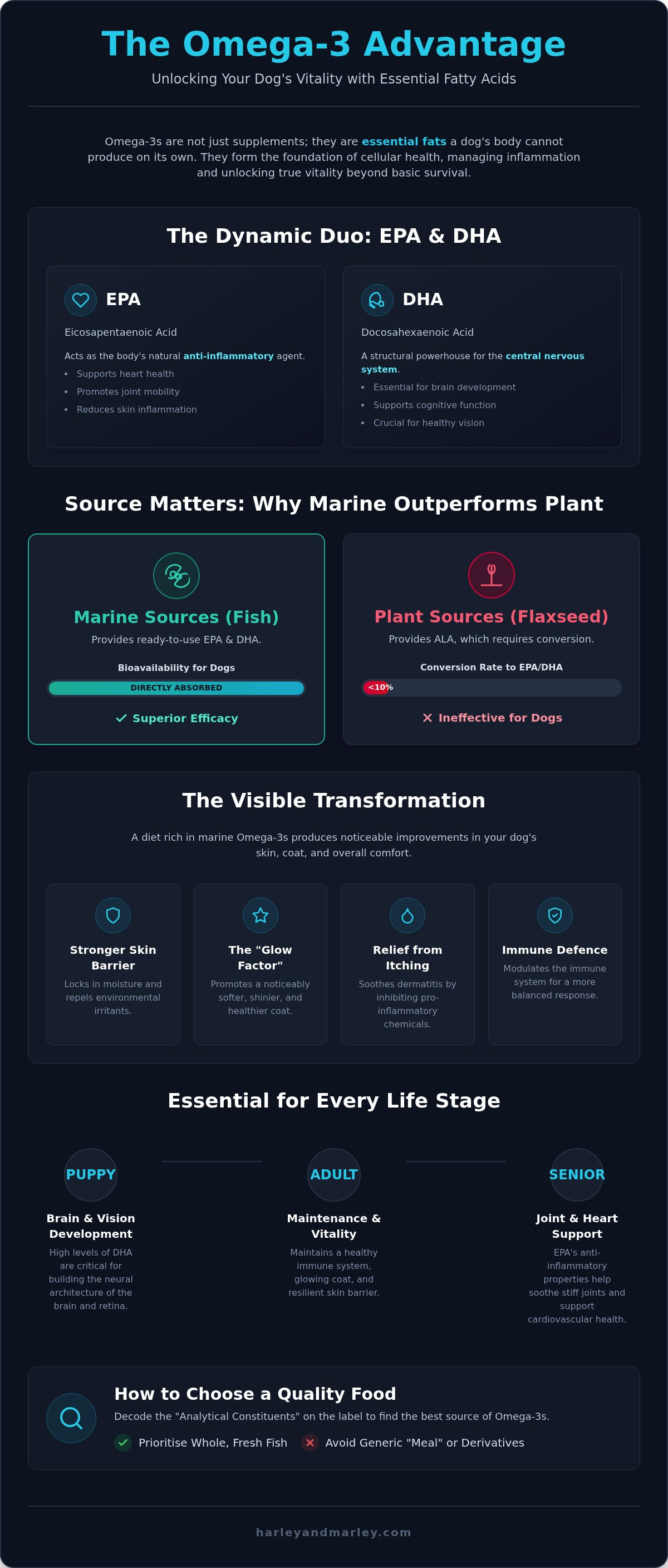
Not all Omega 3s are created equal. Eicosapentaenoic acid (EPA) acts as the body’s natural internal regulator, specifically targeting systemic inflammation to support heart and joint health. In contrast, Docosahexaenoic acid (DHA) is the structural powerhouse for the central nervous system. It's the primary fatty acid found in the brain and retina, making it indispensable for cognitive function and vision. The ratio of these two components is far more telling than the total "Omega" percentage on a packet. A balanced profile ensures that your dog benefits from both immediate anti-inflammatory support and long-term neurological protection.
The Problem with Plant-Based Omegas for Dogs
Many budget-friendly brands use flaxseed or chia oils to claim "high Omega" content on their labels. However, these plant-based sources contain Alpha-linolenic acid (ALA), which dogs are notoriously poor at converting into usable EPA and DHA. Research suggests the conversion rate is often less than 10 per cent, leaving your dog with very little functional benefit. For true efficacy, marine-sourced nutrients are superior. Choosing a high-quality fish based dog food ensures your pet receives pre-formed EPA and DHA that can be absorbed immediately. This direct bioavailability is what separates a premium, health-focused diet from one that relies on cheap, ineffective filler oils that offer more marketing fluff than actual nutrition.
The Visible Transformation: Skin, Coat, and Immune Health
The skin serves as a direct window into your pet's internal wellbeing. One of the most immediate omega 3 dog food benefits is the physical fortification of the skin barrier. These fatty acids act as a biological sealant, filling the microscopic gaps between cells to lock in essential moisture and repel environmental irritants. This structural improvement effectively reduces common issues like dandruff whilst neutralising the persistent "doggy odour" that often stems from inflammatory secretions and yeast overgrowth on the skin's surface.
Beyond the barrier, these nutrients fuel the "Glow Factor." When a dog’s diet is sufficiently rich in marine lipids, their sebaceous glands produce high-quality sebum. This natural oil coats each hair shaft, creating that favourite soft texture and a radiant shine that signals a thriving animal. A dull or brittle coat is rarely just a cosmetic issue; it's a metabolic cry for the functional fats that define a healthy exterior.
Relief for Itchy Skin and Dermatitis
EPA is a powerful ally for dogs prone to scratching and redness. It works by actively inhibiting the cellular pathways that produce pro-inflammatory chemicals in the skin. For younger animals with developing immune systems, this support is vital. We recommend choosing the best puppy food for sensitive stomach Ireland to address these issues early. Most owners observe a significant decrease in scratching within four to six weeks as the skin’s inflammatory threshold gradually resets.
Boosting the Natural Immune Defence
At a deeper level, these fatty acids function as sophisticated immune modulators. They help the canine body distinguish between genuine biological threats and harmless environmental allergens like pollen. By supporting white blood cell efficiency and maintaining gut health through clean fish proteins, Omega 3s keep the immune system vigilant without becoming overactive. This balanced internal response protects organ longevity and prevents the chronic wear of systemic inflammation. Transitioning to quality fish-based nutrition is often the simplest way to ensure your dog feels as vibrant as they look.
The Whole Food Advantage: Fish-Based Meals vs. Supplements
Many pet owners treat fatty acids as a "top-up" rather than a dietary foundation. However, the true omega 3 dog food benefits are most potent when the lipids are consumed as part of a whole-fish protein structure. When fats are integrated into the food matrix, they are significantly more bioavailable. Your dog’s digestive system is designed to process these nutrients alongside the minerals and amino acids they naturally occur with, such as Selenium. This synergy ensures that the fats are not just ingested but effectively absorbed at a cellular level.
There is also the critical issue of the "Rancidity Risk." Bottled fish oils are exceptionally delicate. Once you break the seal, exposure to light, heat, and oxygen begins a rapid process of oxidation. Instead of reducing inflammation, rancid oil can actually introduce harmful free radicals into your dog’s system. High-quality fish-based kibble avoids this by protecting these fragile fats within the kibble itself, often using specialised manufacturing processes that preserve the integrity of the marine oils from the factory to the bowl.
Why Meat-Based Diets Often Fall Short
Traditional diets based on chicken or beef are naturally skewed toward Omega 6 fatty acids. Whilst Omega 6 is necessary, an overabundance, common in poultry-heavy or grain-inclusive recipes, can trigger systemic inflammation. This is why many owners ask, is grain free dog food better for their pets? By removing inflammatory grains and focusing on fish protein, you naturally rebalance the Omega 6 to Omega 3 ratio, shifting the body from a pro-inflammatory state to one of calm, functional health.
Consistency is King: The Subscription Benefit
Supplements are easy to forget, and "pulsing" doses only when you notice a dry patch on the coat is far less effective than daily nutrition. Canine biology thrives on consistency. Integrating these fats into every meal ensures that cellular membranes remain supple and resilient year-round. Utilising a monthly food box is often the most practical way to maintain this rhythm. It removes the guesswork and the risk of running out, providing a cost-effective alternative to purchasing separate meat-based food and expensive, high-end oils that may lose potency over time.
Life Stage Specifics: From Puppy Brains to Senior Mobility
The nutritional requirements of a dog are not static; they evolve as the body moves from rapid growth to maintenance and, eventually, to the senior years. One of the most significant omega 3 dog food benefits is its ability to adapt to these changing biological needs. In active adult dogs, marine-sourced fatty acids play a critical role in cardiovascular support by helping to lower blood triglycerides. This cardiovascular efficiency is essential for maintaining high energy levels and long-term heart health, especially in breeds prone to cardiac stress. By integrating these fats into a daily routine, you provide a consistent internal buffer against the wear and tear of an active lifestyle.
Puppy Development and Trainability
During the first few months of life, a puppy enters the "Golden Window" of neurological development. High levels of DHA are indispensable during this phase, acting as the primary structural component of the brain and retina. Research has consistently indicated that puppies with a high DHA intake demonstrate improved focus and trainability, making them more responsive to early commands and socialisation. Providing a diet rich in these fats, such as a specialised puppy food Ireland, ensures that their cognitive foundation is robust whilst supporting the sharp eyesight needed for exploring their new world. It is the most effective way to set a puppy up for a lifetime of mental and physical vitality.
Supporting the Ageing Frame
As dogs enter their senior years, the focus shifts toward preservation and comfort. DHA becomes a vital tool in combating Canine Cognitive Dysfunction (CCD), often referred to as the "Senior Spark" because it helps maintain mental clarity and alertness in older animals. Simultaneously, the EPA component provides natural joint lubrication, which is particularly beneficial for the structural integrity of large breed dog food Ireland. By reducing systemic inflammation, Omega 3s can often decrease a dog’s reliance on NSAIDs for arthritis management. This holistic approach also supports kidney function and helps maintain muscle mass, ensuring your companion remains mobile and engaged amongst the family. To give your senior dog the best possible support, consider our Senior Dog Complete Food to maintain their vitality through every sunset walk.
Selecting High-Quality Omega 3 Dog Food: What to Look for
Deciphering a pet food label requires a discerning eye. To truly understand the omega 3 dog food benefits of a specific product, you must look beyond the marketing claims on the front of the bag and turn directly to the "Analytical Constituents" section. This is where manufacturers are legally required to list the precise percentages of fats and oils. A premium formula won't just list "crude fats"; it will explicitly state the levels of Omega 3, often breaking them down into EPA and DHA. If these figures are missing or obscured, it's often a sign that the levels are too low to provide functional health outcomes.
The quality of the protein source is equally paramount. You should prioritise recipes where "Fresh Fish" is the first ingredient on the list. Many budget brands rely on "Fish Meal" or "Animal Derivatives," which are highly processed, rendered powders that have often lost their delicate lipid profile during high-heat manufacturing. Fresh fish provides the purest form of marine-sourced fatty acids, ensuring that the nutrients remain intact and bioavailable. Choosing a grain-free dog food also acts as a superior vehicle for these fats, as it eliminates the inflammatory fillers that can counteract the benefits of a high-Omega diet.
Transparency and Sourcing
The provenance of your dog’s food directly impacts the stability of its nutritional content. We advocate for a circular economy approach, which involves utilising the whole fish to ensure maximum nutrient density whilst minimising environmental waste. This holistic method captures the full spectrum of minerals and vitamins that support fatty acid absorption. Sourcing matters immensely. Choosing Irish-made products isn't just about supporting local craftsmanship; it's about freshness. Reduced transport times from the coast to the kitchen mean the oils have less time to oxidise, ensuring your dog receives a "Clean Label" product free from the artificial preservatives and stabilisers often found in imported goods.
The Harley & Marley Difference
At Harley & Marley, we've built our entire philosophy around the transformative power of 100% fish-based nutrition. We don't use meat or raw products; instead, we focus on the natural abundance of marine life to provide a diet that is biologically appropriate and ethically sourced. Our specialised recipes are scientifically formulated to balance EPA and DHA for every life stage, from the cognitive needs of puppies to the joint support required by seniors. This commitment to purity and bioavailability ensures that your dog isn't just eating, but truly thriving. You can provide your companion with the ultimate nutritional foundation by choosing our Grain-Free Dog Food. Transition your dog to a high-Omega diet today and witness the visible spark of vitality that only fresh, marine-sourced nutrition can provide.
Elevating Your Dog’s Health Through Marine-Sourced Nutrition
Marine-sourced fatty acids are not merely dietary additions; they are the fundamental building blocks of a resilient, thriving animal. By prioritising bioavailability over synthetic supplements, you ensure your dog receives the full spectrum of omega 3 dog food benefits in their most stable and effective form. From the cognitive development of a growing puppy to the joint mobility of a cherished senior, consistent fish-based nutrition provides a holistic solution to the most common canine health concerns.
True vitality begins with transparency. Choosing a grain-free, Irish-made diet ensures your pet avoids inflammatory fillers whilst benefiting from the freshest regional ingredients. At Harley & Marley, we take pride in our super premium, fish-only recipes that respect both the environment and your dog’s biological needs. It is time to move beyond standard meat-based meals and embrace a cleaner, more functional standard of care.
Discover the power of fish-based nutrition for your dog
We are here to support you in providing the best possible life for your companion, one nutritious bowl at a time.
Frequently Asked Questions
Can I just give my dog human Omega 3 supplements?
You should avoid giving your dog supplements designed for humans. These products often contain concentrated dosages that are inappropriate for canine weights, and they frequently include additives like xylitol or certain flavourings that are toxic to pets. Choosing a formula specifically calibrated for a dog’s biology ensures they receive the correct ratio of EPA and DHA without the risk of accidental poisoning or digestive distress.
How long does it take to see the benefits of Omega 3 in my dog?
Visible changes in the skin and coat typically emerge within three to four weeks of consistent feeding. However, internal improvements such as reduced joint stiffness or enhanced cognitive focus usually require eight to twelve weeks to become fully apparent. This duration allows the fatty acids to be properly integrated into the cellular membranes and begin modulating the body's systemic inflammatory response effectively.
Are there any side effects to giving my dog too much Omega 3?
Excessive intake can lead to complications such as loose stools, nausea, or a noticeable "fishy" odour on the breath. In rare, extreme cases, over-supplementation might interfere with wound healing or blood clotting. It is essential to follow the feeding guidelines on your dog food bag to ensure your pet receives the optimal nutritional balance without exceeding their physiological requirements.
Can Omega 3 help with my dog’s itchy skin and allergies?
Yes, Omega 3 is a potent natural anti-inflammatory that directly strengthens the skin barrier. By inhibiting the production of chemicals that trigger irritation, it helps break the relentless "itch-scratch" cycle associated with seasonal allergies. One of the most celebrated omega 3 dog food benefits is this ability to calm reactive skin and restore a peaceful, comfortable quality of life for your pet.
Is fish-based dog food better for Omega 3 than adding salmon oil?
Whole fish-based food is generally superior because it protects delicate lipids within a stable food matrix. Bottled oils are highly susceptible to oxidation the moment the seal is broken, which can lead to rancidity and the introduction of free radicals. When you choose a complete fish-based meal, the fats remain fresh and bioavailable, providing a more consistent and safer nutrient profile for every serving.
Does cooking dog food destroy the Omega 3 fatty acids?
High temperatures can degrade sensitive polyunsaturated fats, but premium manufacturers utilise specialised low-temperature processing to prevent this. This "freshtrusion" technique ensures that the molecular integrity of EPA and DHA remains intact throughout the manufacturing journey. By avoiding aggressive heat, the final kibble retains its functional health properties, delivering the pure marine nutrients your dog needs to thrive amongst their peers.
Can Omega 3 help my senior dog with joint pain?
It acts as a biological lubricant that significantly reduces the inflammation responsible for arthritic discomfort. Regular intake of marine-sourced EPA helps to soothe aching joints and improve overall mobility in older animals. This nutritional support often allows senior dogs to regain their enthusiasm for daily walks, providing a gentle alternative or a powerful companion to traditional pharmaceutical pain management.
It acts as a biological lubricant that significantly reduces the inflammation responsible for arthritic discomfort. Regular intake of marine-sourced EPA helps to soothe aching joints and improve overall mobility in older animals. This nutritional support often allows senior dogs to regain their enthusiasm for daily walks, providing a gentle alternative or a powerful companion to traditional pharmaceutical pain management. To explore further natural options for supporting your dog’s comfort, you can learn more about Try The CBD and their high-quality hemp-derived range.
What is the difference between Omega 3, 6, and 9 for dogs?
Omega 3 and 6 are essential fats, but they perform very different roles; Omega 3 reduces inflammation, whilst Omega 6 can promote it if the ratio is imbalanced. Omega 9 is considered non-essential because the canine body can produce it internally. The secret to peak vitality lies in prioritising Omega 3 to counterbalance the abundance of Omega 6 found in most modern, meat-heavy pet diets.