


Diarrhoea after a food change doesn’t automatically mean the new food is wrong for your dog. If you’re thinking, “my dog has diarrhea after switching food”, it’s understandable to worry about dehydration, illness or whether to keep feeding the new diet. The timing matters, but it’s only one part of the picture.
A sudden change can upset digestion while your dog adjusts to different ingredients. A gradual transition, usually over 7 to 14 days, can help reduce the chance of digestive upset. Diarrhoea can also have causes unrelated to food, so don’t assume the new diet is to blame.
This guide explains why diarrhoea can follow a food switch, what to review in your dog’s feeding routine and when to seek veterinary advice. You’ll also learn which symptoms need prompt attention and how to plan a more gradual transition next time. A fish-based or grain-free food may suit some dogs, but it is not a cure for diarrhoea or a substitute for veterinary care if symptoms persist or your dog seems unwell.
Key Takeaways
- If my dog has diarrhea after switching food, the timing may offer a clue, but it doesn’t prove the new food is unsuitable.
- Changing food, portion sizes and feeding routines together can make it harder to identify what may have upset your dog’s digestion.
- Look out for blood, repeated vomiting, weakness, pain or possible dehydration. Seek prompt veterinary advice if you notice these signs.
- Keep fresh water available and observe your dog closely. Avoid giving medication or fasting them unless your vet advises it.
- For a future food change, use a gradual transition with consistent portions, guided by the food’s instructions and your vet’s advice.
Why might my dog have diarrhoea after switching food?
A food change is one possible reason for diarrhoea, but it isn’t a diagnosis. Diarrhoea means stools that are unusually loose or watery. One softer stool may have a different cause from repeated watery bowel movements, and the timing of a new diet can’t identify the cause on its own.
If you’re thinking, “my dog has diarrhea after switching food”, a sudden change is one factor to consider. Dogs often eat the same food regularly, so an abrupt switch gives their digestion less time to adjust to a different meal. Even a complete, balanced food may be unfamiliar to your dog. A gradual introduction can make the change less abrupt, but it can’t rule out other explanations for the symptoms.
A food change can coincide with diarrhoea without proving the new food caused it. Keeping that distinction in mind can help you avoid deciding too quickly that a diet is unsuitable while still taking your dog’s symptoms seriously.
How can a food change affect a dog’s digestion?
A familiar feeding routine gives you a useful baseline. When the food changes suddenly, your dog’s digestive system has to adjust to a different combination of ingredients. If the portion size or mealtime routine changes at the same time, it becomes harder to tell which change may be relevant.
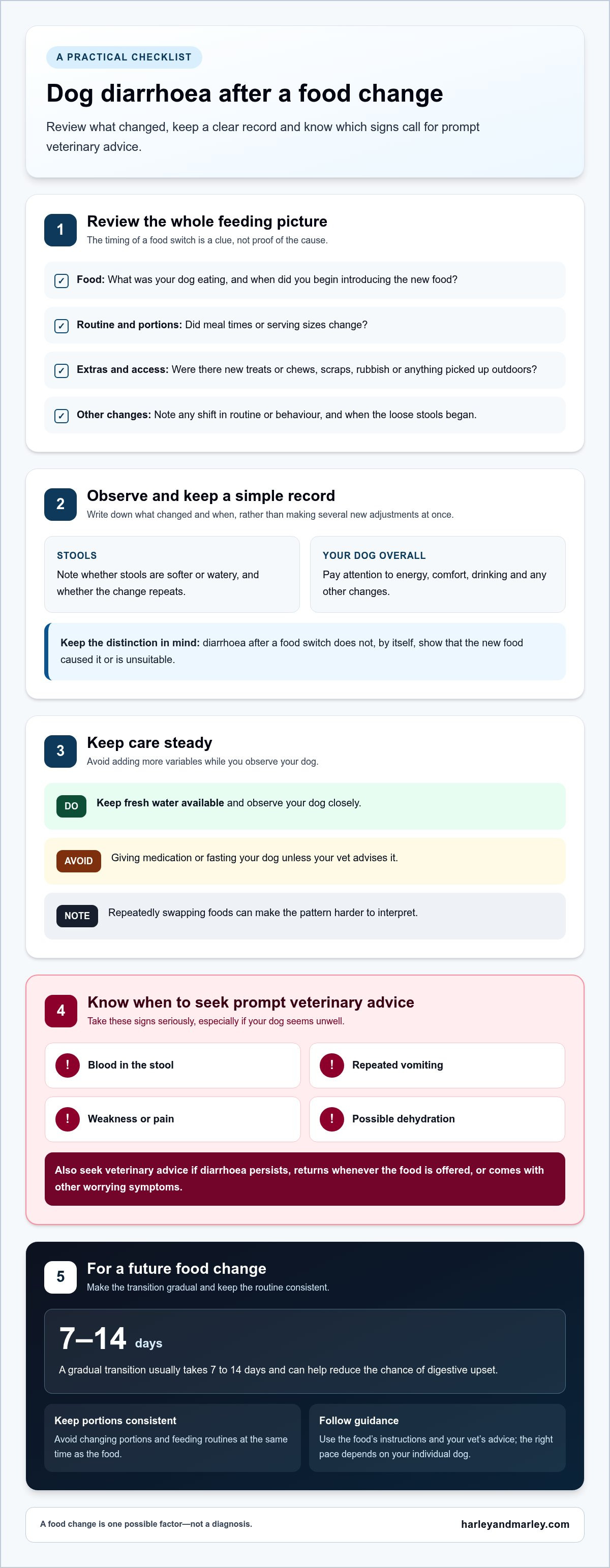
Review the whole picture. Did you replace the old food in one go, increase the serving, add new treats or notice your dog eating something outdoors? These details may help explain a change in stool. Write down what changed and when, rather than making several new adjustments at once. That record can also help you describe the situation clearly if you speak to a vet.
Does diarrhoea mean the new food is unsuitable?
Not necessarily. Loose stools soon after a diet switch may suggest a connection, but they don’t confirm one. Other foods, a change in portions or something your dog ate can also be relevant. One episode does not establish a food allergy or intolerance. Avoid repeatedly swapping foods to test a theory, as each change adds another variable and can make the pattern harder to interpret.
If the diarrhoea persists, returns whenever the food is offered or comes with other worrying symptoms, seek veterinary advice rather than continuing to experiment. Your vet can assess whether the diet may be contributing and advise what to feed next. For wider context on how food characteristics relate to stool quality, see this dog food loose stools guide. It can help you think about digestibility, but it can’t determine the cause of your dog’s symptoms.
What happens in your dog’s gut after a diet change?
A food switch changes what your dog eats and often how their meals are served. An abrupt replacement gives you little opportunity to see how they respond as the new food is introduced. A gradual change makes it easier to observe what happens along the way, although it can’t guarantee that digestive signs won’t occur or reveal their cause by itself.
The pace should suit your individual dog. Their age, health, current symptoms and feeding needs all matter, so follow the food’s guidance and seek veterinary advice if you’re unsure or symptoms are concerning. There isn’t one transition timetable that’s right for every dog.
Why does the speed of a food switch matter?
Introducing a new food gradually gives you clearer observations than changing everything at once. For example, if stools become loose after you introduce the new food while the meal routine and portion stay consistent, there are fewer simultaneous changes to consider. Note when each change happens and what you observe, rather than making another adjustment straight away.
Ingredients can differ between foods, but that difference alone doesn’t prove a particular ingredient or food category is responsible. Portion size matters too: a larger serving can be relevant even if the food itself is unchanged. Follow the feeding guidance and avoid adding several new treats or extras during a transition if you want to understand how your dog responds.
What else could be contributing to diarrhoea?
A food switch isn’t the only possible explanation. An unfamiliar treat, food scavenged on a walk, stress from a change in routine or an illness could also be relevant. Timing alone can’t distinguish between these possibilities, so treat them as useful context rather than a diagnosis.
Before discussing the problem with your vet, make a simple note of:
- What food your dog was eating and when you began introducing the new one.
- Any changes to portions, treats, chews or meal times.
- Possible access to scraps, rubbish or something picked up outdoors.
- Changes in routine or behaviour, and when the loose stools began.
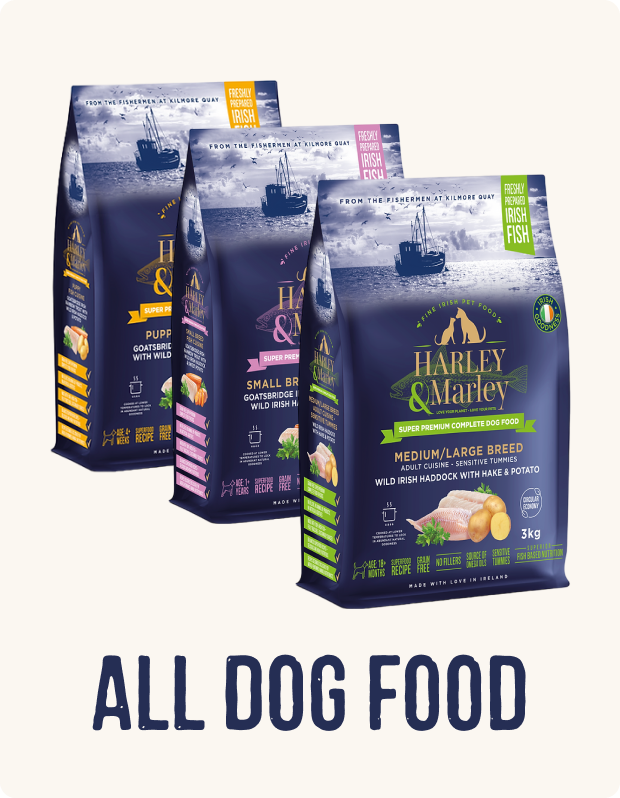
This record can help you describe the sequence clearly, especially if several details have changed. If you’re comparing diets for routine feeding, a fish-based dog food guide can offer general food-choice context, not advice for treating diarrhoea. Harley & Marley offers complete fish-based foods for different life stages and breed sizes. Explore the complete dog food range as one option when choosing a diet that fits your dog’s feeding needs.
Is it a mild food-change upset or a reason to call the vet?
A small change in stool consistency in an otherwise well dog may be less concerning than diarrhoea that is severe, worsening or accompanied by other symptoms. There’s no single rule that can safely distinguish a harmless food-related upset from an illness at home. Consider your dog as a whole: their energy, comfort, drinking and any other changes matter alongside their stools.
Blood in the stool, repeated vomiting, marked weakness, signs of dehydration, pain or suspected toxin ingestion warrant prompt veterinary advice. If your dog seems seriously unwell, contact a vet promptly rather than waiting to see whether the symptoms settle.
Which symptoms should prompt veterinary advice?
Use the comparison below as a guide, not a diagnosis. If you’re uncertain about the severity, it’s safer to call your vet and describe what you’ve observed.
| What you notice | What to do |
|---|---|
| A mild stool change, with your dog otherwise behaving normally and no other concerning signs | Keep a close eye on their overall condition and note any changes. Seek advice if symptoms worsen or don’t settle. |
| Blood in the stool, repeated vomiting, significant weakness or apparent pain | Contact a vet promptly, especially if your dog seems distressed or is becoming less responsive. |
| Possible dehydration, such as very dry or tacky gums, or suspected access to a toxin or harmful substance | Seek prompt veterinary advice. Don’t wait for diarrhoea to resolve or try home treatments without guidance. |
| Diarrhoea that persists, worsens or repeatedly returns | Arrange veterinary advice rather than continuing to change foods in search of an explanation. |
Severe or prolonged diarrhoea can make dehydration a concern, particularly if your dog is also vomiting or drinking less than usual. If you notice worrying changes in their condition, tell the vet what you’ve seen and when it began. If toxin ingestion is possible, share what your dog may have eaten and when, if known. Don’t induce vomiting or give medication unless a veterinary professional instructs you to.
When is close observation not enough?
Observation has limits. Get veterinary advice if the diarrhoea continues, becomes more severe or keeps returning, even if it began around the time you changed food. Don’t rely on a fixed number of hours or days to decide whether it’s safe to wait. The right response depends on your dog’s symptoms and health.
Be especially cautious with puppies, senior dogs and dogs with existing health conditions. They may need an individual assessment sooner, so contact your vet if diarrhoea develops or you’re concerned about their condition. If you’re unsure, a call to the clinic can help you decide what to do next. The new food may be relevant, but veterinary advice can help assess other possible causes and guide feeding decisions without repeated, unstructured diet changes, ensuring brands like Harley & Marley are introduced safely.
What should you do when your dog has diarrhoea after a food switch?
If you’re asking, “my dog has diarrhea after switching food”, assess your dog before changing their meals again. A measured plan helps you spot deterioration, keep useful information for your vet and avoid adding more variables. The new food may be relevant, but don’t assume it is the cause.
- Check for warning signs first. If your dog has blood in their stools, repeated vomiting, marked weakness, pain, signs of dehydration or may have eaten something harmful, contact a vet promptly. If they seem seriously unwell, don’t wait to monitor them at home.
- Make water available. Keep fresh drinking water within easy reach and note whether your dog is drinking. Don’t force them to drink. If they’re vomiting, seem weak or you’re worried about dehydration, seek veterinary advice.
- Observe the whole picture. Note how often your dog passes stools and whether they’re soft, watery or contain anything unusual. Keep track of appetite, energy, drinking and any vomiting too. Their behaviour overall matters alongside the stool change.
- Write down recent changes. Record the foods and portions offered, when the new food was introduced, and any treats, chews or scavenged food. Include when symptoms started and how they’ve changed. This gives your vet a clearer sequence of events than memory alone may provide.
- Get advice if you’re concerned. Contact your vet if symptoms are severe, worsening, persistent or keep returning, or if your dog seems unwell. Puppies, senior dogs and dogs with existing health conditions may need earlier individual guidance.
What can you safely monitor at home?
For a mild change in an otherwise well dog, close observation can help you recognise whether things are settling or getting worse. Keep water available and track stool frequency and appearance, appetite, drinking, energy and vomiting. Monitoring isn’t a substitute for veterinary advice if symptoms become concerning. You know your dog’s normal behaviour, so trust your judgement if they don’t seem themselves.
What should you avoid doing during an upset?
Resist trying to solve the problem by changing several things at once. Avoid adding new foods, treats, supplements or home remedies while you’re trying to understand what may be contributing. Don’t repeatedly switch diets to test a theory, and don’t give human anti-diarrhoeal medicines unless a vet specifically instructs you. Don’t delay veterinary advice if warning signs appear.
Once your dog is well and a diet change is appropriate, choose a complete food that suits their life stage and feeding needs, then follow its guidance and any veterinary advice. Harley & Marley offers complete fish-based foods for different life stages and breed sizes. These are a dietary option, not a treatment for diarrhoea. Explore complete dog food options when you’re ready to consider a suitable diet and plan a careful transition.
How can you restart or change your dog’s food more carefully?
Plan the next food change separately from managing the current upset. If your dog still has diarrhoea, symptoms are concerning or you’re unsure what to feed, speak to your vet before restarting the new food or making another switch. A different diet isn’t a substitute for finding out why symptoms are continuing.
Once your dog is well enough for a food change, keep the process simple. Choose a complete food that fits their life stage and feeding needs, introduce it gradually in line with its feeding guidance, and keep portions and other parts of the routine steady. There’s no single transition pace that suits every dog. If loose stools return or you have concerns, pause further changes and seek veterinary advice.
How should you plan a future food transition?
Before you begin, check that the new food is appropriate for your dog and follow the feeding instructions. Keep treats, meal times and serving amounts as consistent as possible, so you can observe the response to the food change rather than several changes at once. If your dog develops digestive upset, ask your vet whether to continue, slow the transition or take another approach.
For recurring symptoms or a diagnosed health condition, get individual veterinary guidance before changing foods. This keeps the plan centred on your dog’s needs, rather than relying on repeated trial and error. If your dog had diarrhoea after a previous switch, note what happened and share it with the vet as you plan the next step.
How can you assess whether a food suits your dog?
Look for a pattern over time, not a verdict from one meal. Keep a simple record of stool quality, appetite and general wellbeing, alongside the dates and amounts of food offered. Consider that record in context: a change in routine, an extra treat or an unrelated illness could also affect how your dog feels. If symptoms persist or recur, discuss the pattern with your vet instead of repeatedly changing diets.
A complete food should suit your dog’s life stage and individual feeding needs. Harley & Marley offers complete fish-based foods for puppies, small breeds, medium and large adult dogs, and senior dogs. These are food options, not treatments for diarrhoea, and no diet can be assumed to suit every dog. If you’re considering a fish-based complete food as part of a planned diet change, explore Harley & Marley’s dog food range and follow the food guidance alongside veterinary advice where needed.
Make your next feeding choice with confidence
If you’re thinking, “my dog has diarrhea after switching food”, let their current symptoms guide your next step rather than rushing into another diet change. If diarrhoea continues or you’re concerned, speak to your vet before restarting or choosing a different food. Once your dog is ready for a change, a considered choice and steady transition can help you understand how they respond.
Harley & Marley’s complete fish-based foods are made with fresh Irish fish offcuts, and the company has a five-star Google Reviews rating. These details may help you explore a food option, but no food should be treated as a cure for diarrhoea or a substitute for veterinary advice.
Explore Harley & Marley’s complete fish-based dog food range as you consider a suitable next step for your dog’s diet. With careful observation and support from your vet when needed, you can make feeding decisions with greater confidence.
Frequently Asked Questions
Why does my dog have diarrhoea after switching food?
A quick food change can be one reason your dog’s stools become loose, but it isn’t the only possibility. If you’re searching “my dog has diarrhea after switching food”, think back over the period before symptoms began: did your dog get a new chew, pick something up outdoors or experience a change in routine? These details can help your vet assess the situation. Seek advice if symptoms worsen or your dog seems unwell.
How long does diarrhoea after changing dog food last?
There’s no set duration that’s safe to wait for every dog, because diarrhoea may have a cause other than the food change. Pay attention to whether your dog’s condition is improving, staying the same or getting worse, rather than relying on a universal countdown. Contact your vet if symptoms are severe, persistent or accompanied by other concerns. Puppies, senior dogs and dogs with health conditions may need advice sooner.
Should I stop feeding the new food if my dog has diarrhoea?
Don’t assume the new food is definitely responsible or make repeated switches without advice. Consider how your dog is behaving, how severe the diarrhoea is and whether a vet has already given feeding instructions. If symptoms are worrying or continue, ask your vet whether to keep feeding the new food, pause the transition or make another change. Their recommendation can account for your dog’s health and feeding history.
Can changing dog food too quickly cause diarrhoea?
Yes, an abrupt change can be one possible cause, as your dog may need time to adjust to a different feeding routine. It doesn’t confirm that the food itself is unsuitable. Other recent changes, such as a new treat or a disrupted routine, may also be relevant. For a future switch, introduce the new food gradually, keep other feeding habits steady and ask your vet for individual guidance if digestive problems recur.
What should I feed my dog when they have diarrhoea after a food change?
There isn’t one feeding plan that suits every dog with diarrhoea, so avoid starting a new diet or home remedy based on guesswork. Keep fresh water available and make a note of what your dog has eaten, including treats and chews. Contact your vet for guidance if symptoms are severe, persistent or come with other concerns. Ask before changing meals, especially if your dog is a puppy or has a health condition.
When should I call a vet about diarrhoea after switching food?
Contact your vet promptly if you see blood in your dog’s stools, repeated vomiting, marked weakness, signs of dehydration, pain or possible harmful ingestion. Get advice if diarrhoea worsens, persists or repeatedly returns, even if your dog seems otherwise well. A puppy, senior dog or dog with an existing health condition may need an earlier assessment. If your dog seems seriously unwell or you’re worried, don’t wait for symptoms to pass.
Can I give my dog human medicine for diarrhoea?
No. Don’t give your dog human anti-diarrhoeal medicine unless a vet specifically instructs you to. A medicine intended for people may be unsuitable for your dog or could complicate an assessment of what’s causing the symptoms. If you’ve already given your dog any medication, tell your vet what it was and how much was given. Seek veterinary advice promptly if your dog is unwell or has other concerning signs.