




Could adding fish oil to your dog’s routine help them move more comfortably? If you’re wondering “is fish oil good for dogs with arthritis”, the evidence offers a reason for cautious optimism: the marine omega-3s EPA and DHA may support joint comfort, but they’re not a cure or a replacement for veterinary care.
Stiffness or a change in activity can have different causes, so a veterinary assessment is the right starting point. Research suggests omega-3s may have a role in arthritis care, but results vary and a general supplement claim cannot tell you what your dog needs. Speak with your veterinary surgeon before starting fish oil, particularly if your dog takes medication or has another health condition.
This guide explains what the evidence says, what fish oil may and may not do, and how to discuss product suitability and possible side effects. It also covers how fish oil might fit into a wider, vet-led care plan rather than being used as a stand-alone arthritis treatment.
Key Takeaways
- Is fish oil good for dogs with arthritis? It may support joint care, but it isn’t a cure or a substitute for veterinary treatment.
- EPA and DHA are the omega-3s of interest. A possible anti-inflammatory effect does not mean every dog will respond in the same way.
- Consider supplements alongside veterinary treatment and lifestyle support, not as a replacement for either.
- Before adding fish oil, discuss your dog’s needs with your veterinary surgeon. Bring the product label and details of medicines and other supplements.
- Harley & Marley offers fish oil for dogs. Review the product information with your vet to discuss whether it suits your dog.
Is fish oil good for dogs with arthritis? What owners should know first
Fish oil may support care for dogs with arthritis, but it isn’t a cure. The omega-3 fats in fish oil may help with some aspects of joint comfort, yet a supplement can’t diagnose the cause of stiffness, reverse joint damage or replace veterinary treatment. If you’re asking “is fish oil good for dogs with arthritis”, the balanced answer is that it may help some dogs as part of a wider plan. Your veterinary surgeon can advise whether it’s suitable for your dog.
What does arthritis mean for a dog?
Osteoarthritis is a chronic condition affecting the joints that can make movement uncomfortable. It may develop as joint structures change over time, but it isn’t simply an inevitable part of ageing. For general background on the condition, see Osteoarthritis.
Possible signs include stiffness after resting, slower walks, difficulty getting up or reluctance to jump into the car. These changes can have different causes, so treat them as reasons to seek veterinary assessment, not as a way to diagnose arthritis at home. A veterinary surgeon can examine your dog, assess their movement and recommend an appropriate care plan.
The short answer on fish oil and canine arthritis
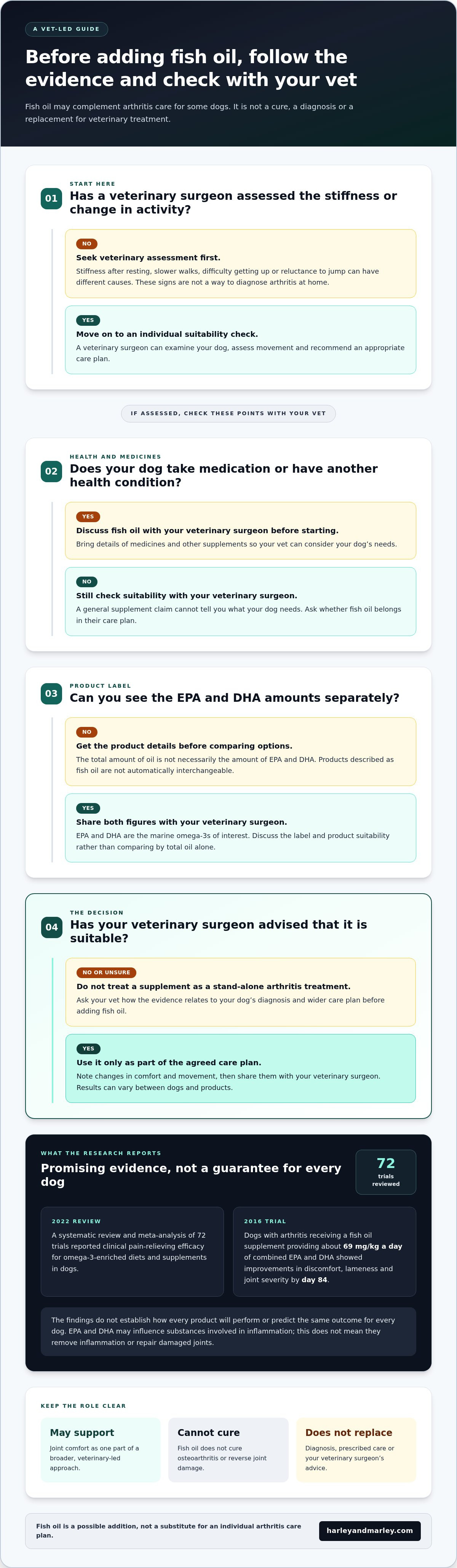
Research on marine omega-3s suggests potential supportive benefits. A 2022 systematic review and meta-analysis of 72 trials reported clinical pain-relieving efficacy for omega-3-enriched diets and supplements in dogs. That finding is encouraging, but it doesn’t mean every product or dog will have the same outcome. Use the evidence to inform a conversation with your vet, not as a substitute for an individual assessment.
Fish oil is a nutritional supplement, not prescribed pain relief. It doesn’t repair damaged joints or provide stand-alone treatment for osteoarthritis. A veterinary care plan may involve several approaches, and the veterinary surgeon who knows your dog is best placed to advise on treatment and supplementation.
In brief: fish oil may complement veterinary-led arthritis care, but it can’t cure osteoarthritis, guarantee improved mobility or take the place of a treatment plan. Note changes in your dog’s comfort and movement, then share them with your veterinary surgeon when discussing options.
How EPA and DHA in fish oil may support dogs with arthritis
Fish oil’s potential relevance to joint care centres on two long-chain omega-3 fatty acids: eicosapentaenoic acid (EPA) and docosahexaenoic acid (DHA). In the body, these fats can influence the production of substances involved in inflammation. This gives researchers a biological reason to study them in relation to osteoarthritis, a chronic and progressive joint disease. It doesn’t prove that a supplement will noticeably improve an individual dog’s comfort or movement.
EPA and DHA: what are the active omega-3s?
Fish oil products can differ in their EPA and DHA content. The total amount of oil on a label isn’t necessarily the amount of these specific fatty acids. For a useful comparison, look for EPA and DHA amounts separately and discuss the figures with your veterinary surgeon. Products aren’t interchangeable simply because they’re all described as fish oil.
The proposed effect is that EPA and DHA may alter the balance of fatty acids used to produce inflammatory compounds. This is a possible way they could support joint health, not evidence that they remove inflammation or repair damaged joints. Since the response may depend on both the dog and the product, check the label details rather than comparing products by total oil alone.
What does research say about omega-3s and canine joints?
A 2022 systematic review and meta-analysis of 72 trials reported clinical analgesic efficacy for omega-3-enriched diets and supplements in dogs. In a 2016 double-blind, placebo-controlled trial, dogs with arthritis receiving a fish oil supplement providing about 69 mg/kg a day of combined EPA and DHA showed improvements in discomfort, lameness and joint severity by day 84. These findings are encouraging, but they don’t predict the same result for every dog.
Studies may use different formulations, amounts and outcome measures. A result from one trial can’t establish how every product will perform in everyday use, and the review of multiple trials isn’t a promise that a particular oil will help your dog. Ask your veterinary surgeon how the evidence relates to your dog’s diagnosis and care.
The evidence for EPA and DHA is promising, but it can’t prove that every dog with arthritis will benefit. Harley & Marley offers fish oil for dogs. Discuss the product label and its suitability with your veterinary surgeon before use.
Fish oil versus other arthritis support: how to weigh the options
Fish oil is one possible part of arthritis care, not an alternative to veterinary treatment. If you’re asking “is fish oil good for dogs with arthritis”, consider the dog’s diagnosis, comfort, mobility and wider needs. No single approach suits every dog. A veterinary surgeon can help decide which measures belong in an individual care plan. Cornell’s guidance also places omega-3 supplements within a broader approach to osteoarthritis treatment.
| Type of support | Possible role | Who guides it? |
|---|---|---|
| Fish oil and other supplements | May offer nutritional support, but effects can vary and supplements don’t replace diagnosis or prescribed care. | Discuss suitability and product details with your veterinary surgeon. |
| Veterinary treatment | Addresses the dog’s diagnosed condition and may include prescribed pain relief or other clinical measures. | The veterinary surgeon assesses and manages treatment. |
| Lifestyle and home support | Appropriate activity, weight management and practical changes at home may help support comfort and movement. | Adapt recommendations to your dog’s needs with veterinary guidance. |
Can fish oil replace arthritis medication?
No. A supplement isn’t a substitute for veterinary diagnosis or prescribed treatment. Don’t stop, reduce or change a prescribed medicine because you’ve introduced fish oil or your dog seems more comfortable. Speak with the prescribing veterinary surgeon first. They can consider nutrition as one element of care and advise whether supplementation is suitable alongside your dog’s current treatment.
How does fish oil compare with other supportive measures?
Different measures serve different purposes. Fish oil may contribute nutritional support, while weight management can be relevant to reducing excess load on joints. Suitable, regular activity can help maintain movement, but the right type and amount depend on the dog. At home, practical adjustments such as a non-slip surface or an easier route to a favourite resting place may help. Discuss changes with your vet, especially if movement becomes more difficult.
There’s no universal ranking: the most useful combination depends on the dog’s health, symptoms and response to care. Nutrition is broader than one supplement. For an overview of fish-based diets and canine nutrition, read this fish-based dog food guide. Use it as general context, and make decisions about arthritis support with your veterinary surgeon.
How to discuss fish oil for an arthritic dog safely
Decide whether to add a supplement with your veterinary surgeon, not by relying on a general dose chart or a label claim. To make the discussion practical, take these details to your appointment:
- 1. Share the exact product label. Bring the container or a clear photo, including the ingredients and feeding directions.
- 2. Review the EPA and DHA amounts. Check whether these are stated separately. The total oil quantity alone doesn’t show how much of each fatty acid the product provides.
- 3. Disclose your dog’s full health picture. Tell the vet about medicines, diagnosed conditions, allergies and any other supplements or fortified foods.
- 4. Ask for individual guidance. Your veterinary surgeon can assess suitability, advise on how to use the product and explain what changes to monitor. There isn’t one universal dose for every dog.
- 5. Agree when to follow up. Keep track of your dog’s comfort, movement and any changes after introduction. Seek veterinary advice if you have concerns.
What should you check on a fish oil label?
Read beyond the front-of-pack description. Look for clearly listed ingredients, the amounts of EPA and DHA, the species the product is intended for and its feeding directions. These details help your vet assess the specific supplement rather than fish oil in general. Don’t assume two products are equivalent because both contain fish oil; their composition can differ.
When should a veterinary surgeon guide supplement use?
Speak with your vet before use, particularly if your dog has an existing health condition or takes medication. Their medical history can affect whether a supplement is appropriate and what monitoring may be sensible. This is especially relevant for older dogs managing several aspects of their health at once. For wider context on feeding older dogs, see our senior dog nutrition guide.
Fish oil is a supplement, not a replacement for prescribed arthritis care. Keep following your dog’s treatment plan unless the prescribing veterinary surgeon advises a change. If you and your vet decide fish oil may suit your dog, explore fish oil for dogs and review the product label together before use.
Harley & Marley fish oil: a considered addition to your dog’s routine
After weighing the evidence and discussing your dog’s needs with your veterinary surgeon, you may decide to explore fish oil as one part of their nutrition routine. Harley & Marley is an Irish-owned canine nutrition business specialising in fish-based foods and supplements, including fish oil for dogs. It’s a nutritional product to consider, not an arthritis treatment or a promise of improved comfort.
Where a fish oil supplement fits in a thoughtful routine
Arthritis care is individual. A supplement should sit alongside, not take the place of, veterinary guidance, prescribed treatment where needed, balanced nutrition and practical support suited to your dog. The question “is fish oil good for dogs with arthritis” can’t be answered by the product category alone: suitability depends on your dog’s health, existing diet and the specific supplement.
Before use, review the product label with your veterinary surgeon. Check the ingredients, intended species, feeding directions and the amounts of EPA and DHA. The total quantity of oil doesn’t tell you how much of those fatty acids the product contains. Your vet can advise whether the product is appropriate and how it may fit with your dog’s overall feeding routine.
Keep expectations measured. Fish oil may be considered as nutritional support, but it can’t reverse joint changes or guarantee less pain, easier movement or a particular response. If you introduce a supplement with your vet’s agreement, follow the guidance you’ve been given and monitor your dog’s wellbeing. Discuss concerns or unexpected changes with your veterinary surgeon.
Explore fish oil with clear expectations
Harley & Marley’s fish oil is one option to review as you consider your dog’s nutrition. Take the product information to your veterinary surgeon so they can discuss its suitability and serving instructions in the context of your dog’s needs. A considered choice starts with the label and a conversation, not a promise on the pack.
Explore Harley & Marley fish oil and review the product information with your veterinary surgeon before deciding whether it belongs in your dog’s routine.
Make your dog’s joint-care choices with confidence
So, is fish oil good for dogs with arthritis? It may offer supportive nutritional benefits, but it isn’t a cure and can’t replace diagnosis or prescribed treatment. The evidence around EPA and DHA is encouraging, yet individual dogs can respond differently.
The practical next step is a conversation with your veterinary surgeon. Share the product label, your dog’s health history and details of any medicines or other supplements. Your vet can help assess suitability, advise on serving instructions and place fish oil within a wider care plan that may include appropriate activity, weight management and home adjustments.
Harley & Marley is an Irish-owned business specialising in fish-based canine nutrition and offers fish oil supplements for dogs. Explore the product information and discuss it with your vet before adding fish oil to your dog’s routine.
Explore Harley & Marley fish oil. With thoughtful guidance and a plan tailored to your dog, you can take an informed step towards supporting their comfort.
Frequently Asked Questions
Is fish oil good for dogs with arthritis?
Fish oil may support arthritis care for some dogs, but it isn’t a cure or a replacement for veterinary treatment. Its EPA and DHA omega-3 fatty acids have been studied for potential joint-support benefits, though individual responses can vary. If you’re asking “is fish oil good for dogs with arthritis”, discuss your dog’s diagnosis, diet and health history with your veterinary surgeon before adding a supplement.
How long does fish oil take to help a dog with arthritis?
Fish oil isn’t an immediate treatment. If it’s suitable for your dog, any noticeable change may take several weeks or longer, and some dogs may not show an obvious difference. Follow the serving guidance agreed with your veterinary surgeon and keep a simple record of changes in movement or comfort. This can help you and your vet assess whether the supplement seems useful as part of the care plan.
Can I give my dog fish oil with arthritis medication?
Possibly, but ask your veterinary surgeon before combining fish oil with prescribed arthritis medication. Share the supplement label and the names of all medicines your dog takes, including other supplements. Your vet can consider your dog’s health and treatment plan, then advise whether the combination is appropriate. Don’t stop, reduce or change prescribed medication without speaking to the veterinary surgeon responsible for your dog’s care.
What should I look for in fish oil for an arthritic dog?
Check that the label clearly states the ingredients, intended species and feeding directions. Look for EPA and DHA amounts stated separately, since the total oil quantity doesn’t tell you how much of each omega-3 fatty acid is provided. Fish oil products can differ, so don’t assume one is equivalent to another. Show the label to your veterinary surgeon, who can help assess the product and its suitability for your dog.
Can fish oil cause side effects in dogs?
Some dogs may experience mild digestive effects, such as loose stools or diarrhoea, and fishy breath can occur. If you notice a change after starting a supplement, contact your veterinary surgeon for advice rather than adjusting the amount yourself. Discuss fish oil before use if your dog has a bleeding disorder or takes medication that may affect blood clotting. Keep to the serving instructions recommended for your dog.
Can fish oil replace joint supplements or arthritis medication?
No. Fish oil shouldn’t be treated as a substitute for prescribed arthritis medication, veterinary assessment or an individual care plan. It may be considered as nutritional support, but whether it suits your dog depends on their needs and the product. Don’t discontinue or alter medication, or combine several supplements, without veterinary guidance. Your veterinary surgeon can help weigh nutrition, treatment and practical support together, rather than relying on one product alone.
Should I ask my vet before giving fish oil to my dog?
Yes, speak with your veterinary surgeon before starting fish oil, especially if your dog has a health condition, takes medication or uses other supplements. Bring the product label and discuss the ingredients, EPA and DHA amounts, serving guidance and what changes to monitor. Your vet can consider your dog’s individual history and wider arthritis care plan, helping you make a considered choice instead of relying on a general recommendation.