


Cod can be a suitable alternative protein for some dogs with food allergies if it’s cooked thoroughly, served plain and deboned. Whether cod is good for dogs with allergies depends on the individual dog: fish may be a useful novel protein, but some dogs react to fish too. Cod alone is not a balanced long-term diet.
If your dog is uncomfortable or has recurring skin or digestive symptoms, it’s understandable to look for a gentler food option. The right choice depends on identifying what your dog reacts to, rather than assuming any fish will suit every sensitive dog.
Here, you’ll learn how cod’s protein and nutrients may support dogs, how it compares with other fish, and what omega-3s can mean for skin and coat health. You’ll also find out how preparation matters and when a fish-based complete food may be more suitable than plain cod.
Key Takeaways
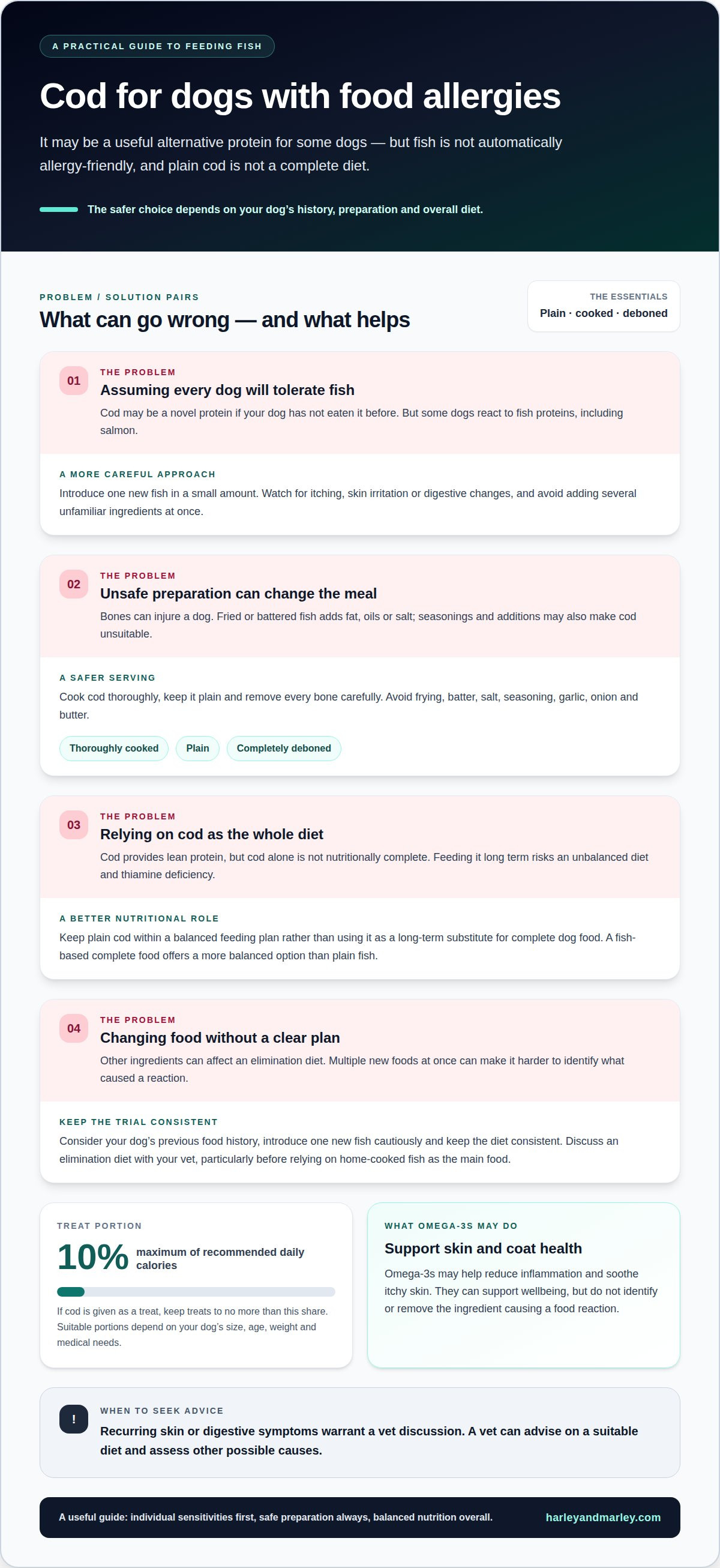
- Plain, thoroughly cooked, deboned cod can offer an alternative protein, but introduce fish in a small amount and watch for a reaction.
- Cod provides lean protein, yet feeding cod alone long term can leave a dog short of essential nutrients.
- Compare fish options by preparation and your dog’s individual sensitivities; bones, seasonings and cooking methods can affect suitability.
- Omega-3s may support skin and coat health, while a fish-based complete food offers a more balanced option than plain fish.
Fish as an alternative protein for dogs with food allergies
Fish can provide an alternative protein for dogs that react to familiar meats such as beef or chicken. Cod may suit some dogs, but it needs to be a new protein for that individual.
Cod as an alternative protein
Cod is a fish-based source of protein that can replace beef or chicken for some dogs. This may matter if a dog reacts to a meat ingredient in its usual food. Serve cod cooked, plain and deboned, without unsuitable additions such as garlic, onion or butter. Feeding cod alone long term risks an unbalanced diet and thiamine deficiency.
Fish as a novel protein
A novel protein is one a dog hasn’t eaten before, such as fish instead of familiar meat. Cod may suit an elimination diet if the dog hasn’t eaten it previously, but other ingredients can affect the trial too. Keep the diet consistent and discuss it with your vet, particularly before relying on home-cooked fish as your dog’s main food.
Lean white fish protein
Cod, haddock and pollock are lean white fish that provide digestible protein when thoroughly cooked. Their relatively lean profile can make them alternatives to fattier or familiar meat ingredients, but preparation matters: remove every bone and avoid frying, batter, salt and seasoning. Plain cooked fish is different from battered cod, which adds fat and may cause digestive upset.
Fish protein sensitivities
Fish isn’t automatically suitable for every allergic dog; some dogs react to fish proteins, including salmon. Introduce a new fish in a small amount and watch for itching, skin irritation or digestive changes. In Ireland, arrange a vet appointment if suspected food allergies cause recurring symptoms or affect your dog’s skin or digestion. A vet can advise on a suitable diet and assess other possible causes, helping avoid unnecessary ingredient changes.
Cod’s nutrients and potential health benefits
Cod provides protein, which dogs need as part of a balanced diet. It’s also described as relatively low in mercury because cod is a small, shorter-lived fish. That makes cod an option to consider, but it isn’t a complete food by itself. Your dog’s overall diet still needs to provide all essential nutrients, rather than relying on one ingredient or fish alone.
Cod’s nutritional value depends partly on how it’s prepared. Plain, thoroughly cooked fish avoids the extra fat and seasonings found in fried or battered versions. Keep it in a balanced feeding plan, not as a long-term substitute for complete dog food. Even a healthy ingredient can contribute to an unbalanced diet if it replaces too much of your dog’s usual food.
Salmon may be considered as an alternative fish protein, including in dog food, but it isn’t automatically hypoallergenic. It may be novel for a dog that hasn’t eaten it before; a dog previously exposed to salmon may respond differently. Some dogs react to fish proteins, so watch for changes such as itching or digestive upset after introducing salmon. A fish ingredient alone doesn’t mean a food will suit every allergic dog.
Shellfish deserves separate consideration. Some dogs may react to shellfish, so introduce unfamiliar foods cautiously and watch for changes. Clams, mussels and oysters aren’t interchangeable with finfish such as cod or salmon, and their potential risks differ. Consider your dog’s known food history and the ingredients in each meal. If you’re considering a new fish, introduce it cautiously and note any skin or digestive changes.
Fish types considered suitable for dogs
Cod, haddock and pollock are lean white-fish options when cooked thoroughly. Salmon is another fish, but your dog’s previous reactions and dietary history matter more than the species alone. Smaller, younger wild-caught fish are generally considered safer options. Avoid shark and swordfish because of their higher mercury risk, and don’t treat all seafood as interchangeable.
Serve cod plain, thoroughly cooked and completely deboned. Fish bones can cut a dog’s mouth, injure its throat or puncture an internal organ, so remove them carefully before serving. Avoid fried or battered fish, which adds fats, oils or salt. Sardines should be packed in water without added salt. These steps help reduce avoidable problems while keeping the fish simple.
Fish skin may be offered as a treat if the scales are removed and it’s prepared without oil or seasoning. Dry fish food is also recommended for dogs with allergies or skin conditions, but fish doesn’t suit every dog. A balanced complete food has a different nutritional role from a fish treat or plain cooked fillet.
Portion size depends on your dog’s size, age, weight and medical needs, so there isn’t one suitable serving for every dog. If cod is a treat, keep treats to no more than 10% of recommended daily calories. A small dog and a large dog don’t have the same calorie needs; veterinary guidance helps set an appropriate fish portion without displacing balanced meals.
For a first serving, offer a small amount of one fish, such as plain cod, and watch for digestive or skin changes. Avoid introducing several new ingredients at once: if a problem follows, it’s harder to identify the cause. This measured approach also helps distinguish a treat from a regular dietary ingredient.
Omega-3 fatty acids and skin and coat health
Seafood provides omega-3 fatty acids that support skin, coat and overall health. In cod, omega-3s may help reduce inflammation, soothe itchy skin and ease some allergy signs. These nutrients can contribute to skin condition, but they don’t identify or remove the ingredient causing a food reaction. With persistent itching, note whether signs continue as the diet changes and share that pattern with your vet.
Salmon dog food also contains omega-3 fatty acids with anti-inflammatory properties that can support skin and coat health. Omega oils may support heart health, joint function and mobility, too. Their role is supportive: they don’t establish that a food will suit a dog with a specific allergy. A food’s ingredients and the dog’s previous reactions remain relevant when choosing a diet.
Fish oil can be added to meals to increase omega-3 intake, but it isn’t suitable for every dog or every feeding plan. Dogs with liver problems should avoid fish oil, as their liver may struggle to filter excess vitamins. Fish oil supplements can also interact with medicines or other supplements, potentially affecting a dog’s health or how its medicine works. Discuss those factors before adding a supplement.
Raw fish isn’t a safer route to omega-3s. The American Veterinary Medical Association doesn’t recommend raw or undercooked fish for dogs at any life stage, because raw fish can expose them to parasites and bacteria. Cooked fish and fish oil are different ways of including fish-derived nutrients. Choose based on the dog’s existing diet, health and known sensitivities, rather than assuming more omega-3 will resolve an allergy.
Harley & Marley: Bundles for Dogs
Harley & Marley offers Bundles for Dogs for owners choosing fish-based food as part of their dog’s everyday meals. If you’re moving beyond plain cod, a complete food is designed to provide a balanced meal rather than relying on one fish ingredient alone.
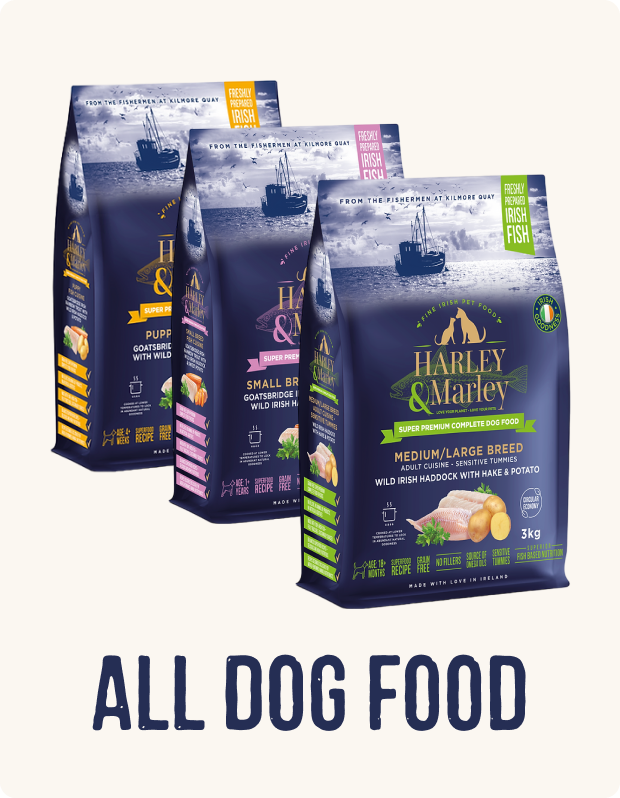
Choose Puppy Complete Food, Small Breed Complete Food or Medium/Large Breed Complete Food to match your dog’s life stage and size. These options can simplify regular feeding, but a fish-based diet isn’t automatically suitable for every dog with allergies. If your dog has recurring symptoms or a suspected food allergy, speak with your vet about dietary choices. For help finding a suitable Harley & Marley option, contact the team.
Choose a food path that fits your dog
Use your dog’s previous foods and symptoms to guide your next conversation about diet. Whether cod is good for dogs with allergies depends on their individual sensitivities, so a considered choice is more useful than repeatedly switching ingredients. If symptoms recur, keep your vet involved as you decide what to feed.
For a complete fish-based meal suited to your dog’s life stage and size, Harley & Marley offers Puppy Complete Food, Small Breed Complete Food and Medium/Large Breed Complete Food. These provide an alternative to feeding plain cod alone.
Ready to explore a suitable food option? Contact Harley & Marley to discuss your dog’s needs and take the next step with confidence.
Harley & Marley for Dogs with Food Allergies
Harley & Marley offers Grain-Free Dog Food and Fish Oil, which may be relevant as you consider food choices for a dog with allergies. Review the ingredients and discuss any diet changes with your vet.
When you’re ready to explore food options, Harley & Marley also offers complete food for puppies, small breeds, medium and large breeds, and senior dogs, along with a monthly food box and bundles for dogs.
Frequently Asked Questions
Can dogs eat cod?
Yes, dogs can eat cod occasionally alongside their usual meals. Offer a small piece on its own, separately from other new foods, so you can spot changes in digestion or skin. Cod should not replace a nutritionally complete diet. If your dog has a medical condition or persistent symptoms, speak with your vet before changing its food.
How much cod can my dog eat?
As a treat, cod should provide no more than 10% of your dog’s recommended daily calories, with meals supplying the other 90%. This limit refers to calories, not the weight of the fish. The portion therefore depends on your dog’s food and daily needs. Serve cod alongside complete meals rather than using it to replace them.
Is Seafood Right for Your Dog?
Seafood can suit some dogs, but it isn’t right for every pet. Consider your dog’s previous exposure to fish, known reactions and existing health needs. Finfish such as cod differs from shellfish, which dogs with a history of food allergies should avoid. If a problem persists after a dietary change, always see a vet.
Can dogs with food allergies eat cod?
Whether cod is good for dogs with allergies depends on their known triggers and previous foods. A dog that reacts to beef may tolerate cod, but cod won’t suit every allergic dog. Keep a clear record of foods and symptoms, then discuss them with your vet. So, is cod good for dogs with allergies? It can be an option if fish suits that individual.
Is cod a common allergen for dogs?
There isn’t a reliable figure showing how often dogs react specifically to cod. A dog can still be sensitive to fish protein, even if cod is new to its food bowl. Previous exposure and individual response matter. Don’t assume a fish-based ingredient is allergen-free; watch for changes and seek veterinary advice if symptoms continue.
How to tell if a dog is allergic to fish or cod
Possible signs include itching, irritated skin, digestive upset or respiratory problems after eating fish. These signs alone don’t prove cod caused the reaction, as other ingredients or health issues may be involved. Note what your dog ate and when symptoms appeared, then share those details with your vet. Always see a vet if a problem persists.