


Hypoallergenic food for Boxers with allergies uses selected protein sources a dog has not reacted to, or hydrolysed proteins broken into smaller components. It can help manage a suspected food allergy, but symptoms such as itchy skin, vomiting or diarrhoea can have other causes too. A veterinary elimination diet trial typically lasts 8-12 weeks and is the most reliable way to investigate a food allergy.
It’s understandable to look closely at your Boxer’s bowl when skin irritation or digestive upset keeps returning. Finding the right approach means identifying a possible food trigger rather than assuming every sensitive dog needs the same diet.
This guide explains what hypoallergenic food means, which ingredients commonly trigger reactions and how a controlled diet trial works. It also explores skin-supporting nutrients and practical considerations for Boxers and Boxerdoodles, so you can make sense of the options and discuss a suitable next step with your vet.
Key Takeaways
- Notice whether itching, vomiting or diarrhoea recur, but remember these signs alone don’t prove a food allergy.
- Learn which proteins and ingredients are common suspected triggers, and why a grain-free label doesn’t automatically make a diet suitable.
- See how fatty acids can support the skin barrier, alongside the importance of identifying the actual trigger.
- Understand why a vet-guided elimination trial needs a carefully controlled diet, and where complete food for medium and large breeds may fit outside that trial.
Symptoms that may indicate a food allergy or intolerance
In dogs, itching, vomiting and diarrhoea can indicate a food allergy or intolerance, but these symptoms don’t identify the cause. A Boxer may have skin and digestive problems together, or show only one type of symptom.
Look for persistent scratching, red or irritated skin, recurring ear trouble, or eye irritation such as redness and watering. Allergic signs can affect several areas, so note whether changes to the skin, ears, eyes and digestion happen at the same time.
Age can offer context, but it doesn’t confirm an allergy. Food allergy symptoms begin before a dog’s first birthday in one-third of cases. One study found ear involvement alone in 25% of dogs with food allergy, while gastrointestinal problems may affect up to 50%.
Keep a simple record of symptoms, meals and treats. Note each food’s ingredients and protein sources, when itching or digestive upset starts, and any changes in stools, appetite or weight. A timeline gives your vet more useful information than memory alone.
In Ireland, hypoallergenic food costs vary with the ingredients, format and amount your dog needs. Compare feeding requirements and composition rather than assuming that a particular label has a standard price.
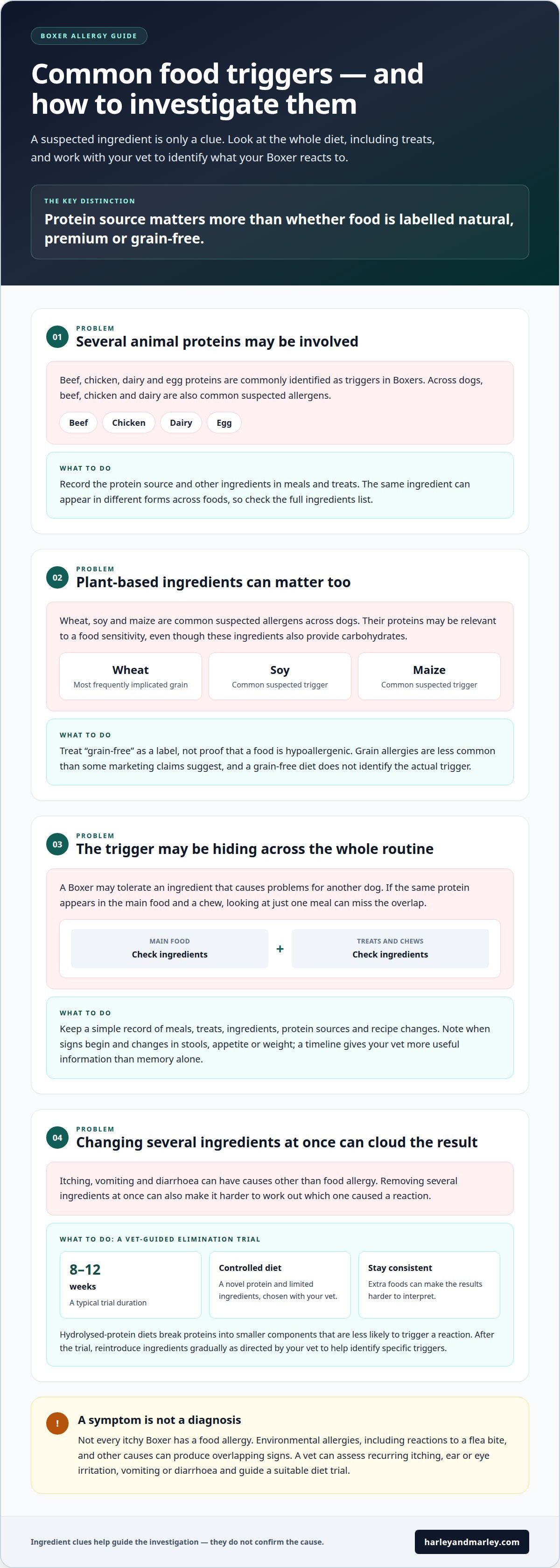
A veterinary elimination diet trial removes suspected triggers by feeding a novel protein and limited ingredients. It typically lasts 8-12 weeks, and consistency matters: extra foods can make the results harder to interpret.
Hydrolysed-protein diets can help manage food allergies because processing breaks proteins into smaller components that are less likely to trigger a reaction. Suitability depends on your dog’s suspected triggers and the diet chosen for the trial.
Allow 8-12 weeks for a full elimination trial and assessment; improvement may not appear immediately. Follow the trial diet throughout, then reintroduce ingredients gradually as directed by your vet to help identify specific triggers.
Arrange a veterinary appointment if your Boxer has recurring itching, ear or eye irritation, vomiting, or diarrhoea. A vet can assess the symptoms, consider other causes and guide a safe diet trial, particularly when several problems occur together.
Common food allergy triggers in Boxers
A food allergy involves the immune system reacting to an ingredient, often a protein. The protein source matters more than whether food is labelled natural, premium or grain-free. A Boxer may react to an ingredient another dog tolerates, so consider suspected triggers individually.
Beef, chicken, dairy and egg proteins are commonly identified as triggers in Boxers. Across dogs, beef, chicken, dairy, wheat, soy and maize are also common suspected allergens. These ingredients can appear in different forms in foods and treats, so read the full ingredients list to spot possible overlaps.
Plant-based ingredients can matter too. Wheat, soy and maize provide carbohydrates, but their proteins may be relevant to a food sensitivity. Grain allergies are less common than some marketing claims suggest, and wheat is the grain most frequently implicated in suspected food allergies. A grain-free label alone neither identifies the trigger nor makes a diet hypoallergenic.
Boxers are among the breeds considered more prone to atopic conditions, which can include food sensitivities. That doesn’t mean every itchy Boxer has a food allergy. One dog may tolerate an ingredient that causes problems for another, and skin signs can also have non-food causes.
Record the food’s protein source and other ingredients, including those in treats, to make patterns easier to discuss with your vet. Note recipe changes, your dog’s weight and feeding routine. For example, if chicken appears in both the main food and a chew, record both rather than assuming only the meal matters.
For a suitable everyday diet outside a controlled allergy trial, compare complete food options by breed size with your dog’s needs in mind. A suspected trigger still needs careful investigation; removing several ingredients at once can make it harder to identify which one caused the reaction.
Fatty acids and skin-supporting nutrients
Fatty acids help support the skin barrier, which protects a Boxer’s skin from irritation. A diet containing essential fatty acids, including those found in fish oil, may help reduce inflammation or lessen allergic reactions. These nutrients support skin health, but they don’t identify or remove an allergy trigger.
Low-allergen carbohydrates and essential fatty acids can support intestinal health alongside the skin barrier. Ingredients such as potato may provide carbohydrates, but potato isn’t automatically suitable for every food trial. The key is whether the complete diet meets your dog’s needs and avoids ingredients being investigated.
Skin irritation doesn’t always start in the food bowl. Boxers can have environmental allergies, and even a single flea bite may trigger allergy problems across the body. Dander, contact with environmental substances and food sensitivities can cause overlapping signs, so a rash alone won’t reveal the cause.
Practical skin care helps you monitor changes. Brush your Boxer weekly to manage shedding, and note whether itching worsens after outdoor activity or a bath. Choose bathing products carefully, as skin irritation from a product can complicate efforts to identify an allergy trigger. Ask your veterinary team about persistent soreness, broken skin or recurring ear irritation.
During a food trial, keep the diet consistent and record skin changes, digestive signs and new exposures. Discuss supplements with your vet before adding them, as an extra ingredient can interfere with the trial. Fish oil may have a place in a broader nutrition plan, but it doesn’t replace identifying the cause of allergic symptoms or choosing an appropriate diet.
Diet advice for Boxers and Boxerdoodles
For Boxers and Boxerdoodles, food choices should reflect past diets, life stage and the reason for changing food. Keep an allergy investigation separate from routine feeding decisions.
Novel-protein food options
A suitable novel-protein diet uses animal proteins your individual dog hasn’t eaten before. No single protein suits every Boxer. Review your dog’s food history, including treats and previous diets, before discussing options with your vet.
When looking for hypoallergenic food for boxers with allergies, a record of past ingredients can help narrow the options. Boxerdoodles may have different feeding histories from Boxers, so don’t assume a protein that’s new to one is also new to the other.
Veterinary hypoallergenic food options
Veterinary hypoallergenic foods are diets selected to help manage suspected food reactions. In Ireland, the right choice depends on your dog’s feeding history and nutritional needs, and whether the food is for an investigation or ongoing feeding.
Ask your vet to consider life stage and nutritional completeness, especially for a growing puppy. Homemade diets also need to be formulated with a vet or veterinary nutritionist to meet nutritional needs. The aim is a clear, suitable plan, not simply a product with a particular label.
Grain-free food and allergy risks
Grain-free food may suit a Boxer if it meets the dog’s nutritional needs, but switching to it during an active food trial can complicate the assessment. Stick to the trial diet rather than introducing a different recipe part-way through.
For a planned change outside a trial, transition gradually over 7-10 days. Discuss a grain-free diet with your vet, who can weigh the diet’s purpose and overall nutritional balance. You can explore grain-free dog food options as part of that everyday feeding decision.
Harley & Marley: Medium/Large Breed Complete Food
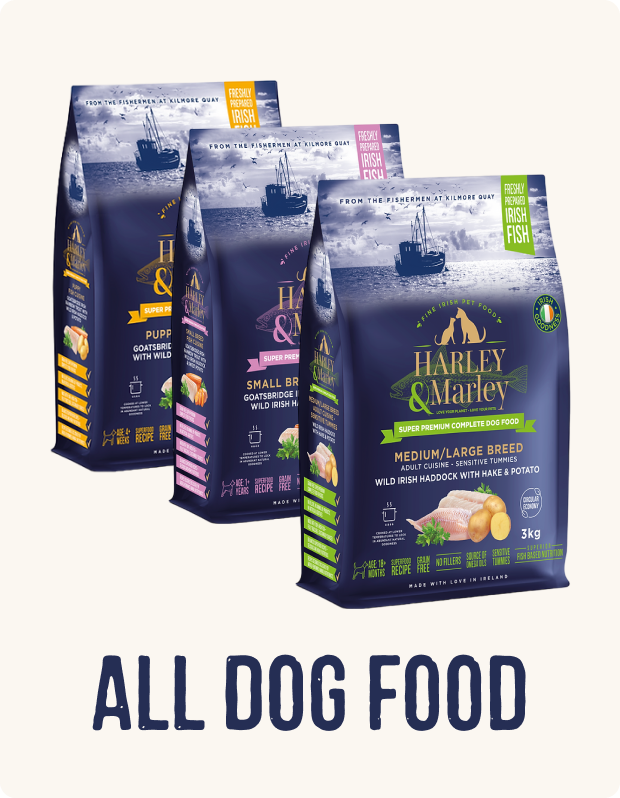
Harley & Marley’s Medium/Large Breed Complete Food is a complete-food option for Boxer owners choosing everyday food. The fish-based range is tailored to breed size and life stage, with Puppy Complete Food and Senior Dog Complete Food also available as dogs grow and age.
This isn’t a veterinary elimination diet, so don’t use it in place of a controlled food trial when investigating suspected allergies. If your Boxer has ongoing symptoms, follow your vet’s diet plan. For routine feeding, choose food suited to your dog’s life stage and size.
Explore Harley & Marley’s complete food options or contact Harley & Marley to discuss your dog’s everyday food needs.
Choose the next step that fits your dog
Choosing hypoallergenic food for Boxers with allergies starts with a clear distinction: are you investigating a suspected reaction, or choosing everyday food after that process? Keeping these decisions separate can help you avoid changing several things at once and make your next conversation about your dog’s needs more focused.
For everyday feeding, Harley & Marley offers Medium/Large Breed Complete Food, Puppy Complete Food and Small Breed Complete Food. Consider your dog’s size and life stage when exploring these options. Suspected allergy symptoms still call for a veterinary-led plan, not just a routine food choice.
Bring your observations and feeding questions together, then explore the food range that suits your dog’s stage of life. Contact Harley & Marley for help with choosing an everyday food option. A thoughtful next step can make feeding decisions feel clearer and more manageable.
Harley & Marley for Boxers With Allergies
Harley & Marley offers Medium/Large Breed Complete Food and Grain-Free Dog Food for readers exploring food options for a Boxer with allergies.
Once you’ve discussed your dog’s dietary needs with your vet, explore these options alongside Fish Oil, Chews & Bites and Bundles for Dogs to find products that fit your routine.
Frequently Asked Questions
What is hypoallergenic food and which dogs benefit from it?
Hypoallergenic food is designed around selected protein sources a dog tolerates or hydrolysed proteins. It may suit a dog whose vet is investigating a suspected food allergy, rather than every dog with itchy skin. It isn’t a diagnosis and doesn’t establish which ingredient caused signs. Food allergy coexists with other allergies in 20-30% of cases, so persistent symptoms may have more than one contributor.
What food allergies are common in Boxers?
Common suspected triggers include beef, chicken, dairy and egg proteins; dogs may also react to wheat, soy or maize. A Boxer’s breed doesn’t reveal which ingredient is responsible, and foods vary in protein sources and other ingredients. If signs recur after meals, write down the full names of foods and treats, then compare their ingredient lists with your vet rather than removing several foods at once.
How can I tell if my Boxer has a food allergy or intolerance?
A food allergy or intolerance may cause itching, vomiting or diarrhoea; recurring ear irritation can occur without obvious stomach upset. Symptoms alone can’t distinguish a food reaction from an environmental allergy or another cause. Record what your dog ate, when signs appeared, any stool changes and affected areas, then share the pattern with your vet. Seek veterinary advice if symptoms persist or worsen.
What ingredients should Boxers with suspected food allergies avoid?
Avoid an ingredient if it’s a known trigger or part of a vet-directed elimination plan. Commonly implicated ingredients include beef, chicken, dairy, wheat, soy and maize. During a food trial, record chews, table scraps, supplements and flavoured medicines, as these extras can disrupt the controlled diet. Grain-free food isn’t automatically allergen-free; the protein source still matters.
What are the best veterinary hypoallergenic dog foods available in Ireland?
The right veterinary hypoallergenic food depends on your dog’s feeding history and nutritional needs, and whether it’s for an elimination trial or ongoing feeding. Ask your vet to select a diet with a novel or hydrolysed protein suited to the suspected triggers.