


If you’re wondering how to improve my dog's coat condition, it can be hard to tell whether food, grooming or a health concern is behind a change. A coat that looks dull or feels itchy deserves attention, but it doesn’t automatically mean you need to add oil or change your dog’s diet overnight.
Advice about bathing, supplements and “coat-boosting” ingredients can point in different directions. Start by looking at your dog’s everyday care and noting what has changed, rather than trying several remedies at once. A complete diet suited to your dog’s life stage supports overall wellbeing, whilst regular grooming helps keep the coat clean and free of tangles.
This guide covers everyday factors that support skin and coat health, how to build a manageable grooming routine, and why complete fish-based food or fish oil may be one consideration, not a guaranteed fix. It also explains which signs call for veterinary advice, so you can make informed choices for your dog.
Key Takeaways
- Track changes in shine, texture, shedding, itchiness and odour to spot patterns that may help explain your dog’s coat concerns.
- Learn how a balanced complete diet supports skin and hair, and why omega-3s aren’t a guaranteed fix for every coat problem.
- Match brushing, bathing and coat checks to your dog’s coat type, using suitable tools and a gentle technique.
- For how to improve my dog's coat condition, start with steady, manageable care rather than changing food or adding several supplements at once.
- Recognise when persistent changes or signs of discomfort call for veterinary advice instead of further home adjustments.
How to improve your dog’s coat: what to look for first
A change in your dog’s coat can have several possible contributors, so there isn’t one guaranteed fix. Before changing their food or adding a supplement, establish what’s different from their usual coat and skin. Breed, coat type, age and season all affect texture and shedding. Compare your dog with their normal pattern rather than expecting every coat to look the same.
Coat condition is the combined appearance and feel of a dog’s fur and skin. A quick, gentle check can help you describe what has changed:
- Shine and texture: Does the coat feel typical for your dog, or has it become unusually dull, dry, greasy or brittle?
- Flakes and odour: Have you noticed visible flaking or a new, persistent smell?
- Shedding: Is loose hair in keeping with your dog’s usual pattern, or does it seem noticeably different?
- Itchiness and patches: Is your dog scratching, licking or rubbing more, or have new thin, bare or discoloured areas appeared?
What does a healthy dog coat look and feel like?
A comfortable coat is clean and suits the dog’s natural type. A short coat may lie close to the body, whilst a long or double coat may feel fuller and need more attention to tangles. Some coats are naturally sleek; others are wiry or curly. Dog coat types and nutritional impacts vary, so shine alone isn’t a universal measure of health.
Seasonal shedding may mean more loose hair than usual, but a marked departure from your dog’s normal pattern is worth tracking. Note when you first spotted the change and whether it is staying in one area or spreading. This gives you a useful baseline for later observations.
Which coat changes should you track?
Keep a brief note on your phone or in a diary. Record what you see, when it began and whether it is changing. Include recent shifts in grooming, bathing, food or routine, as well as how often you’re brushing. If helpful, take a clear photograph in similar lighting every so often to compare the same area over time.
Pay attention to behaviour as well as appearance. Persistent itchiness, redness, tenderness or repeated licking aren’t merely cosmetic concerns, particularly if they seem to cause discomfort. A coat’s appearance can’t confirm the cause, so avoid diagnosing a condition from a photograph or a single symptom. If the change continues, spreads or troubles your dog, share your observations with a veterinary professional. This gives you a clearer starting point when considering how to improve my dog's coat condition.
How nutrition supports your dog’s skin and coat condition
Skin and hair rely on a balanced supply of nutrients as part of your dog’s overall diet. Protein, fats, vitamins and minerals all have roles in normal body function, but treating them as a checklist of extras can be misleading. A complete diet suited to your dog is a more considered starting point than adding individual nutrients without knowing whether they’re needed.
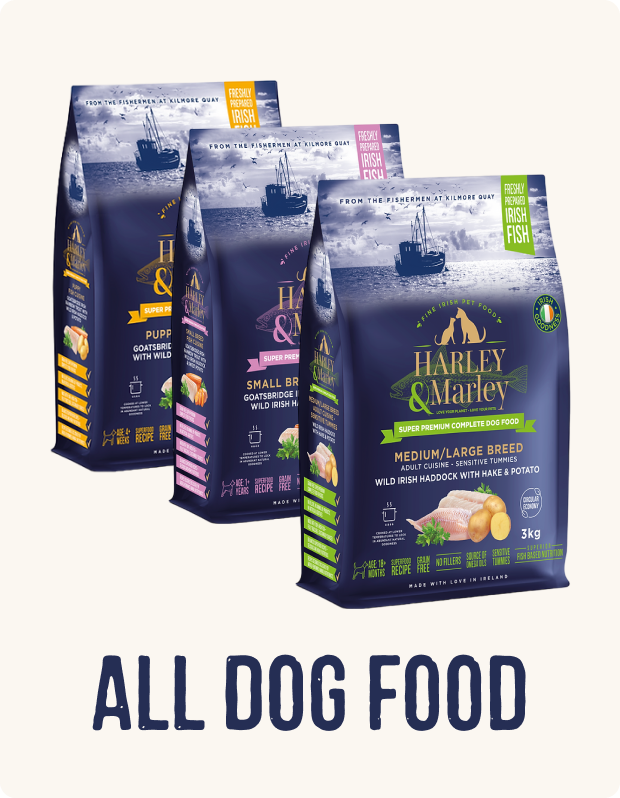
Omega-3 fatty acids are a type of fat that dogs obtain through their diet. They’re discussed in relation to skin and coat nutrition, but they’re not a guaranteed treatment for itchiness, dullness or hair loss. When comparing foods, look for one described as complete for your dog’s life stage and follow its feeding guidance. Harley & Marley offers complete fish-based food for puppies, small breeds, medium and large breeds, and senior dogs, with grain-free options. For more on how fish-based diets fit into canine nutrition, read this fish-based dog food nutrition guide.
Can changing your dog’s food improve coat condition?
Diet may be one factor in coat condition, but changing food won’t address every possible cause, and individual responses vary. If you decide to switch, transition gradually in line with the new food’s product guidance to help minimise avoidable digestive upset. Change one main variable at a time, then keep notes on appetite, digestion and coat changes. This makes it easier to see what has shifted without drawing conclusions from several changes at once.
When should you consider fish oil for dogs?
Fish oil is a supplement option, not a substitute for a complete diet or veterinary advice. It won’t be suitable or necessary for every dog, and the right approach depends on the individual. Avoid guessing at a dose or adding it to address persistent discomfort without professional guidance. If you’re comparing complete fish-based food or fish oil as part of your dog’s nutrition, you can explore Harley & Marley’s fish-based nutrition.
Keep the aim practical: choose food that is complete for your dog’s life stage, follow the feeding guidance and make any changes steadily. If coat changes continue, worsen or come with signs of discomfort, don’t assume another food or supplement is the answer. A veterinary professional can help assess whether something beyond diet needs attention. This measured approach is more useful than looking for a single ingredient or quick fix.
Which grooming habits help your dog’s coat, and which can backfire?
Good grooming supports comfort as well as appearance. Brushing helps remove loose hair and spot tangles; bathing cleans the coat when it needs it; and regular hands-on checks can help you notice changes in the skin or fur. The right schedule varies by dog. A short, smooth coat has different needs from a long, curly coat that mats easily, and your dog’s tolerance matters too.
Grooming frequency should follow your dog’s coat type and comfort, not a fixed calendar. Choose a brush or comb suited to the coat’s length and texture, and use a gentle technique. A tool that works well on one dog may pull, scratch or miss tangles on another. If you’re unsure which tool is appropriate, seek advice from a knowledgeable groomer or veterinary professional.
- Brushing helps loosen shed hair and find tangles before they tighten.
- Bathing removes dirt when needed, but too much can leave skin uncomfortable.
- Coat checks help you notice knots, irritation, odour or other changes early.
How often should you brush your dog?
Let coat length, shedding, tangles and your dog’s tolerance guide the routine. A dog prone to knots may need more frequent, careful brushing than one with a short, low-maintenance coat. Work gently in manageable areas, checking that you’re not tugging at the skin. Brief, consistent sessions also make it easier to spot changes as you groom. Stop if brushing causes pain, marked distress or skin irritation.
How often should you bathe your dog?
There’s no universal bathing schedule. Consider your dog’s coat, activity, skin comfort and any veterinary advice; use products made for dogs rather than household or human shampoos. Washing too often may affect natural skin oils and leave some dogs uncomfortable, whilst leaving dirt in a coat can also cause problems. If odour, dirt or irritation keeps returning, seek advice rather than bathing repeatedly to mask it.
Make coat checks part of grooming, not a separate search for problems. Look and feel gently around areas where knots tend to form, and notice whether your dog seems comfortable with the touch. If you find a tight mat, don’t pull hard or cut close to the skin, where it can be difficult to see what lies beneath. Ask a suitable grooming professional for help with difficult knots; persistent redness, soreness or irritation is a reason to seek veterinary advice.
Keep the routine calm and adaptable. If your dog becomes unsettled, pause and try a shorter session another time rather than forcing the brush or bath. These habits can support a comfortable coat, but they aren’t a substitute for investigating a persistent change. Match care to your dog rather than following a rigid grooming timetable.
When a coat problem may need more than a new food or grooming routine
A coat concern isn’t always solved by changing your dog’s food or brushing more often. Those steps may support everyday care, but persistent itching, sores, hair loss, marked redness or a sudden change can point to an issue that needs veterinary assessment. Don’t try to diagnose the cause from appearance alone or keep changing products in the hope that one will resolve it.
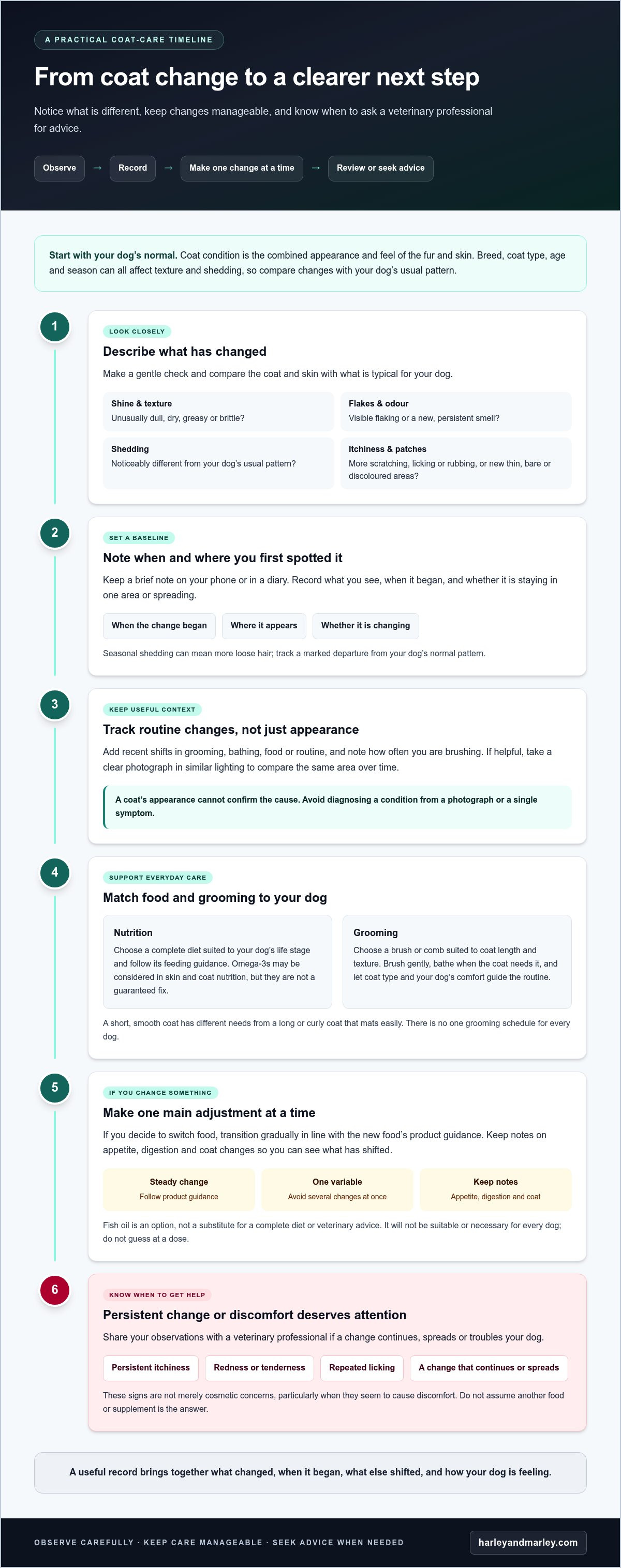
Use a simple sequence to decide what to do next:
- Observe the change. Note what looks or feels different, and where it is on your dog’s body.
- Record how long it has been present. Write down when you first noticed it and whether it is spreading, improving or recurring.
- Check for discomfort. Notice scratching, licking, tenderness, restlessness or reluctance to be touched.
- Seek veterinary advice when needed. Contact your veterinary practice for painful, worsening, widespread or persistent changes, or if your dog seems uncomfortable.
Could itching or hair loss have causes beyond diet?
Yes. Skin and coat changes can have several possible causes, and allergies or parasites are among the possibilities, not conclusions you can draw from a symptom alone. A vet can assess your dog’s individual signs and decide what investigation or care may be appropriate. For related reading on food and sensitive skin, see this poultry-free food and sensitive skin guidance. It’s nutrition information, not a diagnosis or substitute for veterinary advice.
When should you contact your veterinary practice?
Arrange veterinary advice promptly if your dog has sores, marked redness, noticeable hair loss, persistent itching or a sudden coat change. Don’t wait for a new food or grooming routine to work if the condition is painful, worsening or affecting a wide area. A vet can examine your dog and assess whether testing or a tailored care plan is appropriate.
Before the appointment, gather practical details that may help explain the pattern: when it began, where it first appeared, whether it has changed, and any recent food, supplement, bathing or grooming adjustments. Photos taken over time can help show how the area has developed. Mention other changes you’ve noticed, such as increased scratching or sensitivity when touched. Clear notes are more useful than trying to identify the cause yourself.
It’s understandable to look for a quick answer when you’re wondering how to improve my dog's coat condition, but avoid adding several supplements or making repeated diet changes while a persistent problem remains unexplained. Veterinary advice can help distinguish routine care from a concern that needs further attention. For general nutrition comparisons, you can explore Harley & Marley’s complete fish-based dog food, but food choices don’t replace an assessment of ongoing skin or coat symptoms.
Build a realistic coat-care routine your dog can maintain
A useful routine should be simple enough to keep up and flexible enough to suit your dog. Start with three foundations: feed a complete diet appropriate to their life stage, groom in a way that suits their coat and tolerance, and keep an eye out for changes. You don’t need to overhaul everything at once. A steady approach makes it easier to notice what’s helping your dog feel comfortable and what may need a closer look.
- At mealtimes: follow the feeding guidance for a complete food suited to your dog’s life stage and individual needs.
- During grooming: use an appropriate brush or comb gently, and adjust the routine to your dog’s coat and comfort.
- As you go: note changes in coat appearance, grooming needs or signs of discomfort.
Make adjustments gradually and keep them trackable. For example, if you change your dog’s food, avoid introducing several new supplements at the same time. Otherwise, it’s harder to tell which change may have affected appetite, digestion or coat condition. Supplements are optional additions to consider carefully, not automatic coat fixes; seek veterinary guidance if you’re unsure whether one is suitable for your dog.
How can you tell whether your routine is helping?
Keep brief notes rather than relying on memory. Record how the coat looks and feels, whether grooming is comfortable, and any scratching or other signs of irritation. Consider overall wellbeing too, including your dog’s comfort during everyday handling, rather than judging success by shine alone. If a change persists or worsens, arrange veterinary assessment instead of simply adding another home-care step.
How do you choose food and supplements thoughtfully?
Begin with a complete food suited to your dog’s life stage and needs, then follow its feeding guidance. Harley & Marley offers complete fish-based food for puppies, small breeds, medium and large breeds, and senior dogs. Food can be purchased individually, in bundles or through a monthly food box. These options support different ways of organising a feeding routine, but none guarantees a particular coat result.
Fish oil is available as a supplement, but it isn’t necessary for every dog or a replacement for a complete diet. Think about your dog’s whole routine, and speak with a veterinary professional before adding a supplement if there’s an ongoing skin or coat concern. That helps keep changes considered and appropriate, rather than treating one ingredient as a universal answer.
Consistency matters more than a complicated schedule. Choose a complete diet, keep grooming comfortable and observe changes over time. You can explore Harley & Marley’s dog food and fish supplements as part of your nutrition research, without expecting food or supplements alone to resolve every coat concern.
Make your next coat-care choice a considered one
Your next step doesn’t need to be a dramatic change. Choose one practical adjustment that fits your dog’s needs, keep track of how they respond and give the routine time to become familiar. If discomfort or coat changes persist or worsen, make veterinary advice the priority rather than relying on another product or home remedy.
If you’re comparing food options, Harley & Marley’s complete fish-based range includes food for puppies, small breeds, medium and large breeds, and senior dogs. Fish oil supplements and fish-based treats are also available as distinct options, not guaranteed solutions for coat concerns.
For a considered place to continue your nutrition research, explore Harley & Marley’s fish-based food and supplements. Keep your focus on steady care, your dog’s comfort and changes you can observe. With a measured approach, you can make informed choices without chasing quick fixes.
Frequently Asked Questions
How long does it take to improve a dog’s coat condition?
There’s no fixed timeframe, because progress depends on what’s affecting the coat and how your individual dog responds. A coat may take time to reflect changes in care, and hair growth doesn’t happen overnight. Keep a note of what you’ve changed and what you observe, rather than making several adjustments before you can assess the first. If the coat keeps worsening or your dog is uncomfortable, seek veterinary advice rather than waiting for a cosmetic improvement.
Can changing my dog’s food improve a dull coat?
It may help if the current diet isn’t meeting your dog’s nutritional needs, but a food change won’t resolve every cause of dullness. Check that the food is described as complete for your dog’s life stage and follow its feeding guidance. If you decide to switch, use the transition advice supplied with the food and monitor appetite and digestion as well as coat appearance. Persistent changes deserve veterinary assessment, not repeated diet changes alone.
Is fish oil good for a dog’s coat?
Fish oil can be considered as a supplement, but it isn’t a guaranteed remedy or a replacement for a complete diet. Whether it’s appropriate depends on the individual dog and their overall feeding routine. Don’t guess at a dose or add it automatically because the coat looks dull. If your dog has ongoing itching, redness or hair loss, ask your veterinary practice for guidance before treating the issue as a nutrition concern.
How often should I brush my dog to keep their coat healthy?
Brush according to your dog’s coat, shedding, tendency to tangle and comfort, rather than following a universal timetable. For instance, check a long or curly coat regularly for knots in areas that rub together, such as behind the ears or beneath the legs. Use a suitable tool gently and keep sessions manageable. If your dog pulls away, seems distressed or the skin becomes irritated, stop and reassess your technique.
Can bathing too often damage my dog’s coat?
Yes, frequent bathing may affect the coat’s natural oils and leave the skin feeling uncomfortable, particularly if the product or routine doesn’t suit your dog. Bathe when your dog genuinely needs cleaning, using a product made for dogs and rinsing it thoroughly. If an odour returns quickly, or dirt and irritation persist despite bathing, avoid repeated washes to mask the problem and seek advice from a veterinary professional.
What should I do if my dog has itchy skin and hair loss?
Contact your veterinary practice, especially if the itching is persistent, the hair loss is spreading, or you see sores, redness or pain. Avoid diagnosing the cause or trying several new foods and supplements at once. Note when the signs began, where they appear and any recent changes to food, grooming or household routine. Photos can help show how the affected area has changed and give the vet useful context.
Does a shiny coat always mean my dog is healthy?
No. A shiny coat can look reassuring, but appearance alone can’t confirm your dog’s overall health or rule out a problem. Consider the whole picture: comfort, behaviour, appetite and whether the skin is free from changes that concern you. Coat texture also differs naturally between dogs, so compare with your own dog’s usual condition. If you notice a sudden change or signs of discomfort, ask a veterinary professional for advice.