


A miracle ingredient isn’t the starting point for better mobility. The best dog food for joint health is first and foremost a complete diet that suits your dog and meets their everyday nutritional needs. It’s understandable to look for foods or supplements promising extra joint support, especially if your dog seems slower or less keen to move. But nutrition has limits and can’t replace veterinary care.
Can ordinary complete food support your dog’s joints? It can contribute to overall wellbeing, while food suited to your dog’s age, size and needs can help you build a considered feeding routine. Joint-focused claims and supplements deserve a closer look: an ingredient on the label isn’t, by itself, proof that a food will improve mobility.
This guide explains how to assess complete food, weigh up joint-support ingredients and separate supplements, and understand what nutrition can and can’t do. You’ll also learn when stiffness, limping or other movement changes call for advice from your vet, so a change to the food bowl doesn’t delay care your dog may need.
Key Takeaways
- Assess dog food for joint health by checking that it’s complete and suited to your dog’s life stage and size, rather than relying on a prominent label claim.
- Understand how balanced everyday nutrition and omega-3 fatty acids fit into the wider picture of mobility, without treating them as a cure or guaranteed outcome.
- Compare complete food, supplements and veterinary diets as different options with different purposes.
- Use feeding guidance as a starting point, then monitor your dog and consider their individual needs when reviewing portions or food suitability.
- Explore how fish-based complete food for puppies, small breeds, medium and large breeds, and senior dogs can fit into an everyday feeding routine.
Dog food for joint health: what nutrition can realistically support
Can your dog’s everyday food help them move comfortably? A suitable diet supports general health, but food can’t explain or resolve every change in movement. Mobility may be influenced by several factors, including age, body condition, activity, past injury and underlying health. Consider a food change as one part of the picture, not a diagnosis or a stand-alone solution.
Joint-supportive nutrition means feeding a complete diet suited to your individual dog, with the aim of supporting overall wellbeing and normal mobility. It is not veterinary treatment, and it cannot promise to cure or prevent joint disease.
What does joint-supportive dog food mean?
The phrase describes how a food is positioned, not a guaranteed clinical outcome. A product label or ingredient list can’t tell you on its own whether that food is right for your dog. Suitability depends on the whole picture: life stage, size, appetite, body condition and individual dietary needs.
Start with the basics. A complete food is designed to provide a whole diet when fed according to its directions, rather than relying on one ingredient to do all the work. Nutrition depends on the balance of the food and whether it suits the dog eating it. Puppies, adult dogs and senior dogs can have different needs, so a food suitable for one may not be the right everyday choice for another.
In other words, dog food for joint health should first be assessed as food. Is it complete? Is it appropriate for your dog’s life stage and suitable for their routine? Specific claims may prompt questions, but they don’t replace those fundamentals. Nor does an ingredient’s presence prove that it will improve a particular dog’s movement.
When stiffness needs more than a food change
If your dog has new, persistent or worsening difficulty moving, seek veterinary advice rather than waiting to see whether different food makes a difference. Changes might include reluctance to get up, hesitation before stairs, moving differently on walks or seeming less comfortable during everyday activity. These signs can have different causes and aren’t enough to identify a specific condition at home.
Make a note of what you’ve observed and when it happens. This practical detail can help your vet assess the change. If movement seems uncomfortable, don’t push your dog to continue an activity they’re struggling with. Follow your vet’s advice about next steps.
A suitable diet can complement a broader care plan, but it shouldn’t delay an assessment. If your dog already has veterinary guidance, treat food as part of that conversation, not a replacement for it. This approach helps you make thoughtful feeding choices while keeping mobility concerns in the right hands.
How nutrition can contribute to joint health and everyday mobility
A suitable diet provides the nutrients and energy a dog needs for general health and everyday activity. That’s valuable, but it doesn’t mean food can rebuild cartilage or reverse changes in a joint. Comfort and mobility depend on more than the ingredients in the bowl, so consider food alongside your dog’s body condition, activity and overall health.
The role of a balanced complete diet
A complete diet takes a whole-food approach: its nutritional value comes from the overall formulation, not just one highlighted ingredient. Feeding an appropriate amount can also help support a healthy body condition, which matters for movement. Cornell University College of Veterinary Medicine discusses lean body weight and low-impact exercise as part of osteoarthritis management in its guidance on osteoarthritis in dogs.
Think of food as part of the everyday foundation. A dog eating a suitable complete diet in portions matched to their needs has nutritional support for normal daily routines. This isn’t a promise of improved joint function. It’s a sensible way to support general wellbeing while paying attention to other factors that influence movement.
Nutrition can support general health and normal daily activity, but it cannot diagnose or manage joint disease on its own.
Omega-3s, fish ingredients, and realistic expectations
Omega-3 is a family of fatty acids. EPA, or eicosapentaenoic acid, and DHA, or docosahexaenoic acid, are two types found in some marine ingredients. They’re relevant to canine nutrition, but their presence alone doesn’t establish what a particular food can do for an individual dog.
Fish-based foods can differ in formulation, so don’t assume every product has the same omega-3 profile or amount. What matters is the specific nutrient, how much is present and the dog eating the food. Check the food’s current nutritional information rather than inferring a benefit from “fish-based” on the label. A fish-based dog food nutrition guide can help put ingredients into a wider context.
Fish oil is also available as a separate supplement, but it isn’t a substitute for complete food or treatment for joint disease. If you’re considering adding it, especially alongside other supplements or veterinary care, discuss its suitability with your vet. For an everyday feeding option, explore fish-based complete dog food suited to different life stages and sizes, and assess it by its full nutritional information rather than one ingredient alone.
How to compare dog food for joint health without relying on label promises
A useful comparison starts with what the food is designed to do, not the boldest phrase on the pack. “Joint support” may describe a product’s nutritional positioning, but it doesn’t establish that the food suits every dog or will change their mobility. First identify whether you’re choosing a daily diet, considering a supplement or following a veterinary recommendation.
Complete food, supplements, and veterinary diets
These options serve different purposes. Complete food is intended to provide a full daily diet when fed according to its directions. A supplement is an addition, so its suitability should be considered for the individual dog. A veterinary diet has a specific role and should be used with veterinary guidance when appropriate. They aren’t interchangeable.
| Type | What to consider |
|---|---|
| Complete food | Check that it’s labelled complete and suits your dog’s life stage and needs. |
| Supplement | Consider it separately from the main diet, with advice on whether it’s suitable. |
| Veterinary diet | Use under veterinary guidance when recommended for your dog. |
A food with a joint-related claim isn’t automatically a veterinary diet, and a supplement doesn’t replace complete daily food. Keeping these categories distinct helps prevent a headline promise from driving a decision that should account for your dog’s full circumstances.
Which details on the label deserve attention?
Read the practical information first: whether the food is complete, which life stage it’s intended for, and how the feeding guidance applies to your dog. Then consider the ingredient and nutrient information in context. A named ingredient may be worth investigating, but its presence alone doesn’t prove a clinical effect or make the food appropriate for every dog.
Body condition matters too. Feeding directions provide a starting point, but consider portions alongside your dog’s individual needs and the rest of their diet, including treats. If your dog is a senior, age-specific feeding context may help you compare suitable options; this senior dog food guide offers further points to consider.
Use a simple order of checks: complete-food designation, life-stage suitability, feeding instructions, then the details behind any supporting claim. That’s more useful than choosing solely because packaging says “mobility” or highlights one nutrient. For an everyday diet, you can also consider complete food options for different life stages, then assess the feeding information for your dog.
A practical feeding plan: match the food to your dog and monitor changes
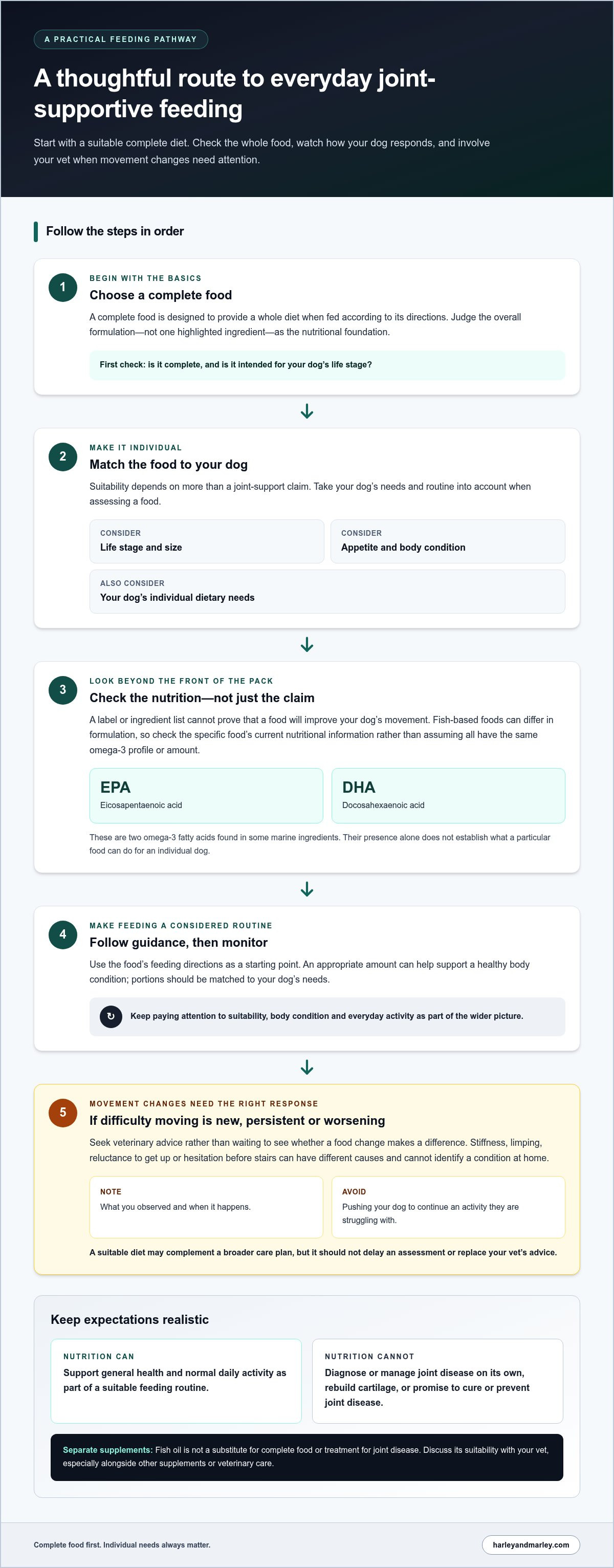
A food change is easier to assess when you have a clear reason for making it and a simple way to observe what follows. If your dog’s mobility has changed, note what you’ve seen before changing their diet. New, painful or worsening symptoms call for veterinary advice first. Don’t wait for a new food to resolve them. Once a change is appropriate, use this sequence:
- Note the concern: record what movement seems different and when you notice it.
- Choose a suitable complete food: consider life stage, size and your dog’s individual needs, not joint-related wording alone.
- Follow feeding guidance: use the chosen food’s directions as your starting point.
- Monitor: keep track of appetite, digestion, activity and mobility, and raise concerns with your vet.
Choose food around age, size, and individual needs
A puppy’s needs differ from those of a senior dog, and size-specific options may help you find a suitable format. Senior dogs can also have individual dietary considerations, so age alone doesn’t determine the right choice. Look for a complete food suited to your dog’s life stage and size, then consider body condition, appetite and any existing veterinary advice.
There isn’t one feeding amount that suits every dog, even when two dogs eat the same type of food. Follow the directions for the food you choose and account for your dog’s individual needs. Avoid setting a calorie target or adding a supplement based solely on a joint-health claim. If your dog has a health concern or is already following a feeding plan, discuss changes with your vet.
Introduce a change thoughtfully and observe
Follow the transition guidance provided with the chosen food, rather than making an abrupt switch without a reason. As you introduce the change, keep notes on appetite, stool, activity and mobility. These observations won’t prove that a diet caused an improvement or setback, but they can give you useful, specific information to discuss with your vet.
Track what you observe in your dog’s movement, but don’t assume a food change will produce a particular result. A brief note can be practical: for example, whether your dog seems reluctant to rise, is less active on walks or moves differently during a familiar activity. Keep the description factual and note whether the change persists or worsens.
Contact your vet if symptoms worsen, seem painful or if you notice a concerning reaction after changing food. A food choice should support a considered routine, not postpone an assessment. If you’re ready to compare everyday options by life stage and size, explore complete fish-based dog food as one part of your feeding plan.
Fish-based complete dog food for a considered joint-health routine
A considered feeding routine starts with food that suits the dog in front of you. Harley & Marley offers complete fish-based dog food for different life stages and sizes. It’s an everyday feeding option, not a treatment for joint disease, and it shouldn’t be chosen on the promise that it will relieve pain or prevent future problems. Its role is to provide a complete diet suited to your dog’s needs.
A complete-food option across life stages and sizes
The range includes complete food for puppies, small breeds, medium and large breeds, and senior dogs. These categories offer a practical starting point: consider your dog’s life stage and size, then assess whether the food fits their individual needs and feeding routine. A senior dog, for example, may have considerations beyond age alone, so a suitable choice depends on the whole picture rather than a joint-health label.
Choosing a category doesn’t promise a change in mobility. Complete food supports everyday nutrition when fed as directed, but it can’t diagnose why a dog is stiff or replace veterinary care when movement changes cause concern. If your dog’s needs are changing, make feeding decisions in the context of their overall wellbeing and any veterinary advice you’ve received.
Explore a fish-based approach to everyday feeding
Fish-based food is one protein choice within a complete diet. It may suit owners looking for this kind of everyday feeding, but the fact that a food is fish-based doesn’t by itself establish a particular joint-health benefit. Assess the food as a whole, including its life-stage category and feeding guidance, rather than relying on one ingredient or a broad claim.
Harley & Marley’s complete food can be purchased individually, in bundles or through a monthly food box. These formats offer different ways to organise regular feeding; the right choice depends on your household’s routine, not on a promise of a clinical result. Grain-free options are also available, but a particular dietary format isn’t automatically better for joint health. Focus on suitability for your dog.
Fish oil is available separately as a canine supplement. It isn’t a substitute for complete food or veterinary care, and it shouldn’t be assumed to treat joint disease. If you’re considering adding a supplement, discuss its suitability with your vet, especially if your dog has symptoms or is receiving care.
If a complete fish-based food fits your dog’s needs and routine, you can explore the dog food range as an everyday feeding option. Keep the decision grounded in suitability, and involve your vet if mobility changes need assessment.
Make your next feeding choice with confidence
Let your dog’s needs, not a bold promise on a label, guide your next step. Choosing dog food for joint health means finding a suitable everyday diet and staying attentive to movement changes. If mobility concerns are new or worsening, seek veterinary advice before changing food.
Harley & Marley’s fish-based range offers complete food across puppy, small-breed, medium-and-large-breed and senior categories. Food is available individually, in bundles or through a monthly food box, with fish oil and treats as separate options. These products can help shape a feeding routine, but they aren’t treatments for joint disease. Choose food according to your dog’s needs and use supplements thoughtfully.
A measured choice is a meaningful one. Explore Harley & Marley’s fish-based dog food and consider which everyday option may suit your dog. Keep observing your dog and seek veterinary guidance when movement changes need assessment.
Frequently Asked Questions
Can dog food reverse arthritis or repair damaged joints?
No. Food can’t reverse arthritis or reliably repair damaged joints. If your dog has been diagnosed with a joint condition, ask your vet how nutrition fits alongside the care plan; don’t replace prescribed care with a diet marketed for mobility. If you notice signs such as limping or reluctance to move, a veterinary assessment can help establish what’s happening before you change their food.
How much omega-3 should a dog get for joint health?
There isn’t one omega-3 amount that suits every dog. The relevant amount can depend on your dog’s size, health, existing diet and the product’s EPA and DHA content, so don’t estimate a dose from the words “fish oil” or “omega-3” alone. Ask your vet to assess whether supplementation is appropriate and what amount, if any, suits your dog.
Is fish-based dog food better for joint health?
Not automatically. Fish-based food isn’t necessarily better for joints simply because it contains fish. Products can differ in formulation and nutrient profile, and individual dogs have different needs. Compare the full nutritional information and suitability for your dog rather than assuming the protein source guarantees a mobility benefit. If a specific health concern is driving your choice, discuss the options with your vet.
What happens if my dog refuses a new joint-support food?
Don’t force the change or let your dog go without eating to make them accept it. Follow the food’s transition guidance and consider whether a sudden change in texture or routine could be affecting acceptance. If your dog continues refusing food, eats much less than usual or seems unwell, contact your vet for advice rather than repeatedly switching foods.
How long does it take to see a difference after changing dog food?
There’s no reliable timeline for a mobility change after switching foods, and a difference isn’t guaranteed. A food change may affect appetite or digestion before you can judge whether the food suits your dog. If movement is the concern, don’t wait for a dietary result before seeking veterinary advice, particularly if signs are getting worse. Your vet can help assess progress in the context of your dog’s health.
Can a puppy eat dog food marketed for joint health?
Only if the food is suitable and complete for puppies or growth, and its feeding guidance matches your puppy’s needs. “Joint health” on the packaging doesn’t establish that it provides appropriate nutrition for a growing dog. Check the life-stage information carefully. If your puppy shows discomfort or moves differently, arrange veterinary advice rather than choosing food based on the claim alone.
Should I give my dog fish oil as well as complete food?
Not automatically. Before adding fish oil, ask your vet whether it’s suitable alongside your dog’s current food, supplements and any medication. The product’s directions and nutrient content matter, and adding a supplement without considering the whole diet may be inappropriate for some dogs. Fish oil is a separate supplement, not a replacement for complete food or veterinary care, and it shouldn’t be treated as joint-disease treatment.